Morrissey Kathryn Lee, Iveša Ljiljana, Delva Soria, D'Hondt Sofie, Willems Anne, De Clerck Olivier
Phycology Research Group Department of Biology Ghent University Ghent Belgium.
Center for Marine Research Ruđer Bošković Institute Rovinj Croatia.
Ecol Evol. 2021 Oct 6;11(21):15004-15019. doi: 10.1002/ece3.8184. eCollection 2021 Nov.
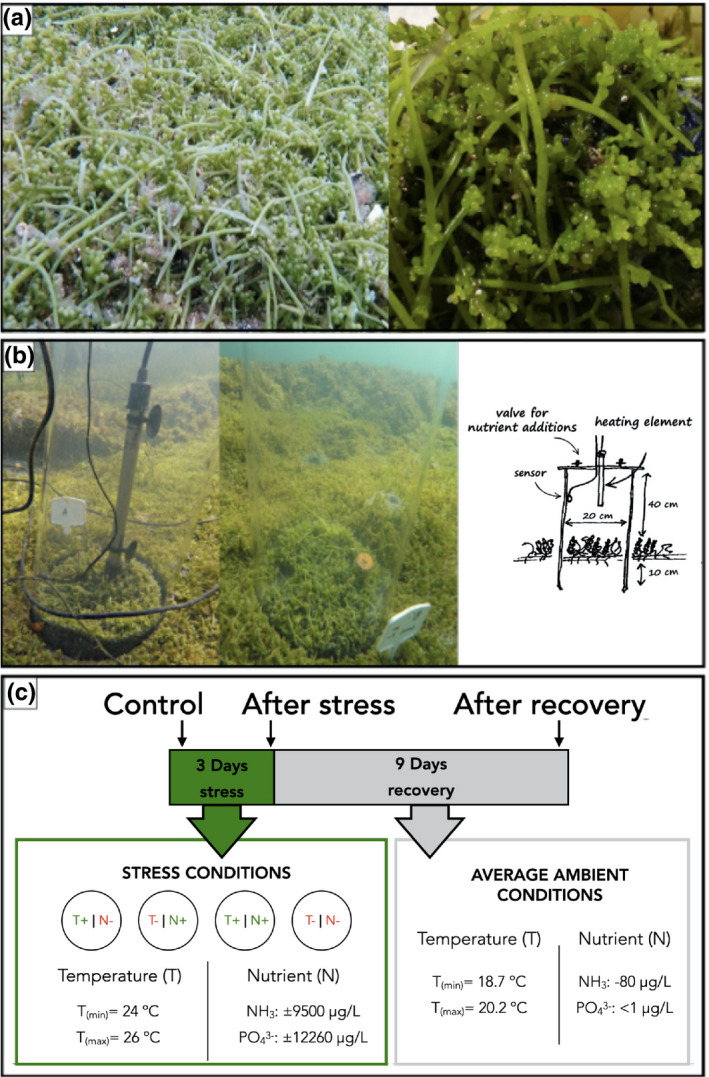
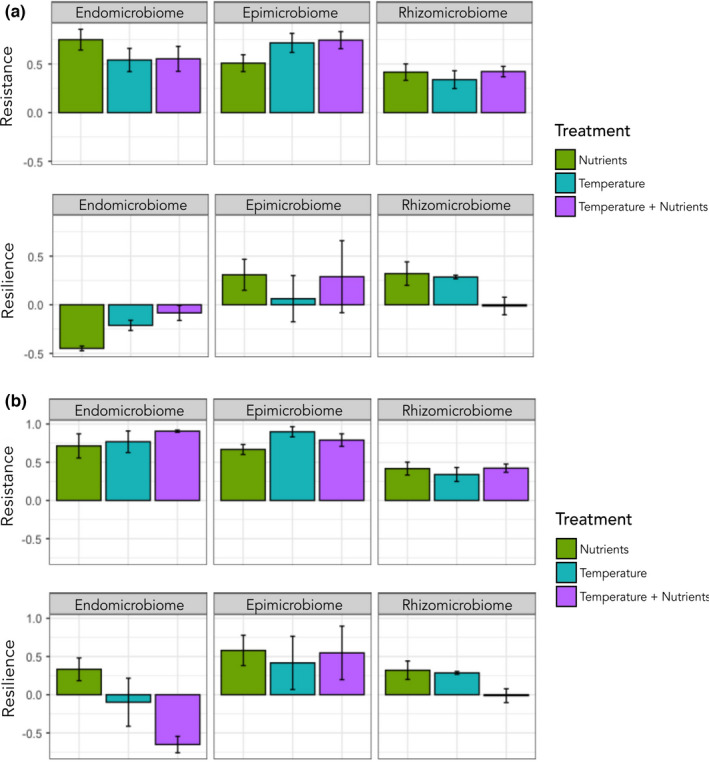
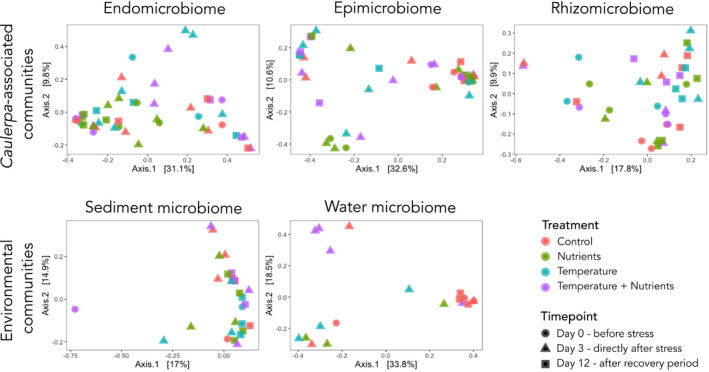
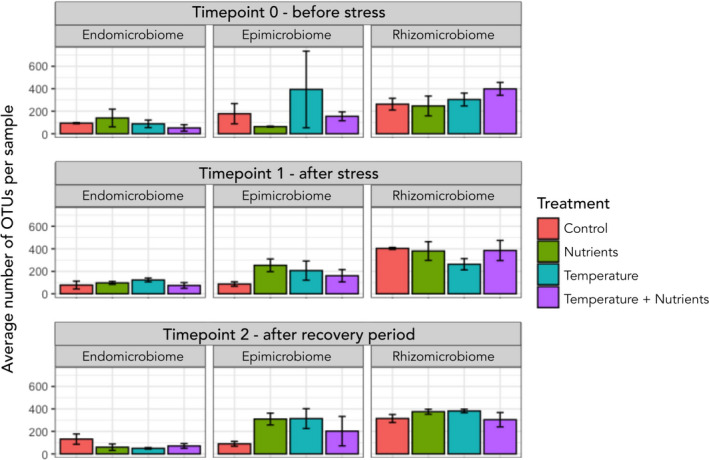
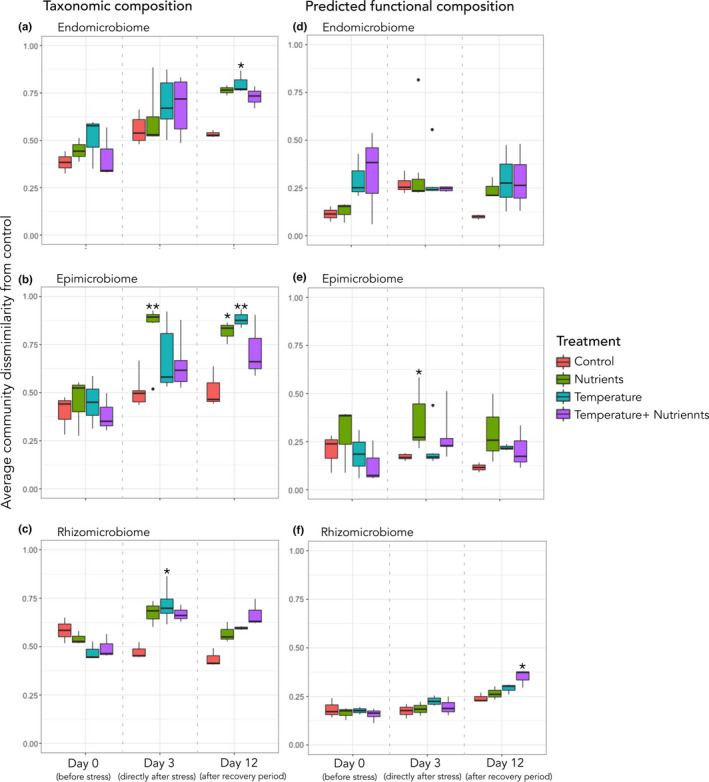
Algal-associated bacteria are fundamental to the ecological success of marine green macroalgae such as . The resistance and resilience of algal-associated microbiota to environmental stress can promote algal health and genetic adaptation to changing environments. The composition of bacterial communities has been shown to be unique to algal morphological niches. Therefore, the level of response to various environmental perturbations may in fact be different for each niche-specific community. Factorial in situ experiments were set up to investigate the effect of nutrient enrichment and temperature stress on the bacterial communities associated with . Bacteria were characterized using the 16S rRNA gene, and the community compositions were compared between different parts of the algal thallus (endo-, epi-, and rhizomicrobiome). Resistance and resilience were calculated to further understand the changes of microbial composition in response to perturbations. The results of this study provide evidence that nutrient enrichment has a significant influence on the taxonomic and functional structure of the epimicrobiota, with a low community resistance index observed for both. Temperature and nutrient stress had a significant effect on the rhizomicrobiota taxonomic composition, exhibiting the lowest overall resistance to change. The functional performance of the rhizomicrobiota had low resilience to the combination of stressors, indicating potential additive effects. Interestingly, the endomicrobiota had the highest overall resistance, yet the lowest overall resilience to environmental stress. This further contributes to our understanding of algal microbiome dynamics in response to environmental changes.
与藻类相关的细菌对于诸如[具体藻类名称未给出]等海洋绿色大型藻类的生态成功至关重要。藻类相关微生物群对环境压力的抗性和恢复力可促进藻类健康以及对不断变化环境的遗传适应。已表明细菌群落的组成对于藻类形态生态位而言是独特的。因此,每个特定生态位的群落对各种环境扰动的响应水平实际上可能有所不同。开展了析因原位实验,以研究营养物质富集和温度胁迫对与[具体藻类名称未给出]相关的细菌群落的影响。使用16S rRNA基因对细菌进行表征,并比较藻类叶状体不同部位(内生、附生和根际微生物组)之间的群落组成。计算抗性和恢复力以进一步了解微生物组成对扰动的响应变化。本研究结果提供了证据,表明营养物质富集对附生微生物群的分类和功能结构有显著影响,两者的群落抗性指数均较低。温度和营养胁迫对根际微生物群的分类组成有显著影响,表现出对变化的总体抗性最低。根际微生物群的功能表现对压力源组合的恢复力较低,表明存在潜在的叠加效应。有趣的是,内生微生物群总体抗性最高,但对环境压力的总体恢复力最低。这进一步有助于我们理解藻类微生物组对环境变化的动态响应。