Long Debbie A, Fink Ericka L
School of Nursing, Centre for Healthcare Transformation, Queensland University of Technology, Brisbane, Queensland, Australia.
Pediatric Intensive Care Unit, Queensland Children's Hospital, Brisbane, Queensland, Australia.
Transl Pediatr. 2021 Oct;10(10):2858-2874. doi: 10.21037/tp-21-61.
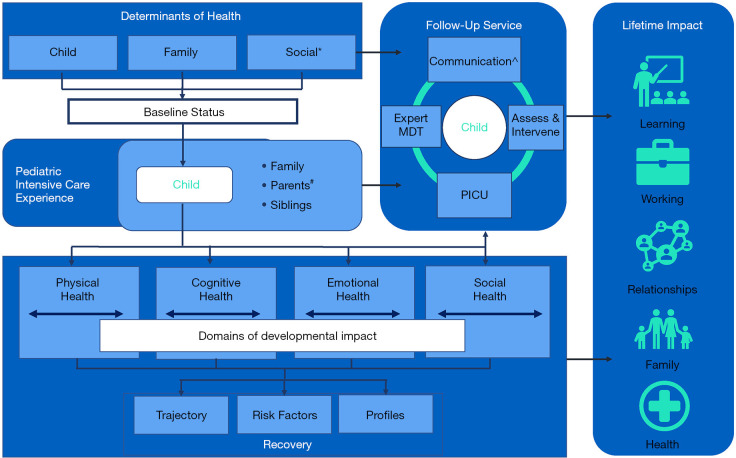
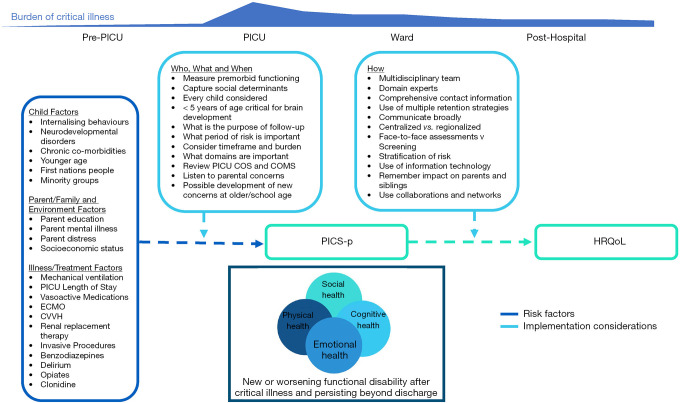
Most children are surviving critical illness in highly resourced pediatric intensive care units (PICUs). However, in research studies, many of these children survive with multi-domain health sequelae that has the potential to affect development over many years, termed post-intensive care syndrome-pediatrics (PICS-p). Clinically, there are no recommendations for the assessment and follow-up of children with critical illness as exists for the premature neonatal and congenital heart disease populations. In research studies, primary and secondary outcomes are largely assessed at or prior to hospital discharge, disregarding post-hospital outcomes important to PICU stakeholders. Incorporating longer term outcomes into clinical and research programs, however, can no longer be overlooked. Barriers to outcomes assessments are varied and generalized individualized, but some PICU centers are discovering how to overcome them and are providing this service to families-sometimes specific populations-in need. Research programs and funders are increasingly recognizing the value and need to assess long-term outcomes post-PICU. Finally, we should seek the strong backing of the PICU community and families to insist that long-term outcomes become our new clinical standard of care. PICUs should consider development of a multicenter, multinational collaborative to assess clinical outcomes and optimize care delivery and patient and family outcomes. The aim of this review is to present the potential considerations of implementing long-term clinical follow-up following pediatric critical illness.
大多数儿童在资源丰富的儿科重症监护病房(PICU)中从危重病中存活下来。然而,在研究中,这些儿童中有许多人存活下来后伴有多领域健康后遗症,这有可能在多年内影响发育,称为儿科重症监护后综合征(PICS-p)。临床上,对于危重病儿童的评估和随访,不像对早产儿和先天性心脏病患者群体那样有相应的建议。在研究中,主要和次要结局大多在出院时或出院前进行评估,而忽视了对PICU利益相关者来说很重要的出院后结局。然而,将长期结局纳入临床和研究项目再也不能被忽视了。结局评估的障碍多种多样,既有普遍的也有个体化的,但一些PICU中心正在探索如何克服这些障碍,并为有需要的家庭(有时是特定人群)提供这项服务。研究项目和资助者越来越认识到评估PICU后长期结局的价值和必要性。最后,我们应该寻求PICU群体和家庭的大力支持,坚持将长期结局作为我们新的临床护理标准。PICU应考虑开展多中心、跨国合作,以评估临床结局并优化护理服务以及患者和家庭的结局。本综述的目的是介绍在儿科危重病后实施长期临床随访可能需要考虑的因素。