Smith Lloyd M, Agar Jeffrey N, Chamot-Rooke Julia, Danis Paul O, Ge Ying, Loo Joseph A, Paša-Tolić Ljiljana, Tsybin Yury O, Kelleher Neil L
Department of Chemistry, University of Wisconsin, Madison, WI, USA.
Departments of Chemistry and Chemical Biology and Pharmaceutical Sciences, Northeastern University, Boston, MA, USA.
Sci Adv. 2021 Nov 12;7(46):eabk0734. doi: 10.1126/sciadv.abk0734.
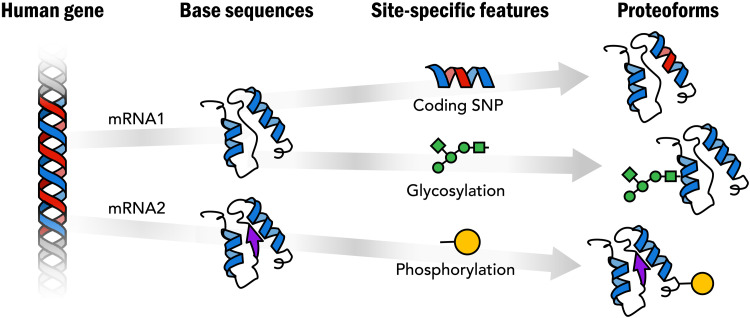
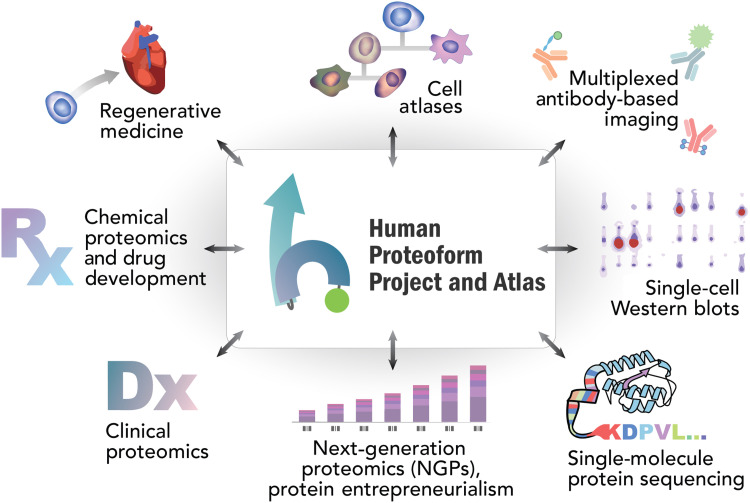
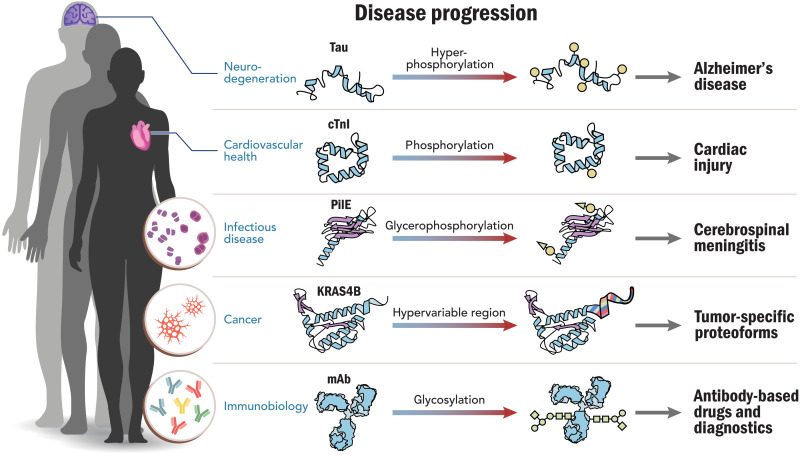
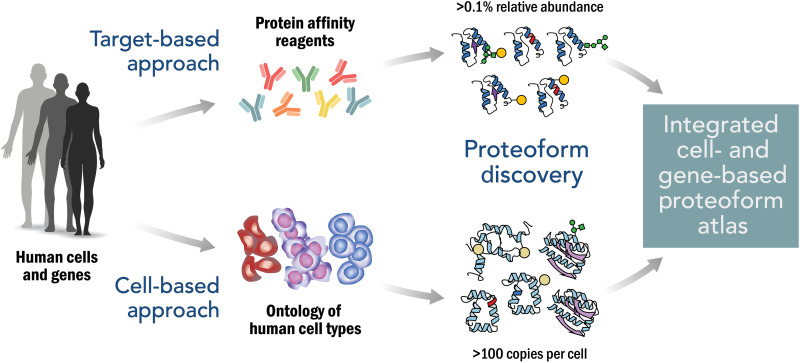
Proteins are the primary effectors of function in biology, and thus, complete knowledge of their structure and properties is fundamental to deciphering function in basic and translational research. The chemical diversity of proteins is expressed in their many proteoforms, which result from combinations of genetic polymorphisms, RNA splice variants, and posttranslational modifications. This knowledge is foundational for the biological complexes and networks that control biology yet remains largely unknown. We propose here an ambitious initiative to define the human proteome, that is, to generate a definitive reference set of the proteoforms produced from the genome. Several examples of the power and importance of proteoform-level knowledge in disease-based research are presented along with a call for improved technologies in a two-pronged strategy to the Human Proteoform Project.
蛋白质是生物学功能的主要执行者,因此,全面了解其结构和特性是在基础研究和转化研究中解读功能的基础。蛋白质的化学多样性体现在其众多蛋白质异构体中,这些异构体是由基因多态性、RNA剪接变体和翻译后修饰组合而成的。这些知识是控制生物学的生物复合物和网络的基础,但在很大程度上仍不为人所知。我们在此提出一项宏伟计划,即定义人类蛋白质组,也就是生成一组由基因组产生的蛋白质异构体的权威参考集。文中列举了基于疾病研究中蛋白质异构体水平知识的强大力量和重要性的几个例子,并呼吁采用双管齐下的策略改进技术,以推进人类蛋白质异构体计划。