Department of Clinical Laboratory, Bellvitge University Hospital, Bellvitge Biomedical Research Institute-IDIBELL, L'Hospitalet de Llobregat, Barcelona, Spain.
Department of Intensive Care, Bellvitge University Hospital, Bellvitge Biomedical Research Institute-IDIBELL, L'Hospitalet de Llobregat, Barcelona, Spain.
Clin Biochem. 2022 Feb;100:13-21. doi: 10.1016/j.clinbiochem.2021.11.001. Epub 2021 Nov 9.
Currently, good prognosis and management of critically ill patients with COVID-19 are crucial for developing disease management guidelines and providing a viable healthcare system. We aimed to propose individual outcome prediction models based on binary logistic regression (BLR) and artificial neural network (ANN) analyses of data collected in the first 24 h of intensive care unit (ICU) admission for patients with COVID-19 infection. We also analysed different variables for ICU patients who survived and those who died.
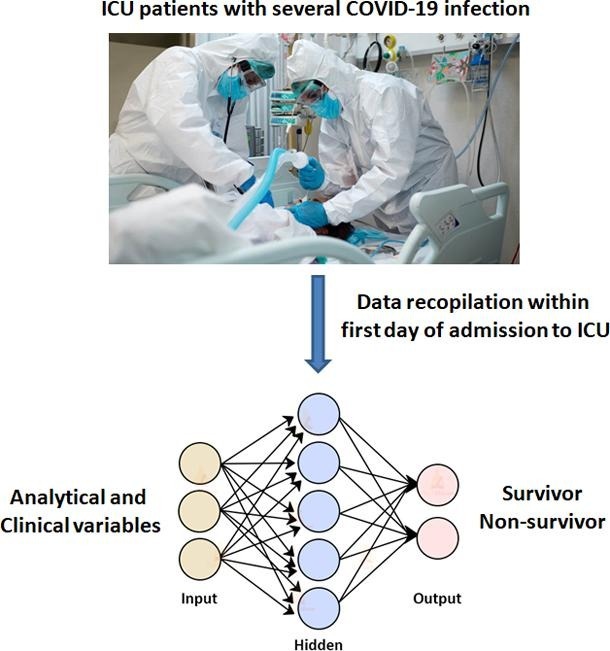
Data from 326 critically ill patients with COVID-19 were collected. Data were captured on laboratory variables, demographics, comorbidities, symptoms and hospital stay related information. These data were compared with patient outcomes (survivor and non-survivor patients). BLR was assessed using the Wald Forward Stepwise method, and the ANN model was constructed using multilayer perceptron architecture.
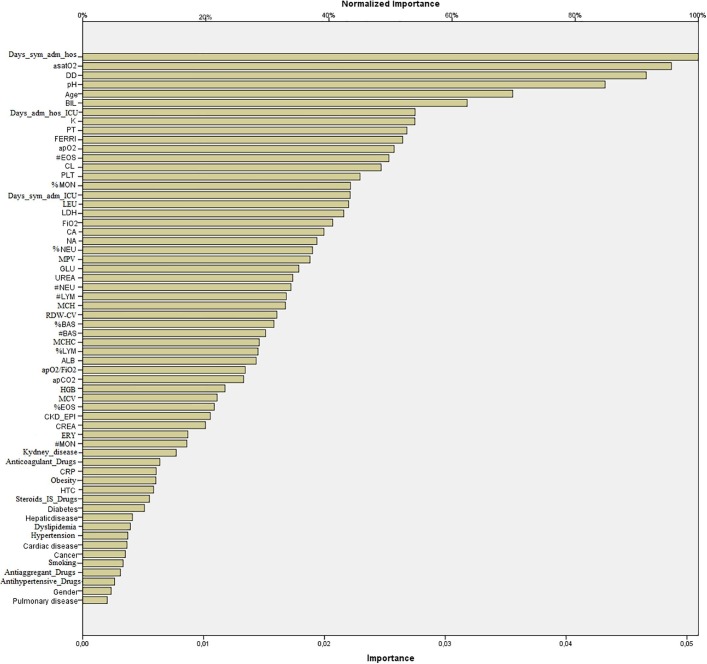
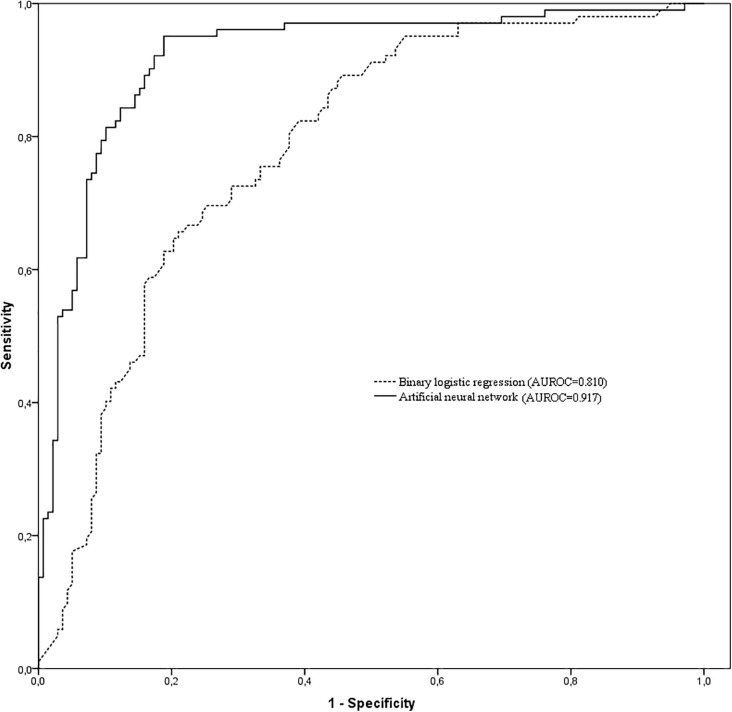
The area under the receiver operating characteristic curve of the ANN model was significantly larger than the BLR model (0.917 vs 0.810; p < 0.001) for predicting individual outcomes. In addition, ANN model presented similar negative predictive value than the BLR model (95.9% vs 94.8%). Variables such as age, pH, potassium ion, partial pressure of oxygen, and chloride were present in both models and they were significant predictors of death in COVID-19 patients.
Our study could provide helpful information for other hospitals to develop their own individual outcome prediction models based, mainly, on laboratory variables. Furthermore, it offers valuable information on which variables could predict a fatal outcome for ICU patients with COVID-19.
目前,对于制定疾病管理指南和提供可行的医疗保健系统来说,对患有 COVID-19 的重症患者进行良好的预后和管理至关重要。我们旨在根据 ICU 入院后 24 小时内收集的数据,通过二元逻辑回归(BLR)和人工神经网络(ANN)分析,为 COVID-19 感染患者提出个体预后预测模型。我们还分析了 ICU 存活患者和死亡患者的不同变量。
收集了 326 名患有 COVID-19 的重症患者的数据。数据包括实验室变量、人口统计学、合并症、症状和住院相关信息。这些数据与患者的结局(存活患者和非存活患者)进行了比较。使用 Wald 逐步向前法评估 BLR,使用多层感知机结构构建 ANN 模型。
ANN 模型的受试者工作特征曲线下面积明显大于 BLR 模型(0.917 比 0.810;p<0.001),用于预测个体结局。此外,ANN 模型的阴性预测值与 BLR 模型相似(95.9%比 94.8%)。年龄、pH 值、钾离子、氧分压和氯离子等变量存在于两个模型中,是 COVID-19 患者死亡的重要预测因素。
我们的研究可以为其他医院提供有价值的信息,以便基于主要的实验室变量,制定自己的个体预后预测模型。此外,它还提供了关于哪些变量可以预测 COVID-19 重症监护病房患者致命结局的有价值信息。