Lukanović David, Kunič Tina, Batkoska Marija, Matjašič Miha, Barbič Matija
Department of Gynecology, Division of Gynecology and Obstetrics, Ljubljana University Medical Center, 1000 Ljubljana, Slovenia.
Center for Social Informatics, Faculty of Social Sciences, University of Ljubljana, 1000 Ljubljana, Slovenia.
J Clin Med. 2021 Nov 8;10(21):5210. doi: 10.3390/jcm10215210.
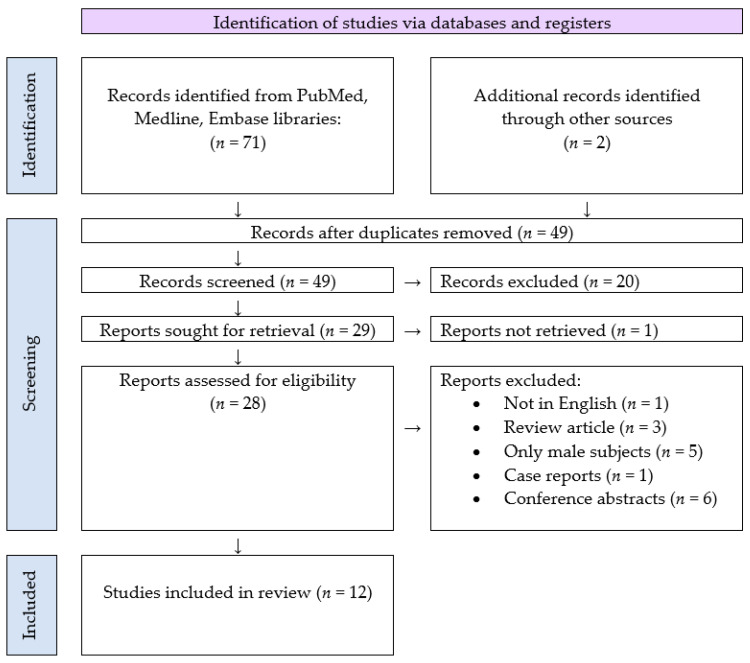
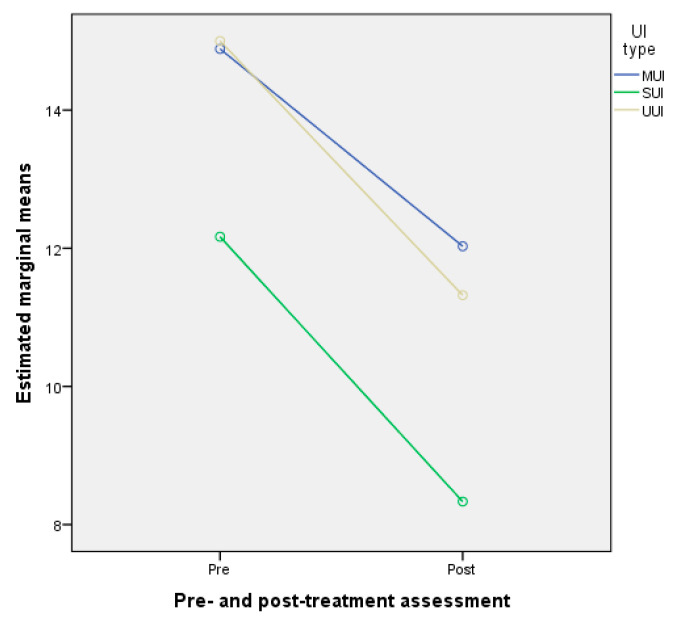
Urinary incontinence (UI) is becoming an increasingly common health problem. UI treatment can be conservative or surgical. This paper focuses on the effectiveness of magnetic stimulation (MS) in the treatment of UI. We performed a systematic review in order to combine and compare results with results from our clinical study. A clinical prospective non-randomized study was carried out at the Ljubljana University Medical Center's Gynecology Division. It included 82 randomly selected female patients, irrespective of their UI type. The success rate of using MS in treating UI was based on standardized ICIQ-UI SF questionnaires. Patients completed 10 therapy sessions on MS, and follow-up was performed 3 months after the last therapy session. UI improved after treatment with MS. The ICIQ-UI SF score improved in patients regardless of the type of UI. However, the greatest decrease in post-treatment assessment ICIQ-UI SF scores was seen in patients with stress urinary incontinence (SUI). Based on the findings described above, it can be concluded that MS is a successful non-invasive conservative method for treating UI. Future studies are necessary, all of which should include a large sample size, a control group, an optimal research protocol, pre-treatment analyses, standardization, and longer follow-ups.
尿失禁(UI)正成为一个日益常见的健康问题。尿失禁的治疗可以是保守治疗或手术治疗。本文重点关注磁刺激(MS)治疗尿失禁的有效性。我们进行了一项系统评价,以便将结果与我们临床研究的结果进行合并和比较。在卢布尔雅那大学医学中心妇科进行了一项临床前瞻性非随机研究。该研究纳入了82名随机选择的女性患者,无论其尿失禁类型如何。使用磁刺激治疗尿失禁的成功率基于标准化的ICIQ-UI SF问卷。患者完成了10次磁刺激治疗疗程,并在最后一次治疗疗程后3个月进行随访。磁刺激治疗后尿失禁情况有所改善。无论尿失禁类型如何,患者的ICIQ-UI SF评分均有所改善。然而,压力性尿失禁(SUI)患者在治疗后评估中的ICIQ-UI SF评分下降幅度最大。基于上述研究结果,可以得出结论,磁刺激是一种成功的非侵入性保守治疗尿失禁的方法。未来有必要开展研究,所有研究都应包括大样本量、对照组、优化的研究方案、治疗前分析、标准化以及更长时间的随访。