Aix Marseille Université, Université de Toulon, CNRS, IRD, MIO UM110, 13288 Marseille, France.
Research Federation for the Study of Global Ocean Systems Ecology and Evolution, FR2022/Tara GOSEE, 3 rue Michel-Ange, 75016 Paris, France.
Int J Mol Sci. 2021 Nov 1;22(21):11868. doi: 10.3390/ijms222111868.
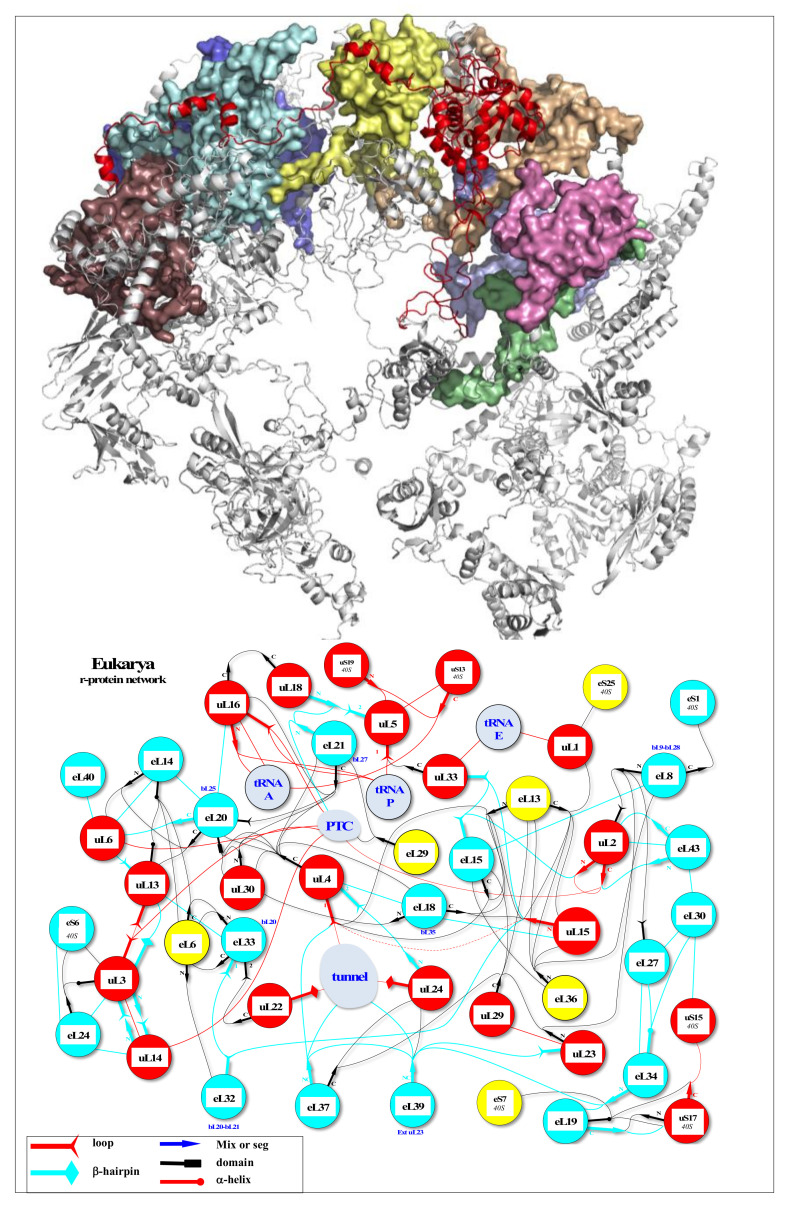
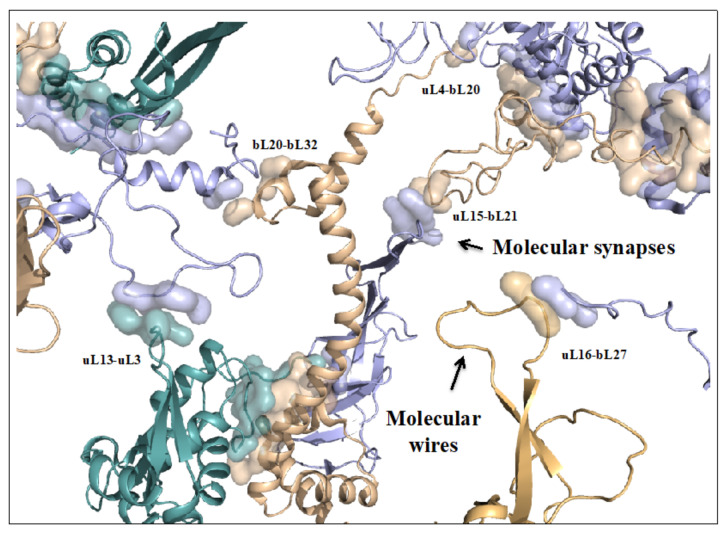
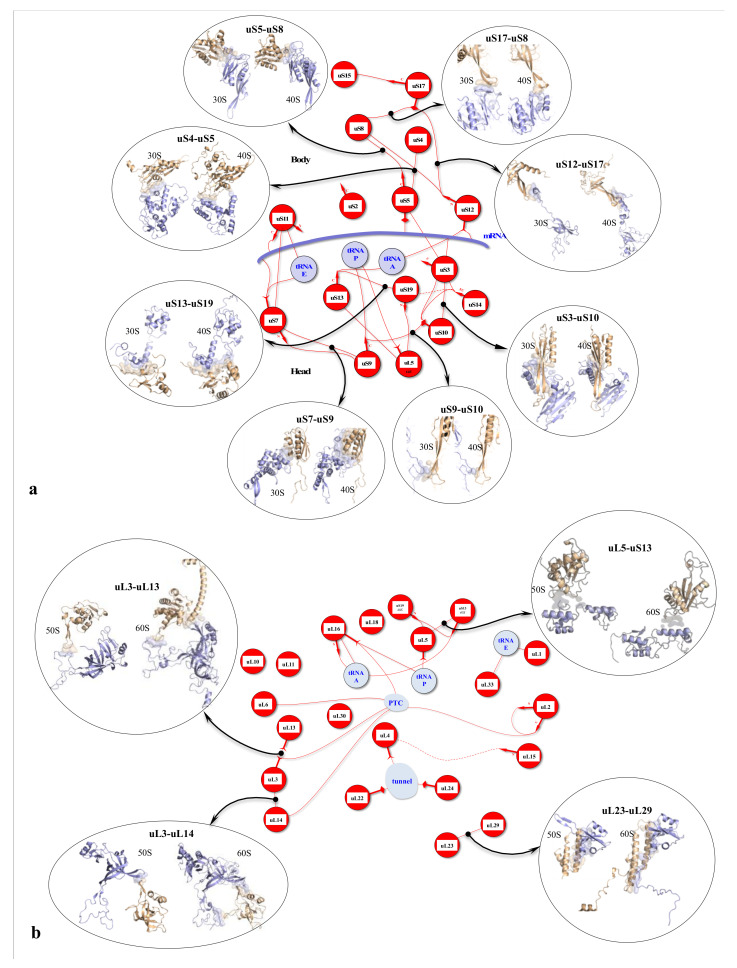
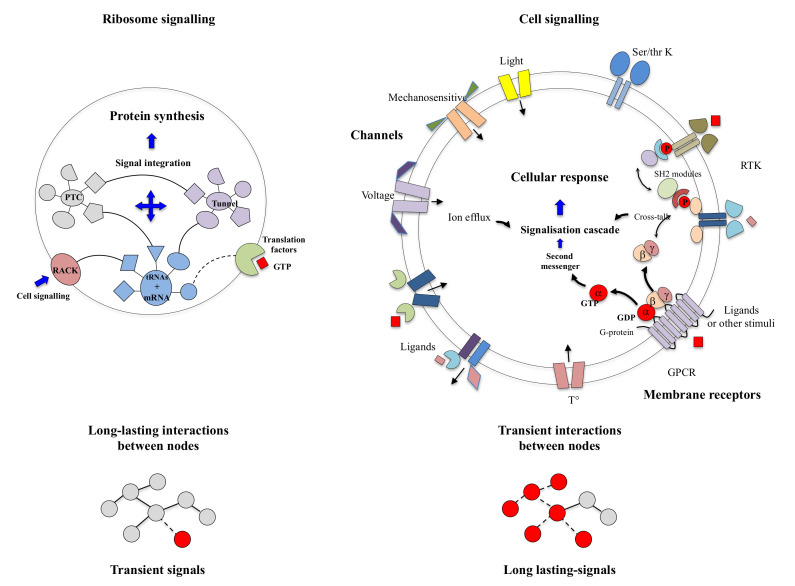
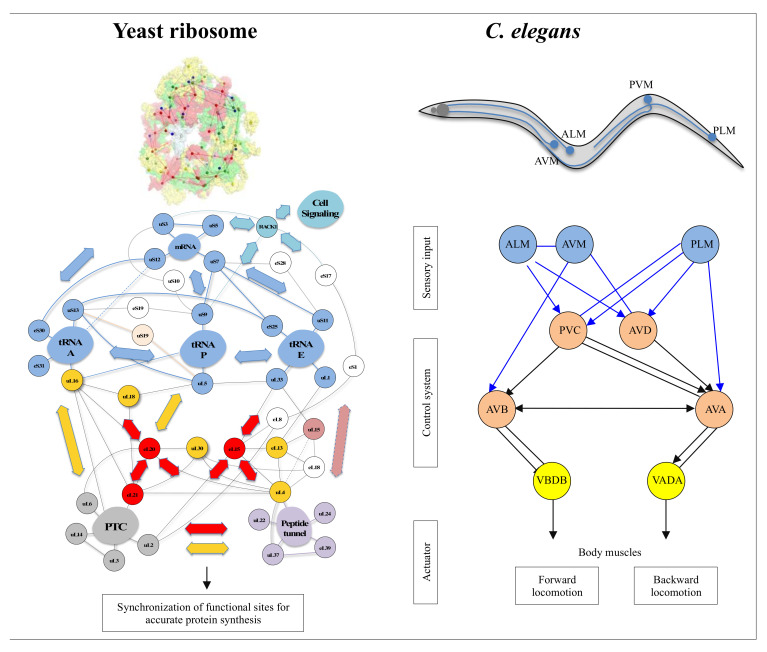
How can single cells without nervous systems perform complex behaviours such as habituation, associative learning and decision making, which are considered the hallmark of animals with a brain? Are there molecular systems that underlie cognitive properties equivalent to those of the brain? This review follows the development of the idea of molecular brains from Darwin's "root brain hypothesis", through bacterial chemotaxis, to the recent discovery of neuron-like r-protein networks in the ribosome. By combining a structural biology view with a Bayesian brain approach, this review explores the evolutionary labyrinth of information processing systems across scales. Ribosomal protein networks open a window into what were probably the earliest signalling systems to emerge before the radiation of the three kingdoms. While ribosomal networks are characterised by long-lasting interactions between their protein nodes, cell signalling networks are essentially based on transient interactions. As a corollary, while signals propagated in persistent networks may be ephemeral, networks whose interactions are transient constrain signals diffusing into the cytoplasm to be durable in time, such as post-translational modifications of proteins or second messenger synthesis. The duration and nature of the signals, in turn, implies different mechanisms for the integration of multiple signals and decision making. Evolution then reinvented networks with persistent interactions with the development of nervous systems in metazoans. Ribosomal protein networks and simple nervous systems display architectural and functional analogies whose comparison could suggest scale invariance in information processing. At the molecular level, the significant complexification of eukaryotic ribosomal protein networks is associated with a burst in the acquisition of new conserved aromatic amino acids. Knowing that aromatic residues play a critical role in allosteric receptors and channels, this observation suggests a general role of π systems and their interactions with charged amino acids in multiple signal integration and information processing. We think that these findings may provide the molecular basis for designing future computers with organic processors.
单细胞生物没有神经系统,它们如何能够表现出习惯化、联想学习和决策等复杂行为,而这些行为被认为是具有大脑的动物的标志性特征?是否存在潜在的分子系统,其认知特性与大脑相当?本综述遵循从达尔文的“根脑假说”,到细菌趋化性,再到最近在核糖体中发现类神经元 r 蛋白网络的思路,探讨了跨尺度信息处理系统的进化迷宫。核糖体蛋白网络为我们了解可能是在三个王国辐射之前出现的最早信号系统提供了窗口。虽然核糖体网络的特点是其蛋白节点之间存在持久的相互作用,但细胞信号网络本质上是基于瞬时相互作用的。因此,虽然在持久网络中传播的信号可能是短暂的,但具有瞬时相互作用的网络会限制扩散到细胞质中的信号在时间上的持久性,例如蛋白质的翻译后修饰或第二信使的合成。信号的持续时间和性质反过来又意味着整合多个信号和做出决策的不同机制。随着多细胞动物神经系统的发展,进化重新发明了具有持久相互作用的网络。核糖体蛋白网络和简单的神经系统具有结构和功能上的相似性,对它们的比较可以暗示信息处理中的尺度不变性。在分子水平上,真核核糖体蛋白网络的显著复杂化与新保守芳香族氨基酸的获取呈爆发式增长有关。鉴于芳香族残基在变构受体和通道中起着关键作用,这一观察结果表明π 系统及其与带电氨基酸的相互作用在多种信号整合和信息处理中具有普遍作用。我们认为这些发现可能为设计具有有机处理器的未来计算机提供分子基础。