State Key Laboratory of Oncogenes and Related Genes, Center for Single-Cell Omics, School of Public Health, Shanghai Jiao Tong University School of Medicine, Shanghai 200025, China.
CAS Key Laboratory of Bio-Medical Diagnostics, Suzhou Institute of Biomedical Engineering and Technology, Chinese Academy of Sciences, Suzhou 215163, China.
Int J Environ Res Public Health. 2021 Oct 20;18(21):11038. doi: 10.3390/ijerph182111038.
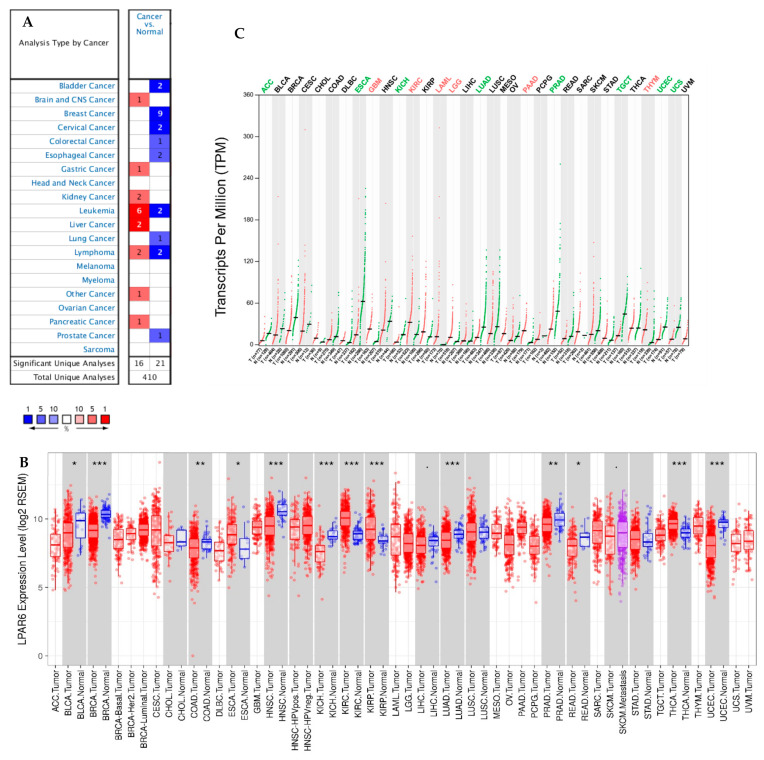
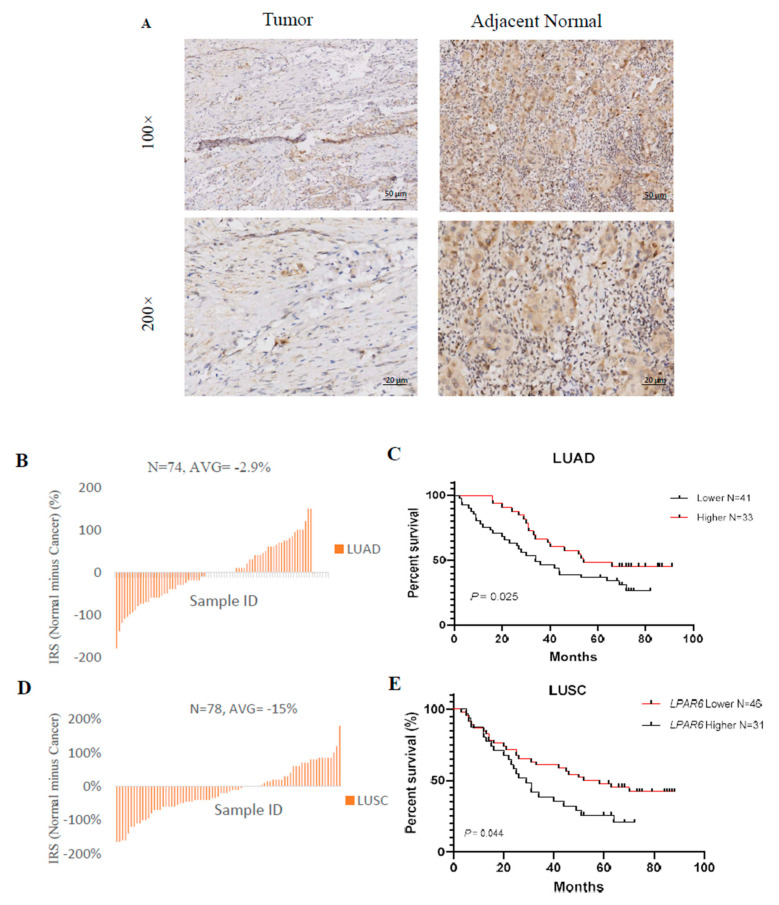
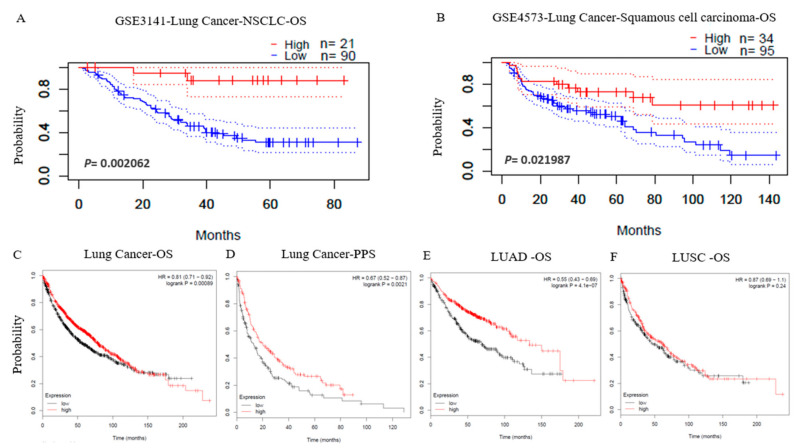
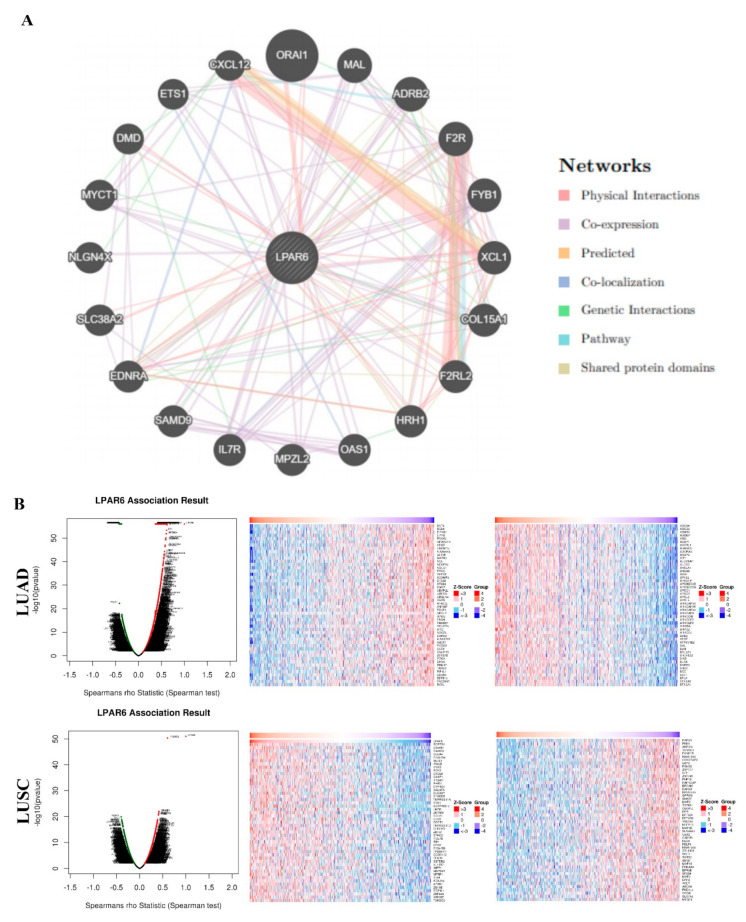
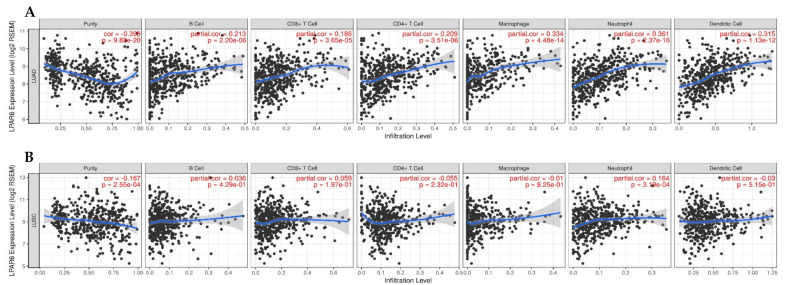
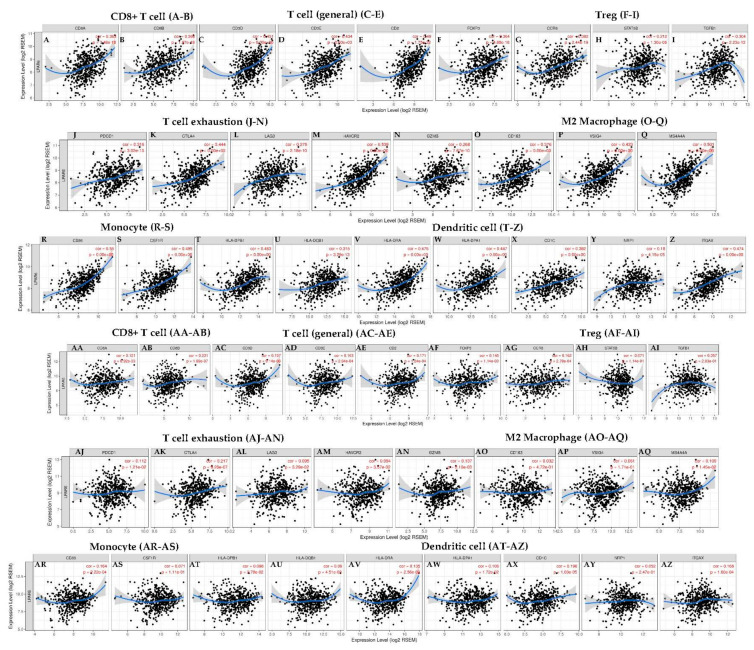
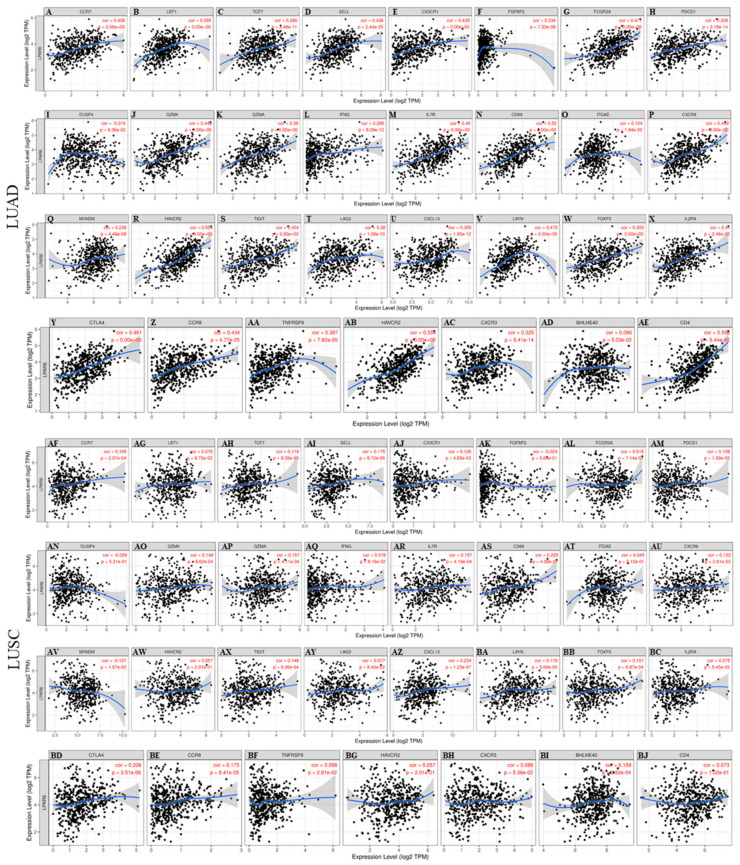
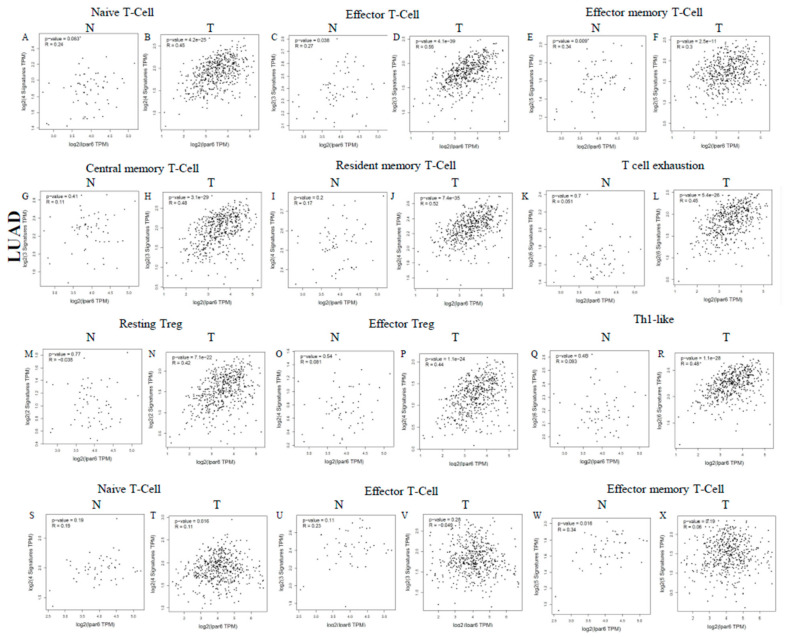
LPAR6 is the most recently determined G-protein-coupled receptor of the lysophosphatidic acid receptor, and very few of studies have demonstrated the performance of LPAR6 in cancers. Moreover, the relationship of LPAR6 to the potential of prognosis and tumor infiltration immune cells in different types of cancer are still unclarified. In this study, the mRNA expression of LPAR6 and its clinical characteristics were evaluated on various databases. The association between LPAR6 and immune infiltrates of various types of cancer were investigated via TIMER. Immunohistochemistry (IHC) for LPAR6 in lung adenocarcinoma (LUAD) and lung squamous cell carcinoma (LUSC) tissue microarray with patients' information was detected. We constructed a systematic prognostic landscape in a variety of types of cancer base on the expression level of mRNA. We enclosed that higher LPAR6 mRNA expression level was associated with better overall survival in some types of malignancy. Moreover, LPAR6 significantly affects the prognostic potential of various cancers in The Cancer Genome Atlas Program (TCGA), especially in lung cancer. Tissue microarrays of lung cancer patient cohorts demonstrated that a higher protein level of LPAR6 was correlated to better overall survival of LUAD rather than LUSC cohorts. Further research indicated that the underlying mechanism of this phenome might be the mRNA expression level of LPAR6 was positively associated to infiltrating statuses of devious immunocytes in LUAD rather than in LUSC, that is, LPAR6 expression potentially contributes to the activation and recruiting of T cells (CD8+ T, naive T, effector T cell) and NK cells and inactivates Tregs, decreases T cell exhaustion and regulates T-helper (Th) cells in LUAD. Our discovery implies that LPAR6 is associated with prognostic potential and immune-infiltrating levels in LUAD. These discoveries imply that LPAR6 could be a promising novel biomarker for indicating the prognosis potential of LUAD patients.
LPAR6 是最近确定的溶血磷脂酸受体的 G 蛋白偶联受体之一,很少有研究表明 LPAR6 在癌症中的作用。此外,LPAR6 与不同类型癌症中预后和肿瘤浸润免疫细胞的潜力之间的关系仍不清楚。在这项研究中,我们在多个数据库中评估了 LPAR6 的 mRNA 表达及其临床特征。通过 TIMER 研究了 LPAR6 与各种类型癌症中免疫浸润的关系。通过免疫组织化学(IHC)检测了带有患者信息的肺腺癌(LUAD)和肺鳞状细胞癌(LUSC)组织微阵列中 LPAR6 的表达。我们根据 mRNA 的表达水平构建了各种类型癌症的系统预后图谱。我们发现,在一些恶性肿瘤中,较高的 LPAR6 mRNA 表达水平与更好的总生存率相关。此外,LPAR6 显著影响 TCGA 中各种癌症的预后潜力,特别是在肺癌中。肺癌患者队列的组织微阵列表明,较高的 LPAR6 蛋白水平与 LUAD 患者的总生存率较好相关,而与 LUSC 患者的总生存率较差相关。进一步的研究表明,这种现象的潜在机制可能是 LPAR6 的 mRNA 表达水平与 LUAD 中浸润性免疫细胞的浸润状态呈正相关,而不是与 LUSC 中的浸润状态呈正相关,即 LPAR6 表达可能有助于 T 细胞(CD8+T、幼稚 T、效应 T 细胞)和 NK 细胞的激活和募集,并使 Tregs 失活,减少 T 细胞衰竭,并调节 LUAD 中的 Th 细胞。我们的发现表明 LPAR6 与 LUAD 的预后潜力和免疫浸润水平相关。这些发现表明,LPAR6 可能是预测 LUAD 患者预后潜力的有前途的新型生物标志物。