Zhuang Xiaona, Chen Zujing, Sun Xiaohong, Li Fangjun, Luo Junyi, Chen Ting, Xi Qianyun, Zhang Yongliang, Sun Jiajie
Guangdong Provincial Key Laboratory of Animal Nutrition Control, Guangdong Engineering & Research Center for Woody Fodder Plants, National Engineering Research Center for Breeding Swine Industry, Guangdong Laboratory for Lingnan Modern Agriculture, South China Agricultural University, Guangzhou, 510642, Guangdong, China.
BMC Vet Res. 2021 Nov 12;17(1):348. doi: 10.1186/s12917-021-03061-y.
Herbal tea residue (HTR) is generally considered to be the waste of herbal tea beverage production while it still retains rich nutrients and active substances. The main aim of the present study was to investigate the effect of fermentation technology on improving the quality of HTRs, and focus on the fermented HTR-induced alleviation of summer heat stress in fattening cattle.
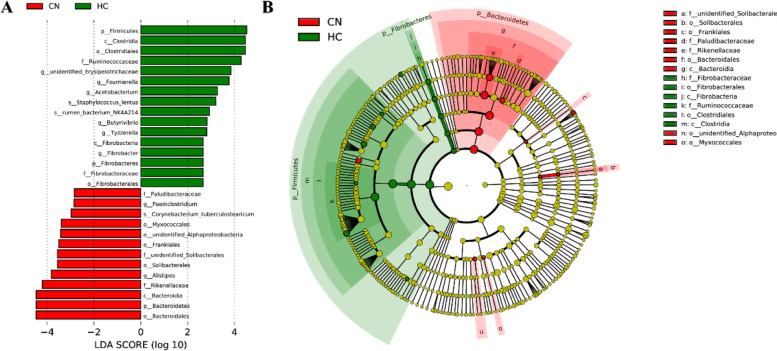
In this study, the waste HTR was fermented and then fed to a total of 45 fattening cattle that were divided into 3 groups (fermented HTR replaced 0, 15, 30% of the forage component of the diet), and the feeding experiment was lasted for 40 days. The physiological indexes, growth performance and fecal microbiota of fattening cattle were evaluated and results showed that fermented HTR could effectively reduce the respiratory rate and rectal temperature of fattening cattle under heat stress, increase the daily feed intake and daily gain, and improve the antioxidant content and blood immune index. In addition, we studied the fecal microbiota composition of 6 fattening cattle in control and 30% HTR substitution groups and found fermented HTR significantly changed the composition of fecal microbiota and increased microbial diversity, and correlation analysis suggested that the bacteria were closely related to fecal SCFA levels of fattening cattle under heat stress.
In this study, fermented HTR replaced 30% of the forage component of the diet that can change the intestine microorganisms, maintain health and alleviate the heat stress of fattening cattle.
凉茶渣(HTR)通常被认为是凉茶饮料生产的废弃物,但其仍保留着丰富的营养成分和活性物质。本研究的主要目的是探讨发酵技术对提高凉茶渣品质的影响,并重点关注发酵后的凉茶渣对育肥牛夏季热应激的缓解作用。
在本研究中,将废弃的凉茶渣进行发酵,然后喂给总共45头育肥牛,这些牛被分为3组(发酵后的凉茶渣替代日粮中0、15、30%的草料成分),饲养实验持续40天。对育肥牛的生理指标、生长性能和粪便微生物群进行了评估,结果表明,发酵后的凉茶渣能有效降低热应激下育肥牛的呼吸频率和直肠温度,增加日采食量和日增重,并提高抗氧化剂含量和血液免疫指标。此外,我们研究了对照组和30%凉茶渣替代组中6头育肥牛的粪便微生物群组成,发现发酵后的凉茶渣显著改变了粪便微生物群的组成并增加了微生物多样性,相关性分析表明这些细菌与热应激下育肥牛粪便中的短链脂肪酸水平密切相关。
在本研究中,发酵后的凉茶渣替代日粮中30%的草料成分可改变肠道微生物,维持健康并缓解育肥牛的热应激。