Jindahra Pavitra, Wongboonsin Kua, Wongboonsin Patcharawalai
Sasin School of Management, Chulalongkorn University, Sasa Patasala Building, Soi Chula 12, Phyathai Road, Pathumwan, Bangkok, 10330 Thailand.
ASEAN Studies Center, Chulalongkorn University, Pathumwan, Bangkok, 10330 Thailand.
J Popul Res (Canberra). 2022;39(4):567-588. doi: 10.1007/s12546-021-09276-y. Epub 2021 Nov 9.
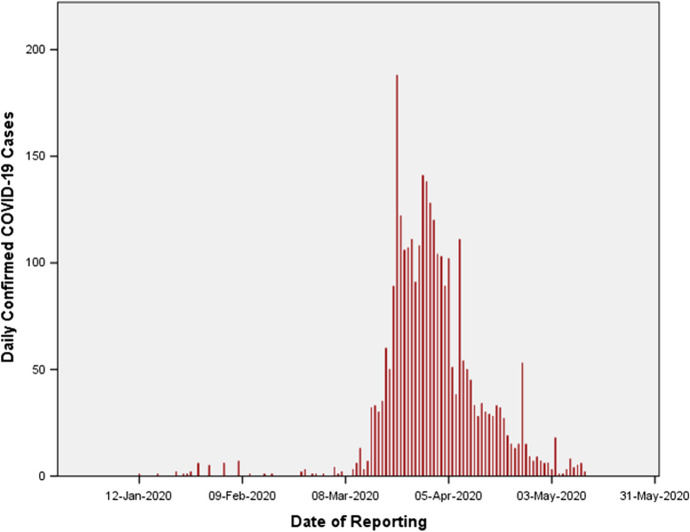
This study investigated the demographic heterogeneity of COVID-19 infection to reveal the role of age structure and gender on COVID-19 diffusion patterns, demonstrating that the infection is distributed unevenly across ages, genders, and outbreak times. Based on cluster analysis, we analysed the 4-month COVID-19 outbreak data (N = 3017) in Thailand from January 12 to May 12, 2020, covering the early to late outbreak period of the initial wave. Results revealed that there are 7 pertinent clusters of COVID-19 outbreaks. Infection risk was classified by age, sex, and confirmed infection period. Results showed that and clusters were at risk of becoming infected at the very beginning of the wave. , , and clusters were key clusters controlling transmission when spreading became pervasive. Relevant clusters addressed at the end of the wave included and clusters. Unlike other regions, the infection risk in Thailand is interestingly stronger among younger age clusters and male populations. Even though elderly individuals are at risk of becoming infected earlier than other clusters, the infection proportion was low. The findings provide new insights into the risk for COVID-19 infection.
本研究调查了新冠病毒感染的人口统计学异质性,以揭示年龄结构和性别在新冠病毒传播模式中的作用,结果表明感染在年龄、性别和疫情爆发时间上分布不均。基于聚类分析,我们分析了泰国在2020年1月12日至5月12日这4个月的新冠疫情数据(N = 3017),涵盖了第一波疫情从早期到晚期的爆发阶段。结果显示,新冠疫情爆发存在7个相关聚类。感染风险按年龄、性别和确诊感染时期进行分类。结果表明,聚类1和聚类2在疫情初期有感染风险。聚类3、聚类4和聚类5在传播变得普遍时是控制传播的关键聚类。在疫情后期涉及的相关聚类包括聚类6和聚类7。与其他地区不同的是,泰国年轻年龄聚类和男性人群中的感染风险明显更高。尽管老年人比其他聚类更早有感染风险,但感染比例较低。这些发现为新冠病毒感染风险提供了新的见解。