• 文献检索
  • 文档翻译
  • 深度研究
  • 学术资讯
  • Suppr Zotero 插件Zotero 插件
  • 邀请有礼
  • 套餐&价格
  • 历史记录
应用&插件
Suppr Zotero 插件Zotero 插件浏览器插件Mac 客户端Windows 客户端微信小程序
定价
高级版会员购买积分包购买API积分包
服务
文献检索文档翻译深度研究API 文档MCP 服务
关于我们
关于 Suppr公司介绍联系我们用户协议隐私条款
关注我们

Suppr 超能文献

核心技术专利:CN118964589B侵权必究
粤ICP备2023148730 号-1Suppr @ 2026

文献检索

告别复杂PubMed语法,用中文像聊天一样搜索,搜遍4000万医学文献。AI智能推荐,让科研检索更轻松。

立即免费搜索

文件翻译

保留排版,准确专业,支持PDF/Word/PPT等文件格式,支持 12+语言互译。

免费翻译文档

深度研究

AI帮你快速写综述,25分钟生成高质量综述,智能提取关键信息,辅助科研写作。

立即免费体验

马来西亚 COVID-19 流行病学描述。

Description of the COVID-19 epidemiology in Malaysia.

机构信息

Institute for Medical Research (IMR), National Institutes of Health (NIH), Ministry of Health Malaysia, Setia Alam, Malaysia.

Ministry of Health Malaysia, Putrajaya, Malaysia.

出版信息

Front Public Health. 2024 Mar 13;12:1289622. doi: 10.3389/fpubh.2024.1289622. eCollection 2024.

DOI:10.3389/fpubh.2024.1289622
PMID:38544725
原文链接:https://pmc.ncbi.nlm.nih.gov/articles/PMC10968133/
Abstract

INTRODUCTION

Since the COVID-19 pandemic began, it has spread rapidly across the world and has resulted in recurrent outbreaks. This study aims to describe the COVID-19 epidemiology in terms of COVID-19 cases, deaths, ICU admissions, ventilator requirements, testing, incidence rate, death rate, case fatality rate (CFR) and test positivity rate for each outbreak from the beginning of the pandemic in 2020 till endemicity of COVID-19 in 2022 in Malaysia.

METHODS

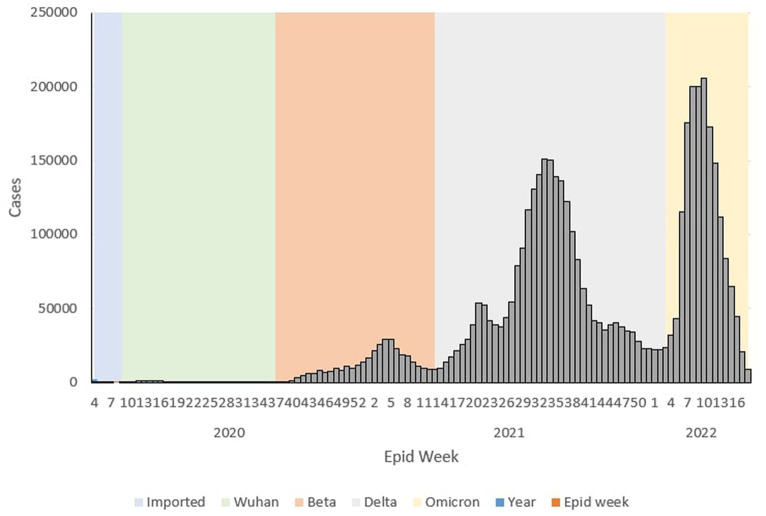
Data was sourced from the GitHub repository and the Ministry of Health's official COVID-19 website. The study period was from the beginning of the outbreak in Malaysia, which began during Epidemiological Week (Ep Wk) 4 in 2020, to the last Ep Wk 18 in 2022. Data were aggregated by Ep Wk and analyzed in terms of COVID-19 cases, deaths, ICU admissions, ventilator requirements, testing, incidence rate, death rate, case fatality rate (CFR) and test positivity rate by years (2020 and 2022) and for each outbreak of COVID-19.

RESULTS

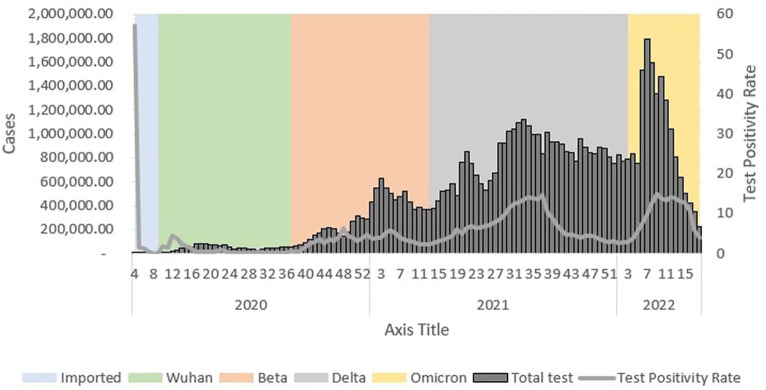
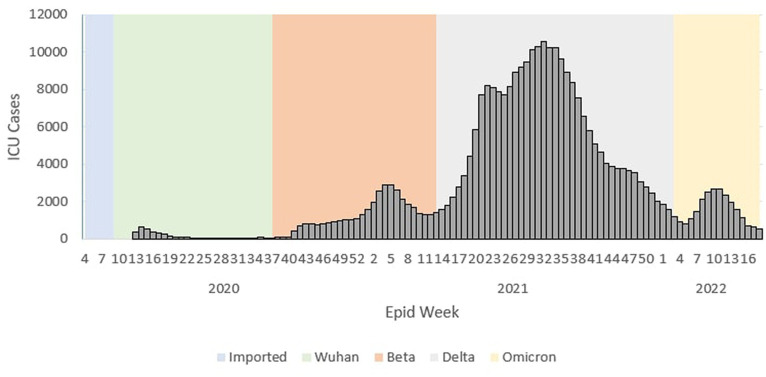
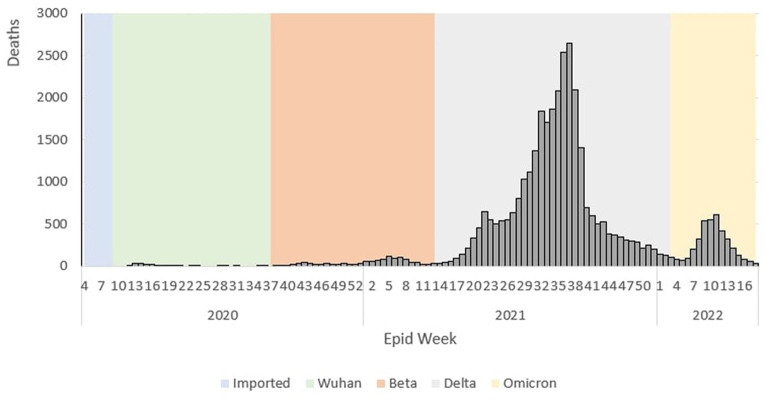
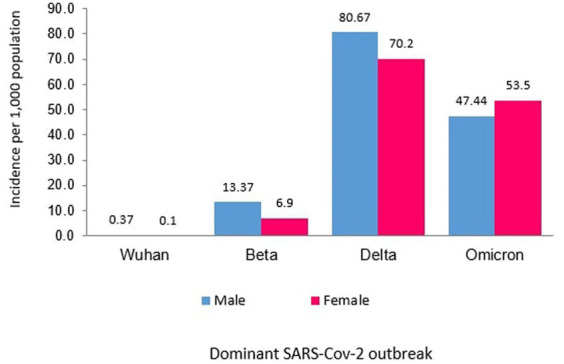
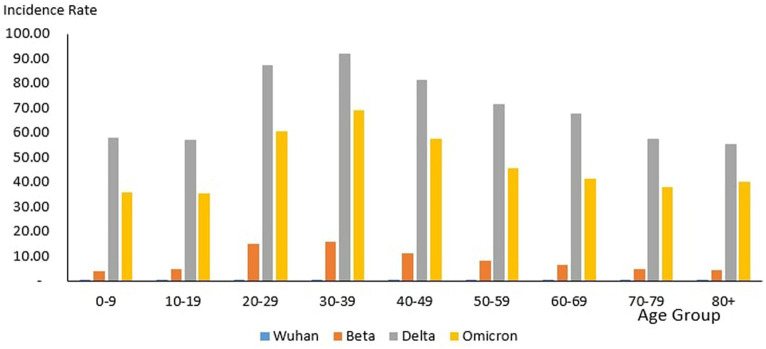
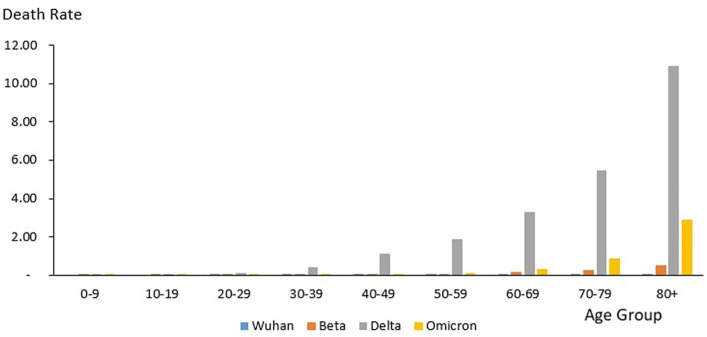
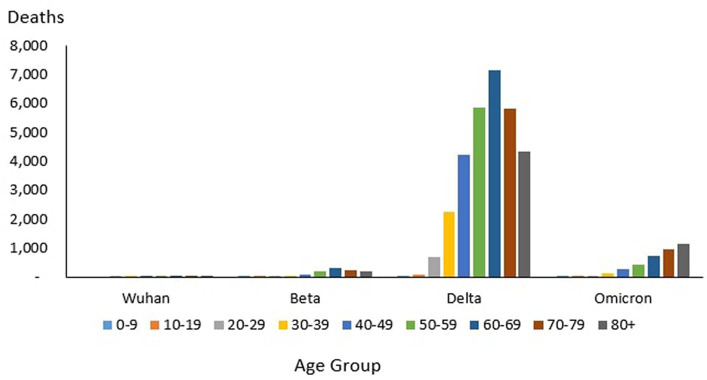
A total of 4,456,736 cases, 35,579 deaths and 58,906,954 COVID-19 tests were reported for the period from 2020 to 2022. The COVID-19 incidence rate, death rate, CFR and test positivity rate were reported at 1.085 and 0.009 per 1,000 populations, 0.80 and 7.57%, respectively, for the period from 2020 to 2022. Higher cases, deaths, testing, incidence/death rate, CFR and test positivity rates were reported in 2021 and during the Delta outbreak. This is evident by the highest number of COVID-19 cases, ICU admissions, ventilatory requirements and deaths observed during the Delta outbreak.

CONCLUSION

The Delta outbreak was the most severe compared to other outbreaks in Malaysia's study period. In addition, this study provides evidence that outbreaks of COVID-19, which are caused by highly virulent and transmissible variants, tend to be more severe and devastating if these outbreaks are not controlled early on. Therefore, close monitoring of key epidemiological indicators, as reported in this study, is essential in the control and management of future COVID-19 outbreaks in Malaysia.

摘要

简介

自 2020 年新冠疫情大流行开始以来,它已在全球迅速传播,并导致多次爆发。本研究旨在描述从 2020 年大流行开始到 2022 年新冠疫情成为地方病期间,马来西亚每次疫情的新冠病例、死亡、重症监护病房(ICU)入院、呼吸机需求、检测、发病率、死亡率、病死率(CFR)和检测阳性率。

方法

数据来自 GitHub 存储库和卫生部官方新冠网站。研究期间为马来西亚疫情爆发开始,即 2020 年第 4 周(Ep Wk 4),至 2022 年最后 18 周(Ep Wk 18)。数据按 Ep Wk 汇总,并按年份(2020 年和 2022 年)和每次新冠疫情分析新冠病例、死亡、ICU 入院、呼吸机需求、检测、发病率、死亡率、病死率(CFR)和检测阳性率。

结果

2020 年至 2022 年期间共报告了 4456736 例病例、35579 例死亡和 58906954 例新冠检测。2020 年至 2022 年期间,新冠发病率、死亡率、CFR 和检测阳性率分别为每 1000 人 1.085 和 0.009、0.80 和 7.57%。2021 年和 Delta 疫情期间报告的病例、死亡、检测、发病率/死亡率、CFR 和检测阳性率更高。Delta 疫情期间观察到的新冠病例、ICU 入院、呼吸机需求和死亡人数最多,证明了这一点。

结论

与马来西亚研究期间的其他疫情相比,Delta 疫情最为严重。此外,本研究提供了证据,表明由高毒力和高传染性变异引起的新冠疫情,如果不早期控制,往往更严重和具有破坏性。因此,密切监测本研究报告的关键流行病学指标,对于控制和管理马来西亚未来的新冠疫情至关重要。
https://cdn.ncbi.nlm.nih.gov/pmc/blobs/5ebc/10968133/4561ac2be2c4/fpubh-12-1289622-g013.jpg
https://cdn.ncbi.nlm.nih.gov/pmc/blobs/5ebc/10968133/c4ce70f5c898/fpubh-12-1289622-g001.jpg
https://cdn.ncbi.nlm.nih.gov/pmc/blobs/5ebc/10968133/fc2a72c27786/fpubh-12-1289622-g002.jpg
https://cdn.ncbi.nlm.nih.gov/pmc/blobs/5ebc/10968133/6f5763580d5b/fpubh-12-1289622-g003.jpg
https://cdn.ncbi.nlm.nih.gov/pmc/blobs/5ebc/10968133/198a1897e78a/fpubh-12-1289622-g004.jpg
https://cdn.ncbi.nlm.nih.gov/pmc/blobs/5ebc/10968133/43b3797cbe1c/fpubh-12-1289622-g005.jpg
https://cdn.ncbi.nlm.nih.gov/pmc/blobs/5ebc/10968133/87605825fea8/fpubh-12-1289622-g006.jpg
https://cdn.ncbi.nlm.nih.gov/pmc/blobs/5ebc/10968133/b07e2c82641a/fpubh-12-1289622-g007.jpg
https://cdn.ncbi.nlm.nih.gov/pmc/blobs/5ebc/10968133/5fef4970f4aa/fpubh-12-1289622-g008.jpg
https://cdn.ncbi.nlm.nih.gov/pmc/blobs/5ebc/10968133/7db5db3ddaf8/fpubh-12-1289622-g009.jpg
https://cdn.ncbi.nlm.nih.gov/pmc/blobs/5ebc/10968133/2ab04a06b2a0/fpubh-12-1289622-g010.jpg
https://cdn.ncbi.nlm.nih.gov/pmc/blobs/5ebc/10968133/d84f3bf63f2d/fpubh-12-1289622-g011.jpg
https://cdn.ncbi.nlm.nih.gov/pmc/blobs/5ebc/10968133/3baea929eb5d/fpubh-12-1289622-g012.jpg
https://cdn.ncbi.nlm.nih.gov/pmc/blobs/5ebc/10968133/4561ac2be2c4/fpubh-12-1289622-g013.jpg
https://cdn.ncbi.nlm.nih.gov/pmc/blobs/5ebc/10968133/c4ce70f5c898/fpubh-12-1289622-g001.jpg
https://cdn.ncbi.nlm.nih.gov/pmc/blobs/5ebc/10968133/fc2a72c27786/fpubh-12-1289622-g002.jpg
https://cdn.ncbi.nlm.nih.gov/pmc/blobs/5ebc/10968133/6f5763580d5b/fpubh-12-1289622-g003.jpg
https://cdn.ncbi.nlm.nih.gov/pmc/blobs/5ebc/10968133/198a1897e78a/fpubh-12-1289622-g004.jpg
https://cdn.ncbi.nlm.nih.gov/pmc/blobs/5ebc/10968133/43b3797cbe1c/fpubh-12-1289622-g005.jpg
https://cdn.ncbi.nlm.nih.gov/pmc/blobs/5ebc/10968133/87605825fea8/fpubh-12-1289622-g006.jpg
https://cdn.ncbi.nlm.nih.gov/pmc/blobs/5ebc/10968133/b07e2c82641a/fpubh-12-1289622-g007.jpg
https://cdn.ncbi.nlm.nih.gov/pmc/blobs/5ebc/10968133/5fef4970f4aa/fpubh-12-1289622-g008.jpg
https://cdn.ncbi.nlm.nih.gov/pmc/blobs/5ebc/10968133/7db5db3ddaf8/fpubh-12-1289622-g009.jpg
https://cdn.ncbi.nlm.nih.gov/pmc/blobs/5ebc/10968133/2ab04a06b2a0/fpubh-12-1289622-g010.jpg
https://cdn.ncbi.nlm.nih.gov/pmc/blobs/5ebc/10968133/d84f3bf63f2d/fpubh-12-1289622-g011.jpg
https://cdn.ncbi.nlm.nih.gov/pmc/blobs/5ebc/10968133/3baea929eb5d/fpubh-12-1289622-g012.jpg
https://cdn.ncbi.nlm.nih.gov/pmc/blobs/5ebc/10968133/4561ac2be2c4/fpubh-12-1289622-g013.jpg

相似文献

1
Description of the COVID-19 epidemiology in Malaysia.马来西亚 COVID-19 流行病学描述。
Front Public Health. 2024 Mar 13;12:1289622. doi: 10.3389/fpubh.2024.1289622. eCollection 2024.
2
The Epidemiology of COVID-19 in Malaysia.马来西亚的新冠肺炎流行病学
Lancet Reg Health West Pac. 2021 Dec;17:100295. doi: 10.1016/j.lanwpc.2021.100295. Epub 2021 Oct 21.
3
The epidemiology of COVID-19 in ten Southeast Asian countries.COVID-19 在十个东南亚国家的流行病学情况。
Med J Malaysia. 2021 Nov;76(6):783-791.
4
The computation of case fatality rate for novel coronavirus (COVID-19) based on Bayes theorem: An observational study.基于贝叶斯定理的新型冠状病毒(COVID-19)病死率计算:一项观察性研究。
Medicine (Baltimore). 2020 May 22;99(21):e19925. doi: 10.1097/MD.0000000000019925.
5
COVID-19 Epidemic in Malaysia: Epidemic Progression, Challenges, and Response.马来西亚的 COVID-19 疫情:疫情进展、挑战和应对。
Front Public Health. 2021 May 7;9:560592. doi: 10.3389/fpubh.2021.560592. eCollection 2021.
6
Meta-analysis and comprehensive study of coronavirus outbreaks: SARS, MERS and COVID-19.冠状病毒爆发的荟萃分析和综合研究:SARS、MERS 和 COVID-19。
J Infect Public Health. 2021 Aug;14(8):1051-1064. doi: 10.1016/j.jiph.2021.06.007. Epub 2021 Jun 17.
7
Assessing the Spatiotemporal Spread Pattern of the COVID-19 Pandemic in Malaysia.评估马来西亚新冠疫情的时空传播模式。
Front Public Health. 2022 Mar 4;10:836358. doi: 10.3389/fpubh.2022.836358. eCollection 2022.
8
Severity of COVID-19 among Residents in Aged Care Facilities in Victoria, Australia: A Retrospective Cohort Study Comparing the Delta and Omicron Epidemic Periods.澳大利亚维多利亚州老年护理机构居民中 COVID-19 的严重程度:比较德尔塔和奥密克戎流行期的回顾性队列研究。
J Am Med Dir Assoc. 2023 Apr;24(4):434-440.e5. doi: 10.1016/j.jamda.2023.01.006. Epub 2023 Jan 20.
9
The public health response to a Plasmodium malariae outbreak in Penampang district, Sabah during a COVID-19 movement control order.在新冠肺炎疫情行动管制令期间,沙巴州必南邦区对间日疟原虫疫情的公共卫生应对措施。
Malar J. 2023 Oct 3;22(1):292. doi: 10.1186/s12936-023-04693-1.
10
COVID-19, Australia: Epidemiology Report 17 (Fortnightly reporting period ending 24 May 2020).2019冠状病毒病,澳大利亚:流行病学报告第17期(截至2020年5月24日的两周报告期)
Commun Dis Intell (2018). 2020 Jun 5;44. doi: 10.33321/cdi.2020.44.51.

本文引用的文献

1
A consensus of evidence: The role of SPI-M-O in the UK COVID-19 response.证据共识:SPI-M-O在英国应对新冠疫情中的作用
Adv Biol Regul. 2022 Dec;86:100918. doi: 10.1016/j.jbior.2022.100918. Epub 2022 Oct 1.
2
The Effects of Meteorological Factors on Dengue Cases in Malaysia.气象因素对马来西亚登革热病例的影响。
Int J Environ Res Public Health. 2022 May 26;19(11):6449. doi: 10.3390/ijerph19116449.
3
COVID-19 double jeopardy: the overwhelming impact of the social determinants of health.COVID-19 的双重危害:健康社会决定因素的压倒性影响。
Int J Equity Health. 2022 May 24;21(1):76. doi: 10.1186/s12939-022-01629-0.
4
The Third Wave: Comparing Seasonal Trends in COVID-19 Patient Data at a Large Hospital System in New York City.第三波:纽约市一家大型医院系统中新冠病毒疾病患者数据的季节性趋势比较
Crit Care Explor. 2022 Mar 1;4(3):e0653. doi: 10.1097/CCE.0000000000000653. eCollection 2022 Mar.
5
Demographic and initial outbreak patterns of COVID-19 in Thailand.泰国新冠肺炎的人口统计学特征及初期疫情模式。
J Popul Res (Canberra). 2022;39(4):567-588. doi: 10.1007/s12546-021-09276-y. Epub 2021 Nov 9.
6
Emergence of B.1.524(G) SARS-CoV-2 in Malaysia during the third COVID-19 epidemic wave.马来西亚在第三波 COVID-19 疫情期间出现的 B.1.524(G) 新型冠状病毒。
Sci Rep. 2021 Nov 11;11(1):22105. doi: 10.1038/s41598-021-01223-4.
7
Impact of SARS-CoV-2 delta variant (B.1.617.2) in surging second wave of COVID-19 and efficacy of vaccines in tackling the ongoing pandemic.严重急性呼吸综合征冠状病毒2型(SARS-CoV-2)德尔塔变异株(B.1.617.2)在新冠疫情第二波激增中的影响以及疫苗在应对当前大流行中的效力
Hum Vaccin Immunother. 2021 Nov 2;17(11):4126-4127. doi: 10.1080/21645515.2021.1963601. Epub 2021 Sep 2.
8
Clinical and Virological Features of Severe Acute Respiratory Syndrome Coronavirus 2 (SARS-CoV-2) Variants of Concern: A Retrospective Cohort Study Comparing B.1.1.7 (Alpha), B.1.351 (Beta), and B.1.617.2 (Delta).关注的严重急性呼吸综合征冠状病毒 2(SARS-CoV-2)变异株的临床和病毒学特征:比较 B.1.1.7(阿尔法)、B.1.351(贝塔)和 B.1.617.2(德尔塔)的回顾性队列研究。
Clin Infect Dis. 2022 Aug 24;75(1):e1128-e1136. doi: 10.1093/cid/ciab721.
9
New waves, new variants, old inequity: a continuing COVID-19 crisis.新一波疫情、新变种、旧有的不平等:持续的新冠疫情危机。
BMJ Glob Health. 2021 Aug;6(8). doi: 10.1136/bmjgh-2021-007031.
10
COVID-19: Unmasking Emerging SARS-CoV-2 Variants, Vaccines and Therapeutic Strategies.新型冠状病毒肺炎:揭开新兴的严重急性呼吸系统综合征冠状病毒 2 变种、疫苗和治疗策略的神秘面纱。
Biomolecules. 2021 Jul 6;11(7):993. doi: 10.3390/biom11070993.