Mooney Scott W J, Alam Nazia M, Prusky Glen T
Burke Neurological Institute, White Plains, NY, United States.
Blythedale Children's Hospital, Valhalla, NY, United States.
Front Hum Neurosci. 2021 Oct 29;15:737409. doi: 10.3389/fnhum.2021.737409. eCollection 2021.
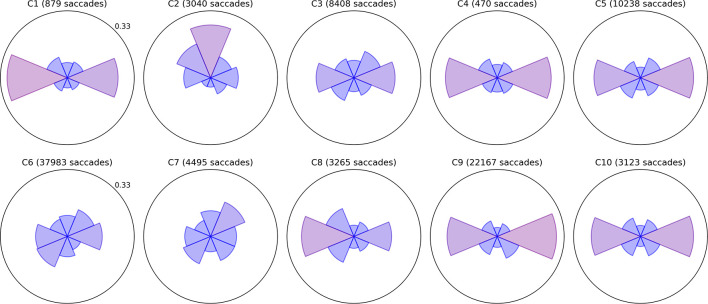
Visual deficits in children that result from brain injury, including cerebral/cortical visual impairment (CVI), are difficult to assess through conventional methods due to their frequent co-occurrence with cognitive and communicative disabilities. Such impairments hence often go undiagnosed or are only determined through subjective evaluations of gaze-based reactions to different forms, colors, and movements, which limits any potential for remediation. Here, we describe a novel approach to grading visual health based on eye movements and evidence from gaze-based tracking behaviors. Our approach-the "Visual Ladder"-reduces reliance on the user's ability to attend and communicate. The Visual Ladder produces metrics that quantify spontaneous saccades and pursuits, assess visual field responsiveness, and grade spatial visual function from tracking responses to moving stimuli. We used the Ladder to assess fourteen hospitalized children aged 3 to 18 years with a diverse range of visual impairments and causes of brain injury. Four children were excluded from analysis due to incompatibility with the eye tracker (e.g., due to severe strabismus). The remaining ten children-including five non-verbal children-were tested multiple times over periods ranging from 2 weeks to 9 months, and all produced interpretable outcomes on at least three of the five visual tasks. The results suggest that our assessment tasks are viable in non-communicative children, provided their eyes can be tracked, and hence are promising tools for use in a larger clinical study. We highlight and discuss informative outcomes exhibited by each child, including directional biases in eye movements, pathological nystagmus, visual field asymmetries, and contrast sensitivity deficits. Our findings indicate that these methodologies will enable the rapid, objective classification and grading of visual impairments in children with CVI, including non-verbal children who are currently precluded from most vision assessments. This would provide a much-needed differential diagnostic and prognostic tool for CVI and other impairments of the visual system, both ocular and cerebral.
脑损伤导致的儿童视觉障碍,包括脑性/皮质性视觉损害(CVI),由于其经常与认知和交流障碍同时出现,很难通过传统方法进行评估。因此,此类损伤往往未被诊断出来,或者仅通过对不同形状、颜色和运动的基于注视的反应进行主观评估来确定,这限制了任何补救的可能性。在此,我们描述了一种基于眼动和基于注视的跟踪行为证据来对视觉健康进行分级的新方法。我们的方法——“视觉阶梯”——减少了对用户注意力和交流能力的依赖。“视觉阶梯”产生的指标可以量化自发扫视和追踪、评估视野反应性,并根据对移动刺激的跟踪反应对空间视觉功能进行分级。我们使用“阶梯”对14名年龄在3至18岁之间、患有各种视觉障碍和脑损伤原因的住院儿童进行了评估。由于与眼动仪不兼容(例如,由于严重斜视),有4名儿童被排除在分析之外。其余10名儿童——包括5名非言语儿童——在2周至9个月的时间内进行了多次测试,并且在五项视觉任务中的至少三项上都产生了可解释的结果。结果表明,我们的评估任务对于无法交流的儿童是可行的,前提是他们的眼睛可以被跟踪,因此是用于更大规模临床研究的有前景的工具。我们突出并讨论了每个儿童表现出的信息性结果,包括眼动的方向偏差、病理性眼球震颤、视野不对称和对比敏感度缺陷。我们的研究结果表明,这些方法将能够对患有CVI的儿童,包括目前被大多数视力评估排除在外的非言语儿童的视觉障碍进行快速、客观的分类和分级。这将为CVI和其他视觉系统损伤(包括眼部和脑部损伤)提供急需的鉴别诊断和预后工具。