Mesa Monica, Becerra Natalia Y
Materials Science Group, Institute of Chemistry, University of Antioquia, Medellín 050010, Colombia.
Tissue Engineering and Cell Therapy Group, Faculty of Medicine, University of Antioquia, Medellín 050010, Colombia.
Int J Biomater. 2021 Nov 3;2021:6857204. doi: 10.1155/2021/6857204. eCollection 2021.
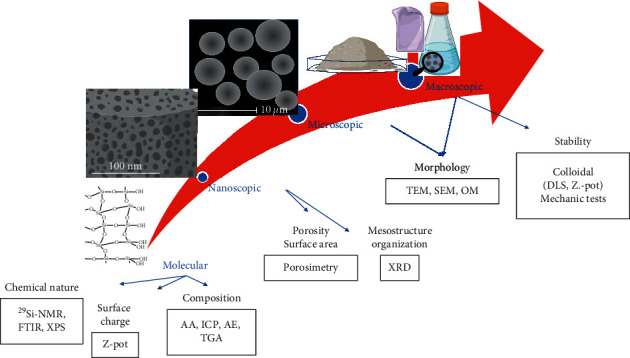
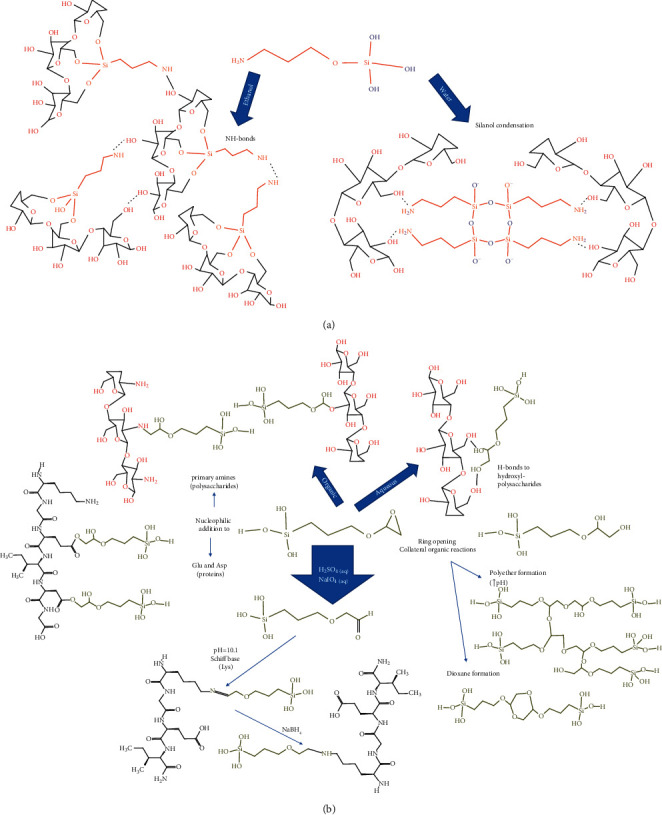
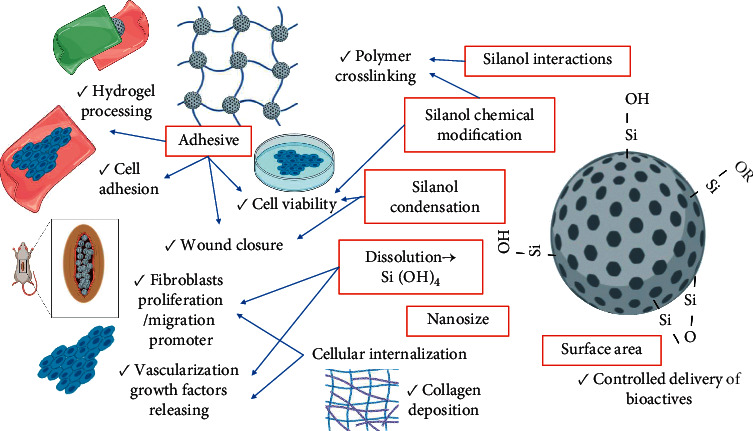
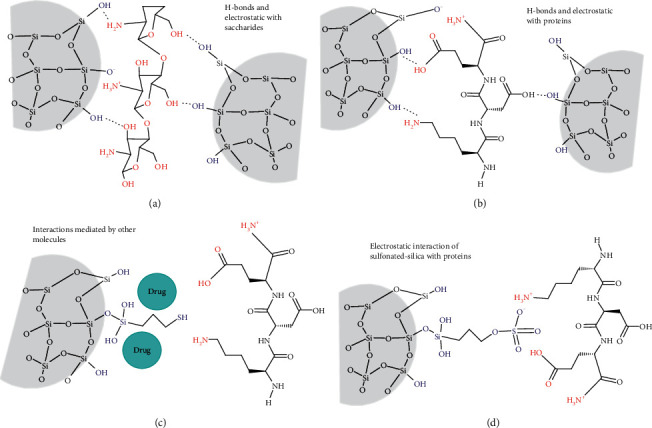
Multifunctional and biocompatible hydrogels are on the focus of wound healing treatments. Protein and polysaccharides silica hybrids are interesting wound dressing alternatives. The objective of this review is to answer questions such as why silica for wound dressings reinforcement? What are the roles and contributions of silane precursors and silica on the functional properties of hydrogel wound dressings? The effects of tailoring the porous, morphological, and chemical characteristics of synthetic silicas on the bioactivity of hybrid wound dressings hydrogels are explored in the first part of the review. This is followed by a commented review of the mechanisms of silica/protein and silica/polysaccharide interactions and their impact on the barrier, scaffold, and delivery matrix functions of the derived hydrogels. Such information has important consequences for wound healing and paves the way to multidisciplinary researches on the production, processing, and biomedical application of this kind of hybrid materials.
多功能且生物相容的水凝胶是伤口愈合治疗的焦点。蛋白质和多糖二氧化硅杂化物是有趣的伤口敷料替代品。本综述的目的是回答诸如为何使用二氧化硅增强伤口敷料?硅烷前体和二氧化硅对水凝胶伤口敷料的功能特性有哪些作用和贡献?在综述的第一部分探讨了调整合成二氧化硅的多孔、形态和化学特性对杂化伤口敷料水凝胶生物活性的影响。接下来是对二氧化硅/蛋白质和二氧化硅/多糖相互作用机制及其对衍生水凝胶的屏障、支架和递送基质功能的影响的评论性综述。此类信息对伤口愈合具有重要意义,并为这类杂化材料的生产、加工和生物医学应用的多学科研究铺平了道路。