Umlazi Clinical Research Unit, Centre for the AIDS Programme of Research of South Africa, University of KwaZulu-Natal, Durban, South Africa.
Department of Obstetrics and Gynaecology, University of KwaZulu-Natal, Durban, South Africa.
PLoS One. 2021 Nov 15;16(11):e0255652. doi: 10.1371/journal.pone.0255652. eCollection 2021.
Young South African women are faced with a dual epidemic of HIV and obesity, placing them at a high risk of developing atherosclerotic cardiovascular disease (CVD). We sought to determine the prevalence of CVD risk factors in a cohort of reproductive-aged South African women living with HIV (WLHIV).
While the main purpose of an ongoing intervention study is the reduction of cardiovascular disease through the integration of CVD screening and prevention in the HIV management plan for women of reproductive age (ISCHeMiA trial), we present the prevalence of risk factors for CVD in this cohort of young women at baseline. Sociodemographic, conventional CVD risk factors, HIV-related factors and self body image perception were assessed through study questionnaires and standardized clinical and laboratory procedures.
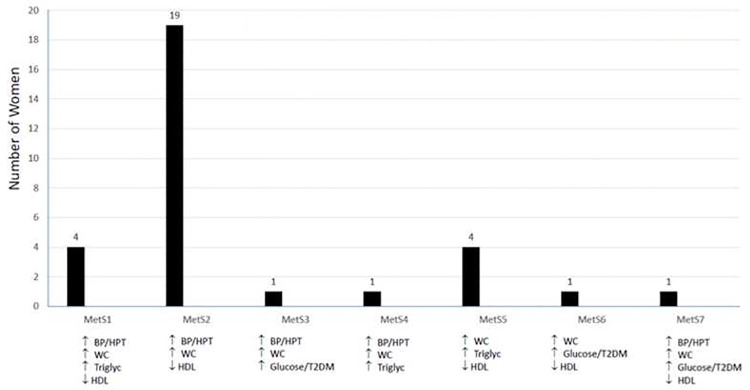
Of the 372 WLHIV enrolled from November 2018 to May 2019, 97% had received efavirenz-based antiretroviral treatment (ART) for at least 1 year and 67.5% (248/367) of women were overweight or obese at the time of enrolment. The prevalence of metabolic syndrome was 17.6% (95%CI 11.6-22.8) at a median age of 35 years (IQR 30.5-40.5). A significant proportion of women had abnormally low levels of high-density lipoprotein (43.2%, 80/185) and elevated levels of high sensitivity C-reactive protein (59.5%, 110/185). Seventy five percent of overweight women with an increased waist circumference reported to be satisfied with their body image.
The high prevalence of metabolic syndrome, obesity and elevated markers of inflammation in young South African WLHIV, underscores the need for a proactive integrated management approach to prevent atherosclerotic cardiovascular disease in low and middle income settings.
南非年轻女性面临着 HIV 和肥胖的双重流行,使她们处于发生动脉粥样硬化性心血管疾病(CVD)的高风险中。我们旨在确定生活在 HIV 中的育龄南非女性(ISCHeMiA 试验)队列中 CVD 危险因素的流行情况。
虽然一项正在进行的干预研究的主要目的是通过将 CVD 筛查和预防纳入育龄女性的 HIV 管理计划来降低 CVD 的发生,但我们在此年轻女性队列中介绍了基线时 CVD 危险因素的流行情况。通过研究问卷和标准化的临床及实验室程序评估了社会人口统计学、传统 CVD 危险因素、HIV 相关因素和自我身体形象感知。
从 2018 年 11 月至 2019 年 5 月期间,共纳入了 372 名 HIV 阳性育龄妇女,其中 97%的人至少接受了 1 年的依非韦伦为基础的抗逆转录病毒治疗(ART),67.5%(248/367)的妇女在入组时超重或肥胖。代谢综合征的患病率为 17.6%(95%CI 11.6-22.8),中位年龄为 35 岁(IQR 30.5-40.5)。相当一部分妇女高密度脂蛋白水平异常降低(43.2%,80/185),高敏 C 反应蛋白水平升高(59.5%,110/185)。75%的超重且腰围增加的妇女对自己的身体形象感到满意。
南非年轻 HIV 阳性育龄妇女中代谢综合征、肥胖和炎症标志物升高的高患病率突出表明,在中低收入国家需要采取积极主动的综合管理方法来预防动脉粥样硬化性心血管疾病。