Milne R John, Delcea Camelia, Cotfas Liviu-Adrian, Ioanas Corina
David D. Reh School of BusinessClarkson University Potsdam NY 13699 USA.
Department of Economic Informatics and CyberneticsBucharest University of Economic Studies 010552 Bucharest Romania.
IEEE Access. 2020 Aug 11;8:151650-151667. doi: 10.1109/ACCESS.2020.3015736. eCollection 2020.
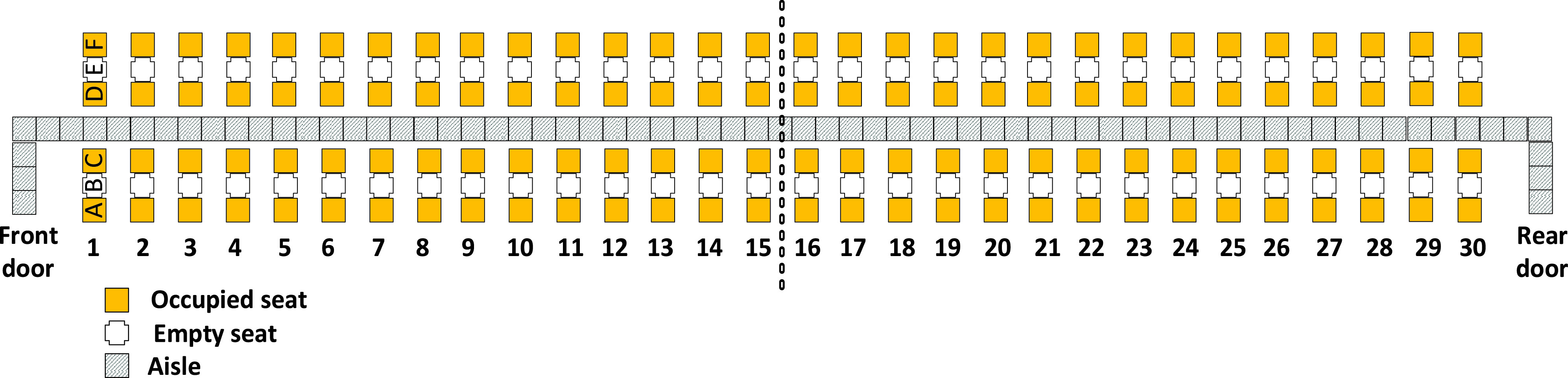
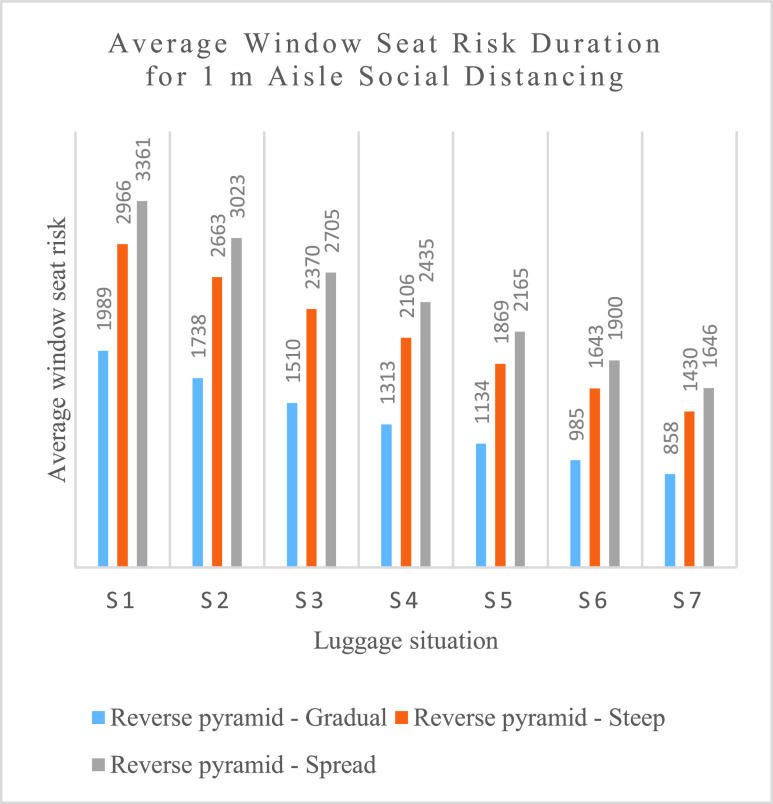
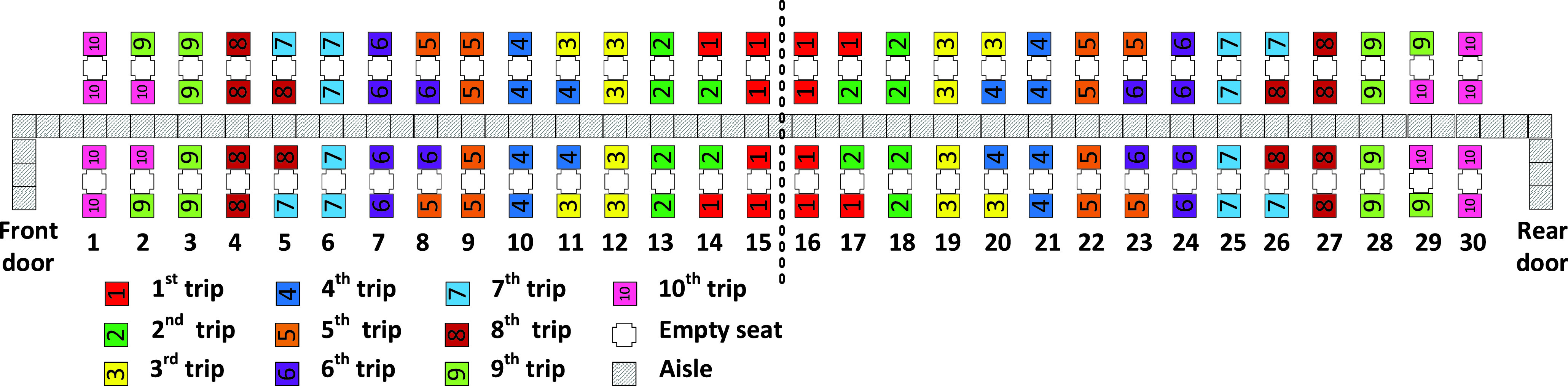
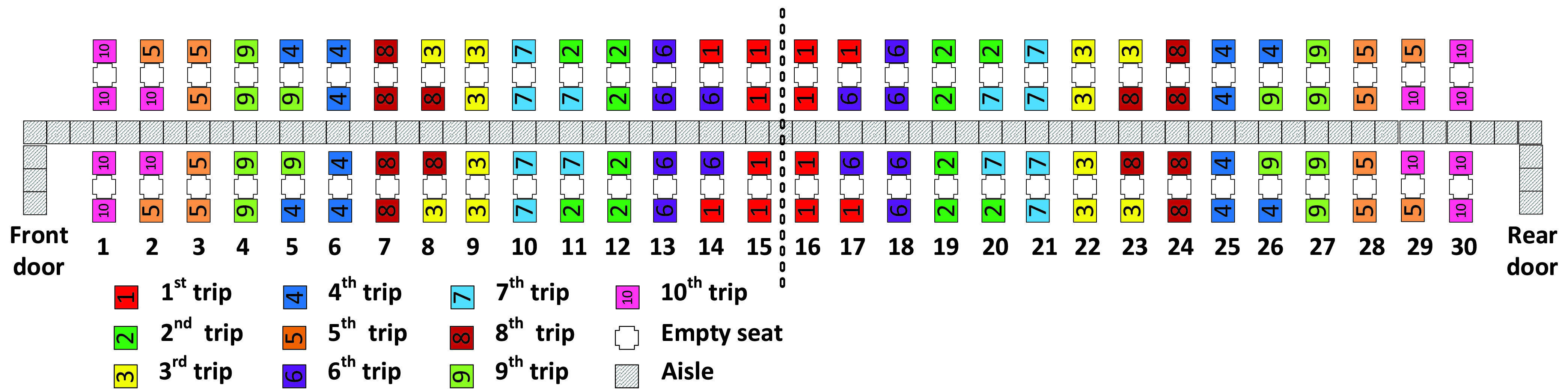
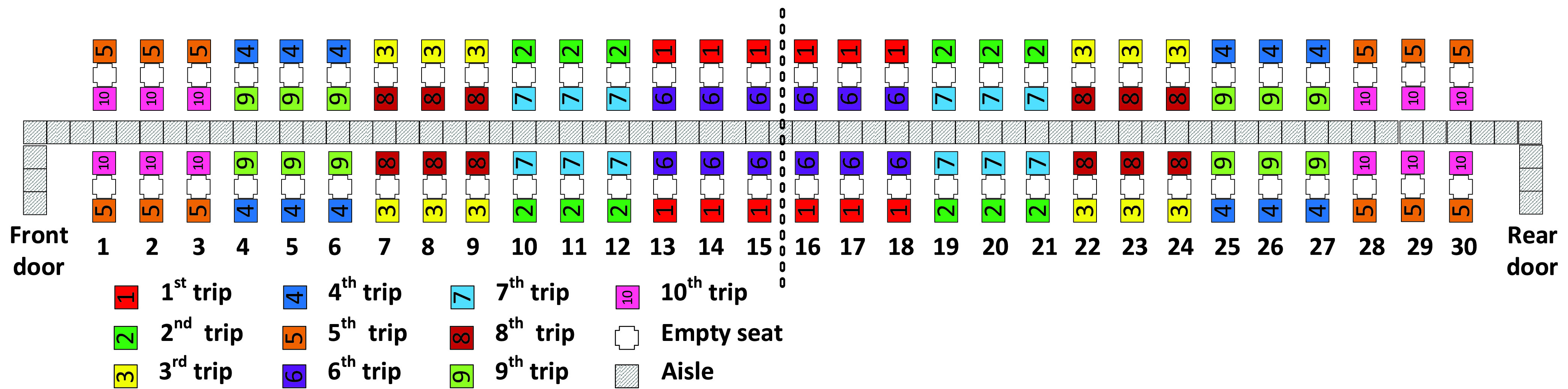
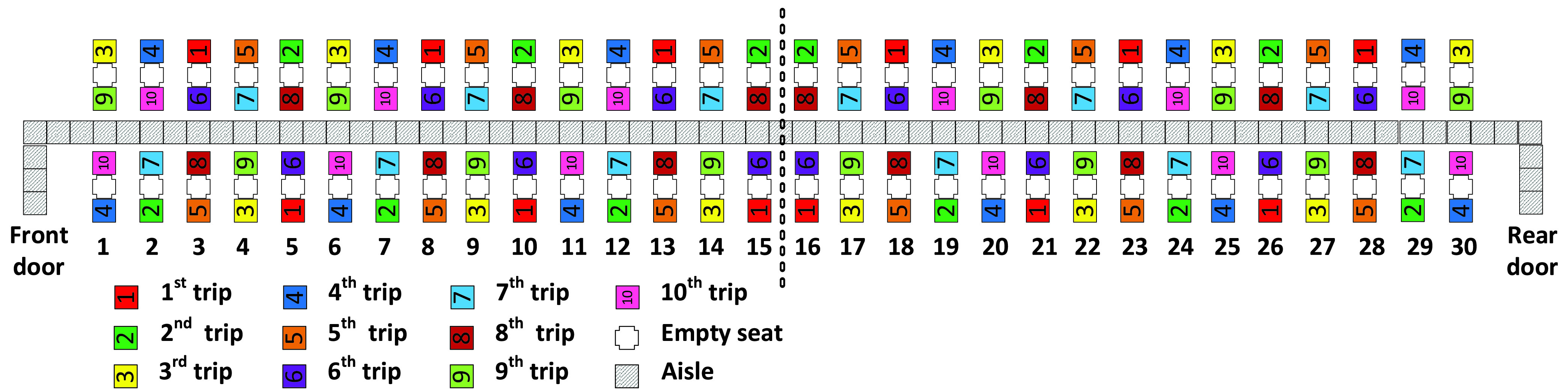
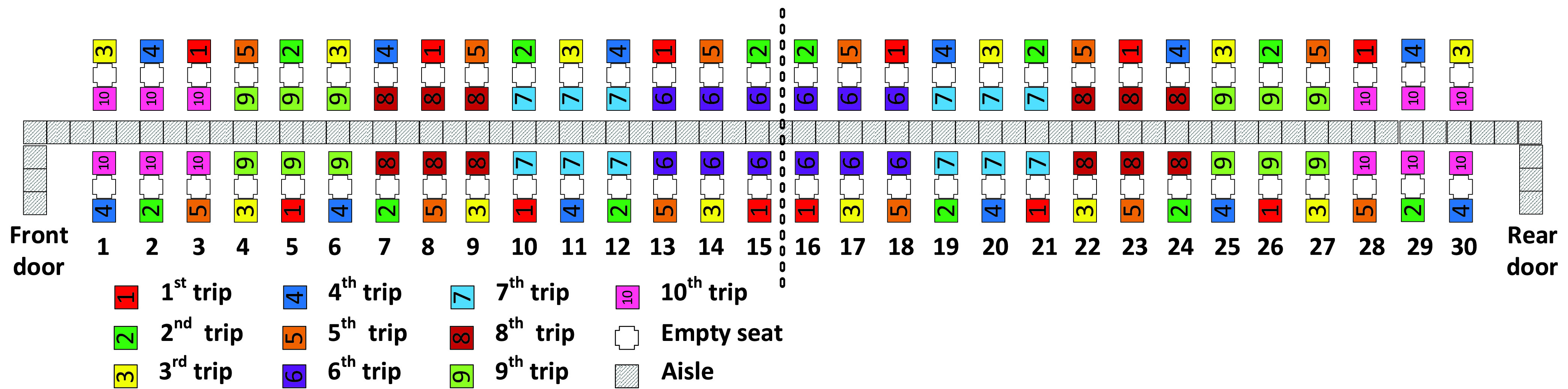
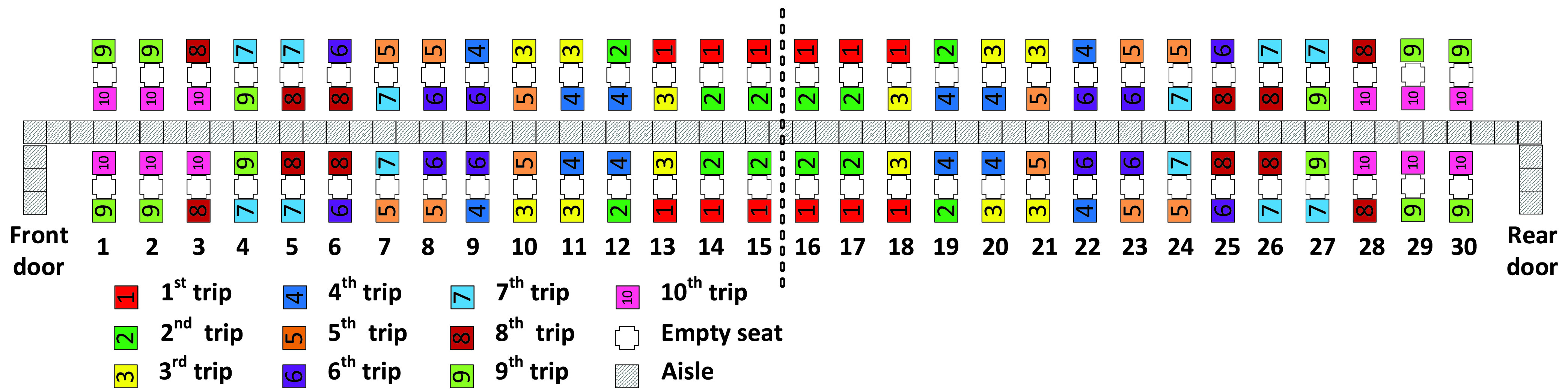
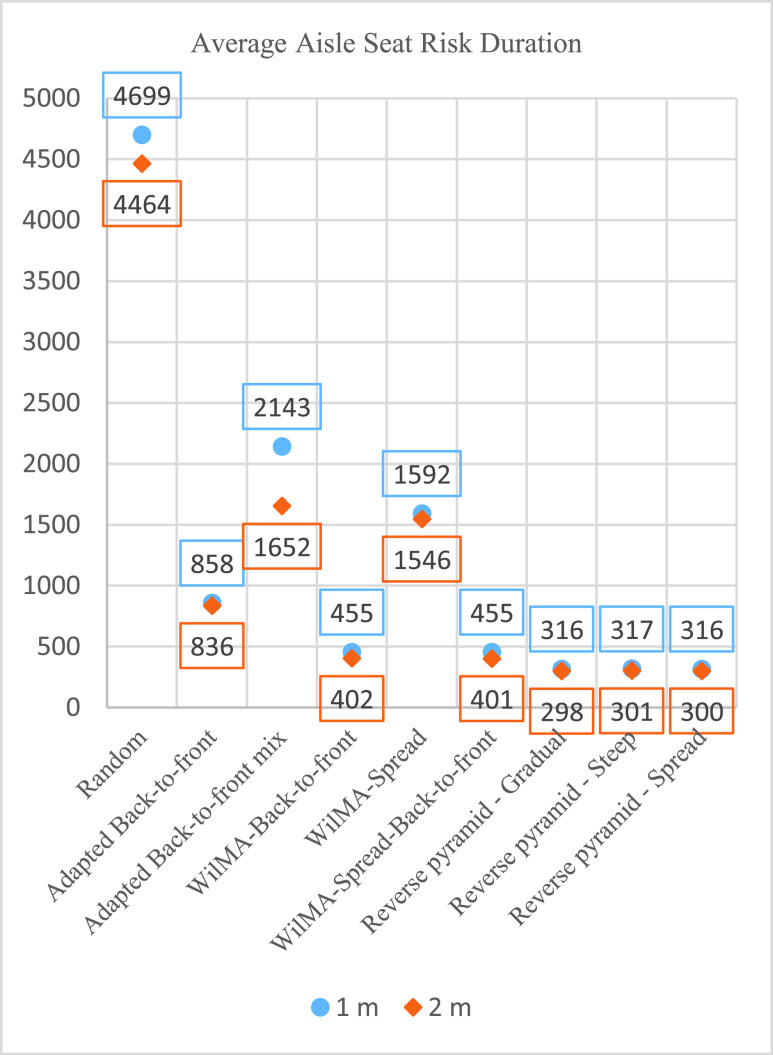
Social distancing reduces the risk of people becoming infected with the novel coronavirus (SARS-CoV-2). When passengers are transported from an airport terminal to an airplane using apron buses, safe social distancing during pandemic times reduces the capacity of the apron buses and has led to the practice of airlines keeping the middle seats of the airplanes unoccupied. This article adapts classical boarding methods so that they may be used with social distancing and apron buses. We conduct stochastic simulation experiments to assess nine adaptations of boarding methods according to four performance metrics. Three of the metrics are related to the risk of the virus spreading to passengers during boarding. The fourth metric is the time to complete boarding of the two-door airplane when apron bus transport passengers to the airplane. Our experiments assume that passengers advancing to their airplane seats are separated by an aisle social distance of 1 m or 2 m. Numerical results indicate that the three variations (adaptations) of the Reverse pyramid method are the best candidates for airlines to consider in this socially distanced context. The particular adaptation to use depends on an airline's relative preference for having short boarding times versus a reduced risk of later boarding passengers passing (and thereby possibly infecting) previously seated window seat passengers. If an airline considers the latter risk to be unimportant, then the Reverse pyramid - Spread method would be the best choice because it provides the fastest time to board the airplane and is tied for the best values for the other two health risk measures.
保持社交距离可降低人们感染新型冠状病毒(SARS-CoV-2)的风险。当使用停机坪巴士将乘客从机场候机楼运送到飞机时,在疫情期间保持安全社交距离会降低停机坪巴士的载客量,这导致航空公司采取让飞机中间座位空着的做法。本文对传统登机方法进行了调整,使其可用于保持社交距离和使用停机坪巴士的情况。我们进行了随机模拟实验,根据四个性能指标评估了九种登机方法的调整方式。其中三个指标与登机过程中病毒传播给乘客的风险有关。第四个指标是当停机坪巴士将乘客运送到飞机时,双门飞机完成登机所需的时间。我们的实验假设前往飞机座位的乘客之间在过道上保持1米或2米的社交距离。数值结果表明,倒金字塔法的三种变体(调整方式)是航空公司在这种保持社交距离的情况下应考虑的最佳选择。具体使用哪种调整方式取决于航空公司相对更倾向于登机时间短还是降低后登机乘客经过(并因此可能感染)先前就座靠窗座位乘客的风险。如果航空公司认为后一种风险不重要,那么倒金字塔 - 分散法将是最佳选择,因为它提供了最快的登机时间,并且在其他两项健康风险指标方面并列最佳。