Cao Jiangang, Ding Han, Shang Jun, Ma Lei, Wang Qi, Feng Shiqing
Department of Orthopedics, Tianjin Medical University General Hospital, Tianjin, China.
International Science and Technology Cooperation Base of Spinal Cord Injury, Tianjin Key Laboratory of Spine and Spinal Cord Injury, Department of Orthopedics, Tianjin Medical University General Hospital, Tianjin, China.
Ann Transl Med. 2021 Oct;9(20):1525. doi: 10.21037/atm-21-4566.
The incidence of osteoarthritis (OA), a chronic degenerative disease, is increasing every year. There is no effective clinical treatment for OA and the pathological mechanism remains unclear. Early diagnosis is an effective strategy to control the progress of OA. In this study, we aimed to identify potential early diagnostic biomarkers.
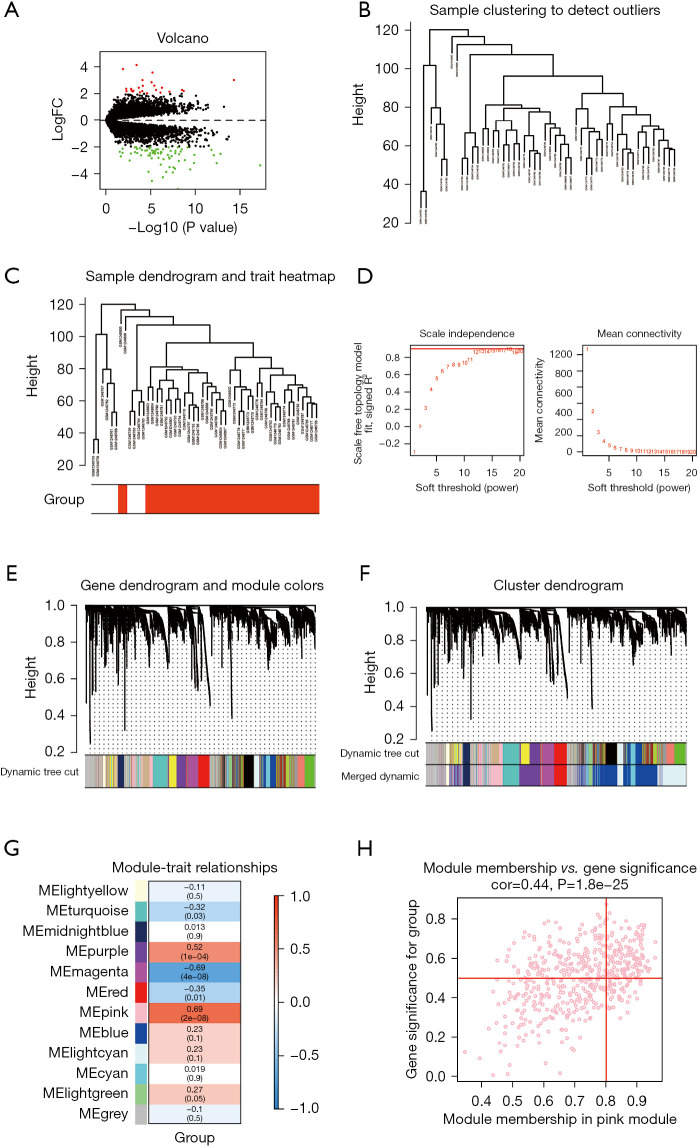
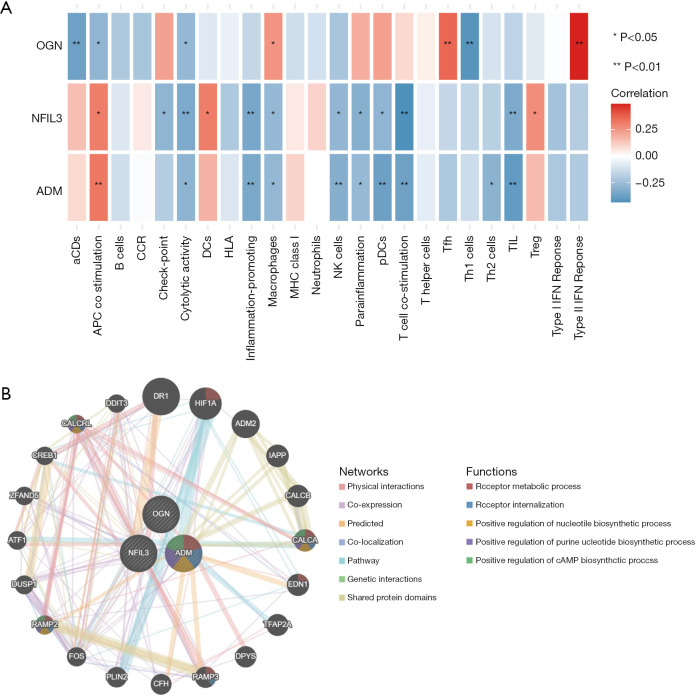
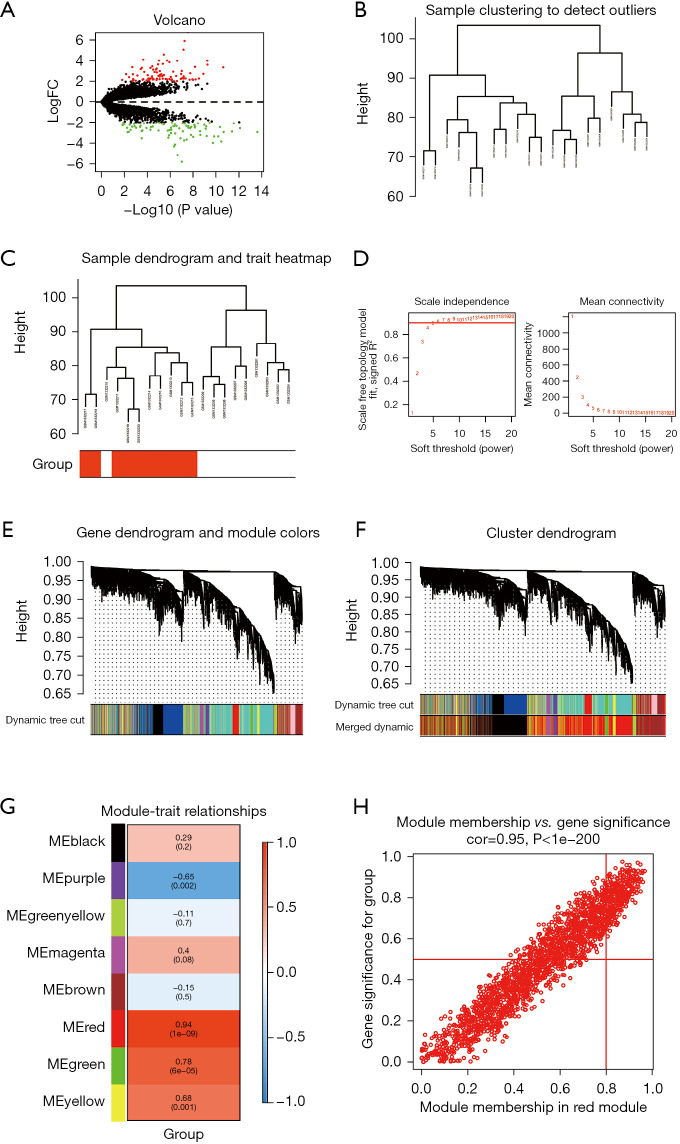
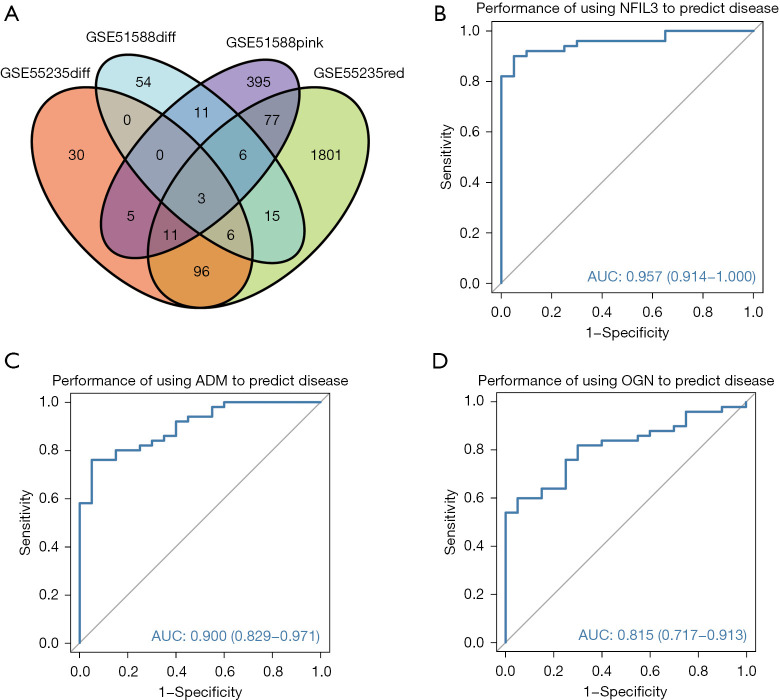
We downloaded the gene expression profile dataset, GSE51588 and GSE55235, from the National Center for Biotechnology Information (NCBI) Gene Expression Omnibus (GEO) public database. The differentially expressed genes (DEGs) were screened out using the "limma" R package. Weighted gene co-expression network analysis (WGCNA) was utilized to build the co-expression network between the normal and OA samples. A Venn diagram was constructed to detect the hub genes. Potential molecular mechanisms and signaling pathways were enriched by gene set variation analysis (GSVA). Single sample gene set enrichment analysis (ssGSEA) was used to identify the immune infiltration of OA.
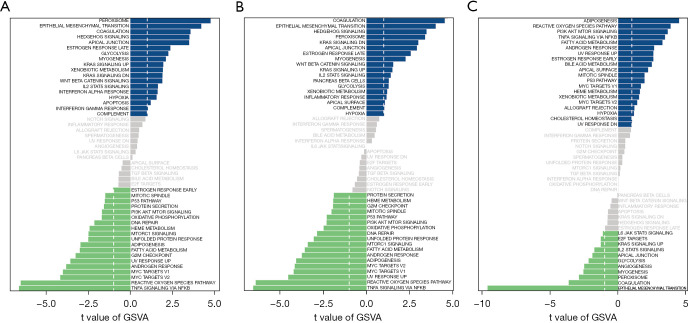
We screened out three hub genes based on WGCNA and DEGs in this study. GSVA results showed that nuclear factor interleukin-3 (NFIL3) was related to tumor necrosis factor alpha (TNF-α) signaling via nuclear factor kappa-B (NF-κB), the reactive oxygen species pathway, and myelocytomatosis (MYC) targets v2. Highly-expressed ADM (adrenomedullin) pathways included TNF-α signaling via NF-κB, the reactive oxygen species pathway, and ultraviolet (UV) response up. OGN (osteoglycin)-enriched pathways included epithelial mesenchymal transition, coagulation, and peroxisome.
We identified three hub genes ( and ) that were correlated to the development and progression of OA, which may provide new biomarkers for early diagnosis.
骨关节炎(OA)作为一种慢性退行性疾病,其发病率逐年上升。目前尚无针对OA的有效临床治疗方法,其病理机制仍不清楚。早期诊断是控制OA进展的有效策略。在本研究中,我们旨在识别潜在的早期诊断生物标志物。
我们从美国国立生物技术信息中心(NCBI)的基因表达综合数据库(GEO)公共数据库中下载了基因表达谱数据集GSE51588和GSE55235。使用“limma”R包筛选差异表达基因(DEG)。利用加权基因共表达网络分析(WGCNA)构建正常样本与OA样本之间的共表达网络。构建维恩图以检测枢纽基因。通过基因集变异分析(GSVA)富集潜在的分子机制和信号通路。使用单样本基因集富集分析(ssGSEA)来识别OA的免疫浸润情况。
在本研究中,我们基于WGCNA和DEG筛选出了三个枢纽基因。GSVA结果显示,核因子白细胞介素3(NFIL3)与通过核因子κB(NF-κB)的肿瘤坏死因子α(TNF-α)信号传导、活性氧途径以及髓细胞瘤(MYC)靶点v2相关。高表达的肾上腺髓质素(ADM)途径包括通过NF-κB的TNF-α信号传导、活性氧途径以及紫外线(UV)反应上调。富含骨甘蛋白(OGN)的途径包括上皮间质转化、凝血和过氧化物酶体。
我们鉴定出了三个与OA的发生和发展相关的枢纽基因,这可能为早期诊断提供新的生物标志物。