Rehabilitation Medicine Department, Affiliated Hospital of North Sichuan Medical College, Nanchong, Sichuan, People's Republic of China.
Medicine (Baltimore). 2021 Nov 19;100(46):e27871. doi: 10.1097/MD.0000000000027871.
Upper limb motor impairment is a common complication following stroke. Although few treatments are used to enhance motor function, still approximately 60% of survivors are left with upper limb motor impairment. Several studies have investigated vagus nerve stimulation (VNS) as a potential technique for upper limb function. However, the efficacy and safety of VNS on upper limb motor function after ischemic stroke have not been systematically evaluated. Therefore, a meta-analysis based on randomized controlled trial will be conducted to determine the efficacy and safety of VNS on upper limb motor function after ischemic stroke.
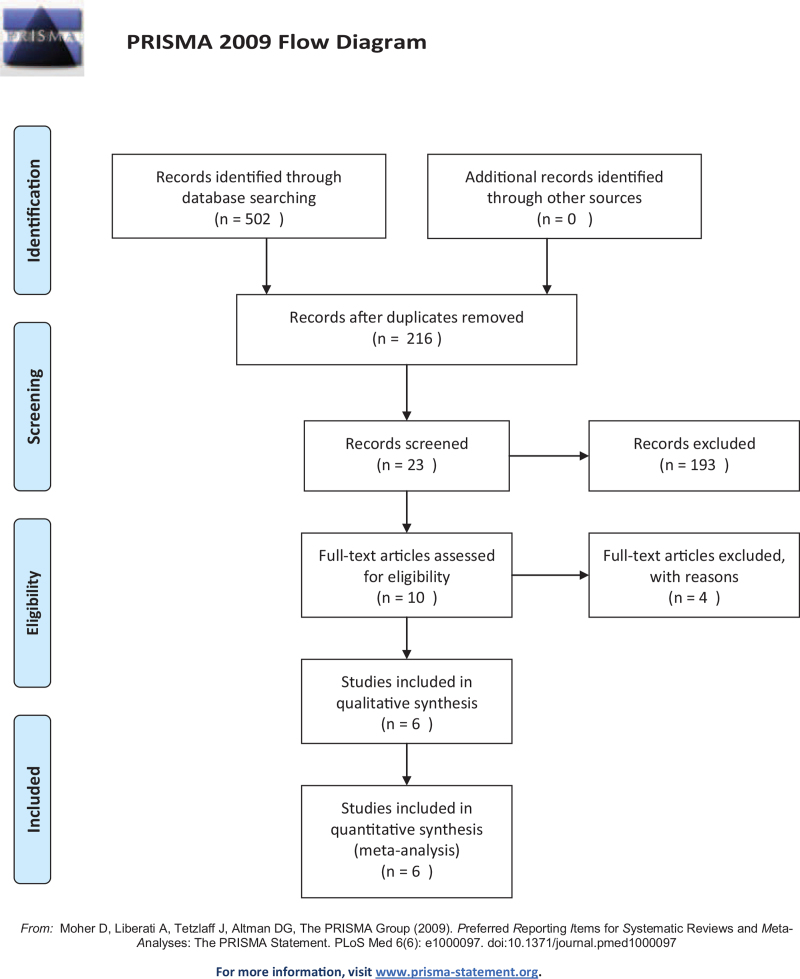
We searched PUBMED, MEDLINE, EMBASE, Cochrane Library, Web of Science, China National Knowledge Infrastructure Library (CNKI), and Wan Fang Database until April 1, 2021.
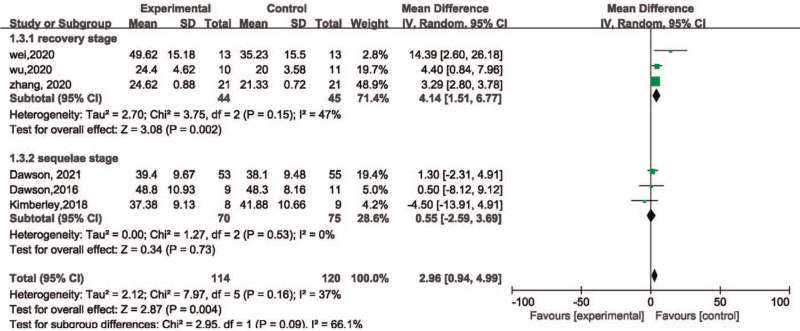
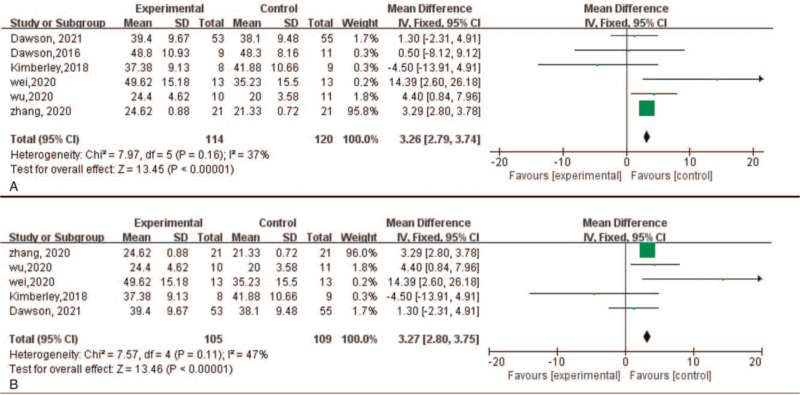
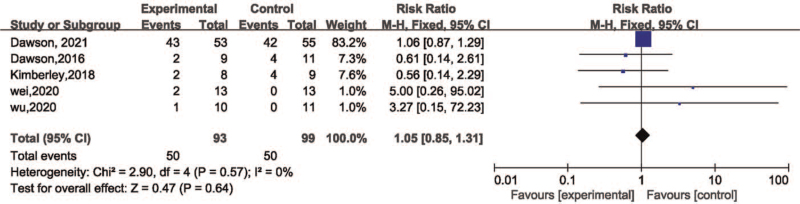
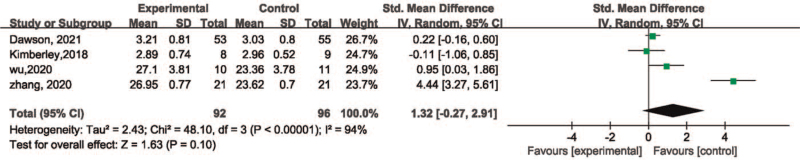
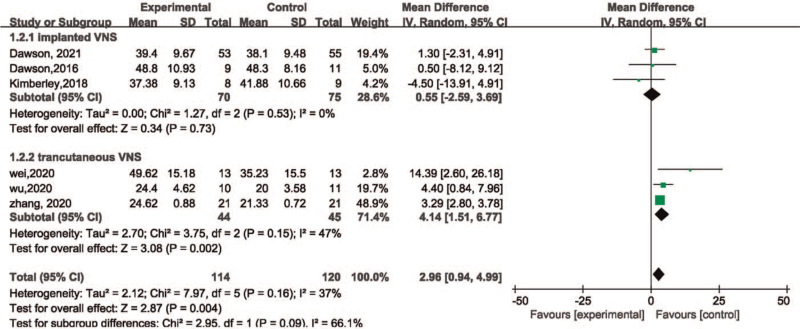
Six studies consisting of 234 patients were included in the analysis. Compared with control group, VNS improved upper limb function via Fugl-Meyer Assessment-Upper Extremity (mean difference = 3.26, 95% confidence interval [CI] [2.79, 3.74], P < .00001) and Functional Independence Measurement (mean difference = 6.59, 95%CI [5.77, 7.41], P < .00001), but showed no significant change on Wolf motor function test (standardized mean difference = 0.31, 95%CI [-0.15, 0.77], P = .19). The number of adverse events were not significantly different between the studied groups (risk ratio = 1.05, 95%CI [0.85, 1.31], P = .64).
VNS resulted in improvement of motor function in patients after ischemic stroke, especially in the sub-chronic stage. Moreover, compared with implanted VNS, transcutaneous VNS exhibited greater efficacy in poststroke patients. Based on this meta-analysis, VNS could be a feasible and safe therapy for upper limb motor impairment.
上肢运动障碍是中风后的常见并发症。尽管有少数治疗方法用于增强运动功能,但仍有约 60%的幸存者存在上肢运动障碍。一些研究已经探索了迷走神经刺激(VNS)作为上肢功能的潜在技术。然而,VNS 对缺血性中风后上肢运动功能的疗效和安全性尚未系统评估。因此,将进行基于随机对照试验的荟萃分析,以确定 VNS 对缺血性中风后上肢运动功能的疗效和安全性。
我们检索了 PUBMED、MEDLINE、EMBASE、Cochrane 图书馆、Web of Science、中国国家知识基础设施图书馆(CNKI)和万方数据库,截至 2021 年 4 月 1 日。
纳入的分析共包括 6 项研究,涉及 234 名患者。与对照组相比,VNS 通过 Fugl-Meyer 上肢评估(平均差值=3.26,95%置信区间[CI] [2.79, 3.74],P<0.00001)和功能独立性测量(平均差值=6.59,95%CI [5.77, 7.41],P<0.00001)改善了上肢功能,但在 Wolf 运动功能测试中没有显示出显著变化(标准化平均差值=0.31,95%CI [-0.15, 0.77],P=0.19)。研究组之间的不良事件数量无显著差异(风险比=1.05,95%CI [0.85, 1.31],P=0.64)。
VNS 可改善缺血性中风后患者的运动功能,尤其是在亚慢性阶段。此外,与植入式 VNS 相比,经皮 VNS 对中风后患者具有更大的疗效。基于这项荟萃分析,VNS 可能是一种可行且安全的治疗上肢运动障碍的方法。