School of Public Policy and Administration, Northwestern Polytechnical University, Xi'an, 710129, China.
School of Business, Nanjing Normal University, Nanjing, 210023, China.
Environ Pollut. 2022 Jan 15;293:118544. doi: 10.1016/j.envpol.2021.118544. Epub 2021 Nov 18.
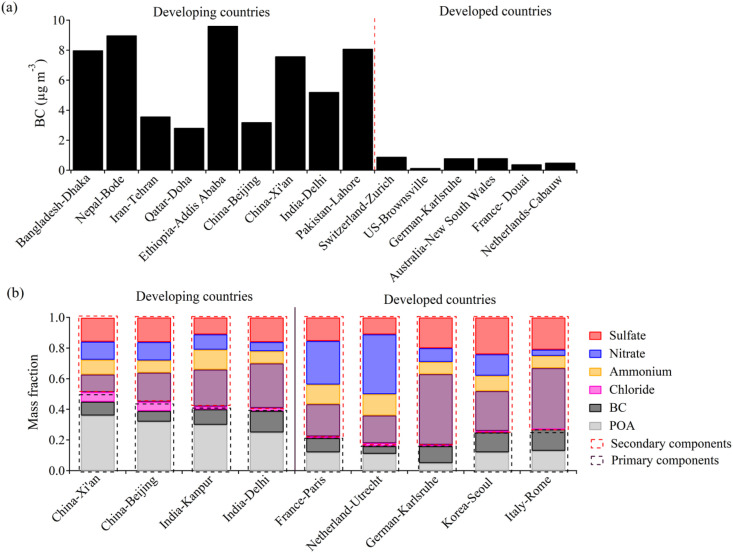
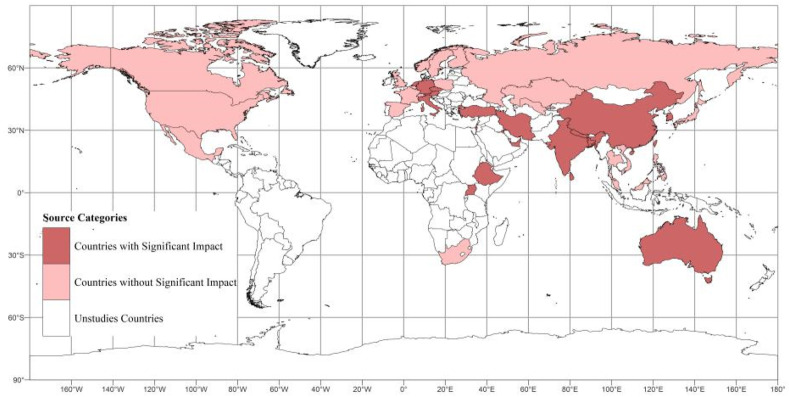
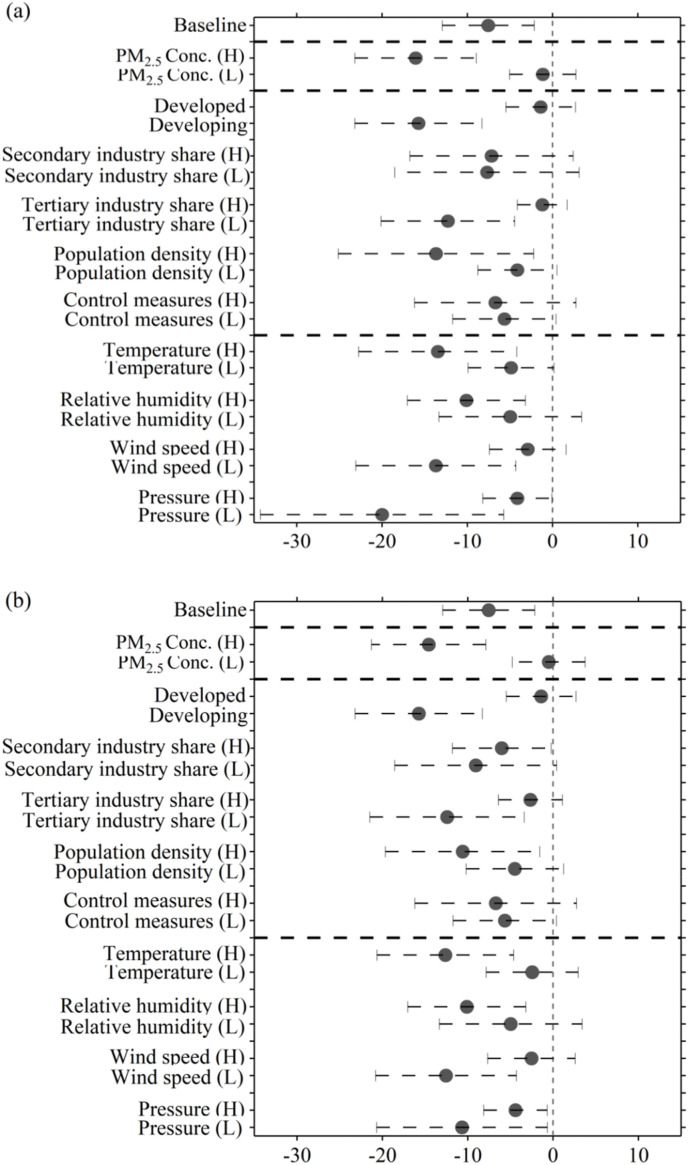
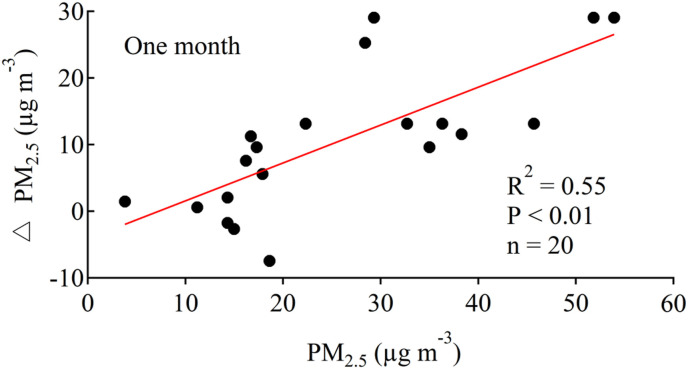
It is enlightening to determine the discrepancies and potential reasons for the degree of impact from the COVID-19 control measures on air quality as well as the associated health and economic impacts. Analysis of air quality, socio-economic factors, and meteorological data from 447 cities in 46 countries indicated that the COVID-19 control measures had significant impacts on the PM (particulate matter with an aerodynamic diameter less than 2.5 μm) concentrations in 20 (reduced PM concentrations of -7.4-29.1 μg m) of the selected 46 countries. In these 20 countries, the robustly distinguished changes in the PM concentrations caused by the control measures differed between the developed (95% confidence interval (CI): -2.7-5.5 μg m) and developing countries (95% CI: 8.3-23.2 μg m). As a result, the COVID-19 lockdown reduced death and hospital admissions change from the decreased PM concentrations by 7909 and 82,025 cases in the 12 developing countries, and by 78 and 1214 cases in the eight developed countries. The COVID-19 lockdown reduced the economic cost from the PM related health burden by 54.0 million dollars in the 12 developing countries and by 8.3 million dollars in the eight developed countries. The disparity was related to the different chemical compositions of PM. In particular, the concentrations of primary PM (e.g., BC) in cities of developing countries were 3-45 times higher than those in developed countries, so the mass concentration of PM was more sensitive to the reduced local emissions in developing countries during the COVID-19 control period. The mass fractions of secondary PM in developed countries were generally higher than those in developing countries. As a result, these countries were more sensitive to the secondary atmospheric processing that may have been enhanced due to reduced local emissions.
确定 COVID-19 控制措施对空气质量以及相关健康和经济影响的程度差异和潜在原因是有启发性的。对来自 46 个国家的 447 个城市的空气质量、社会经济因素和气象数据进行分析表明,COVID-19 控制措施对所选 46 个国家中的 20 个国家的 PM(空气动力学直径小于 2.5μm 的颗粒物)浓度有显著影响(减少 PM 浓度-7.4-29.1μg/m)。在这 20 个国家中,控制措施导致的 PM 浓度变化在发达国家(95%置信区间(CI):-2.7-5.5μg/m)和发展中国家(95%CI:8.3-23.2μg/m)之间存在明显差异。因此,在 12 个发展中国家,COVID-19 封锁措施通过降低 PM 浓度减少了 7909 例死亡和 82025 例住院人数,在 8 个发达国家减少了 78 例和 1214 例。在 12 个发展中国家,COVID-19 封锁措施降低了与 PM 相关的健康负担的经济成本 5400 万美元,在 8 个发达国家降低了 830 万美元。这种差异与 PM 的不同化学成分有关。特别是,发展中国家城市中一次 PM(例如 BC)的浓度比发达国家高 3-45 倍,因此在 COVID-19 控制期间,发展中国家本地排放量减少对 PM 质量浓度的影响更为敏感。发达国家二次 PM 的质量分数通常高于发展中国家。因此,这些国家对由于本地排放量减少可能增强的二次大气处理更为敏感。