Departamento de Medicina y Cirugía Animal, Hospital Clínico Veterinario, Facultad de Veterinaria, Universidad Cardenal Herrera-CEU, CEU Universities, Valencia, Spain.
Servicio de Anestesiología, Reanimación y Tratamiento del Dolor, Hospital Universitari i Politécnic La Fe de Valencia, Spain.
Rev Esp Anestesiol Reanim (Engl Ed). 2021 Dec;68(10):592-596. doi: 10.1016/j.redare.2020.10.008. Epub 2021 Nov 12.
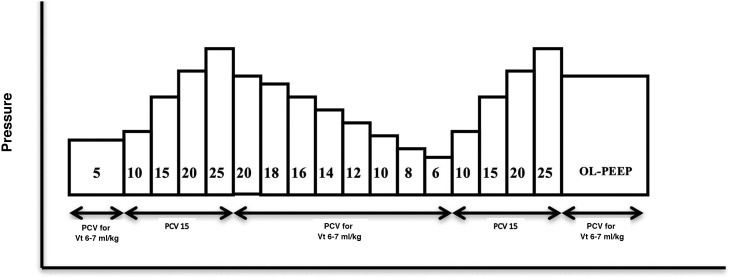
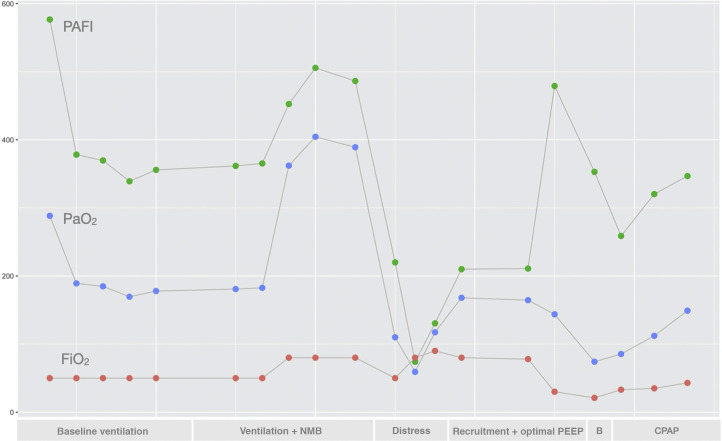
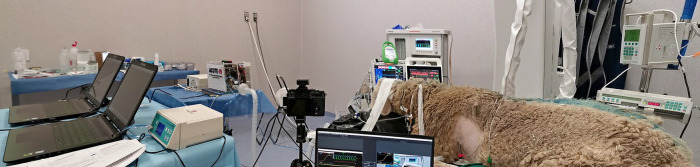
The COVID-19 pandemic has revealed a ventilator deficit in the global health system for this scenario. For this reason, several national and international projects have been developed to get done prototypes of ventilators which could be easy and fast to manufacture. One of the requirements of the AEMPS for conducting clinical studies with new prototypes is through the validation of these new prototypes in an animal model. Therefore, it is important to achieve an animal model which allows us to easily reproduce different clinical scenarios. In this article, we describe the use of a sheep as a research model to assess a prototype ventilator. The animal was anesthetized for 10 h in which the prototype was tested in up to 6 different scenarios. This model is effective and easy to reproduce, making it an excellent choice for this kind of research.
新冠疫情暴露出全球卫生系统在这种情况下存在呼吸机短缺的问题。出于这个原因,已经开展了一些国家和国际项目,以获得可以轻松快速制造的呼吸机原型。AEMPS 开展新原型临床研究的要求之一是通过在动物模型中验证这些新原型来实现。因此,获得一种能够让我们轻松重现不同临床场景的动物模型非常重要。在本文中,我们描述了使用绵羊作为研究模型来评估原型呼吸机。动物麻醉了 10 小时,在这期间对原型机进行了多达 6 种不同场景的测试。该模型效果好,易于复制,是此类研究的理想选择。