Bannu Saira M, Lomada Dakshayani, Varala Sravani, Reddy Madhava C
Department of Biotechnology and Bioinformatics, Yogi Vemana University, Kadapa AP 516005, India.
Department of Genetics and Genomics, Yogi Vemana University, Kadapa, AP 516005, India.
Bioinformation. 2020 Nov 30;16(11):869-877. doi: 10.6026/97320630016869. eCollection 2020.
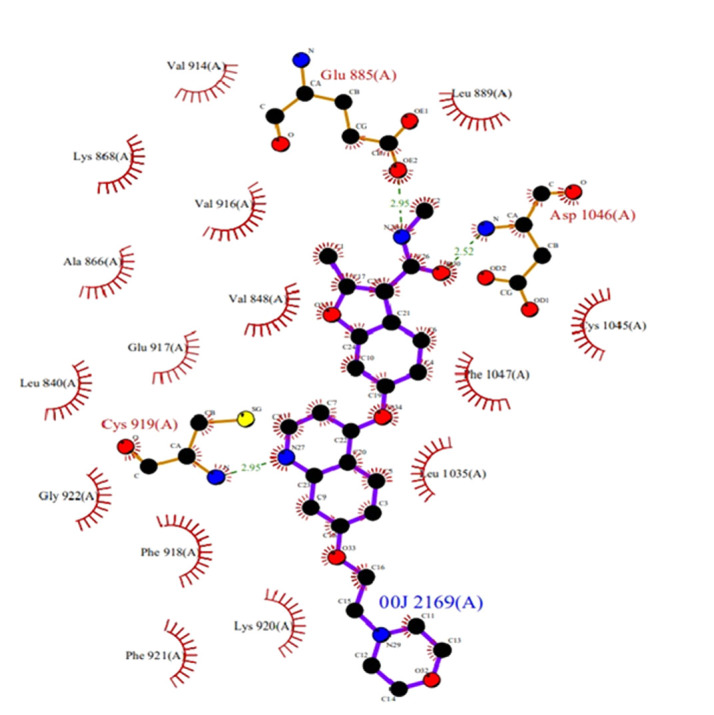
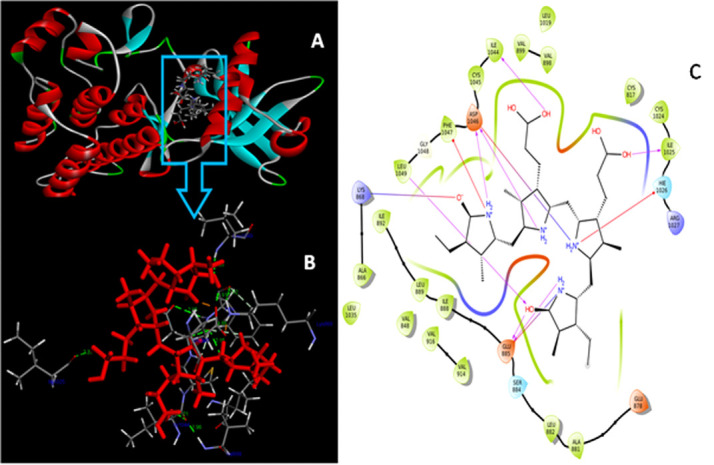
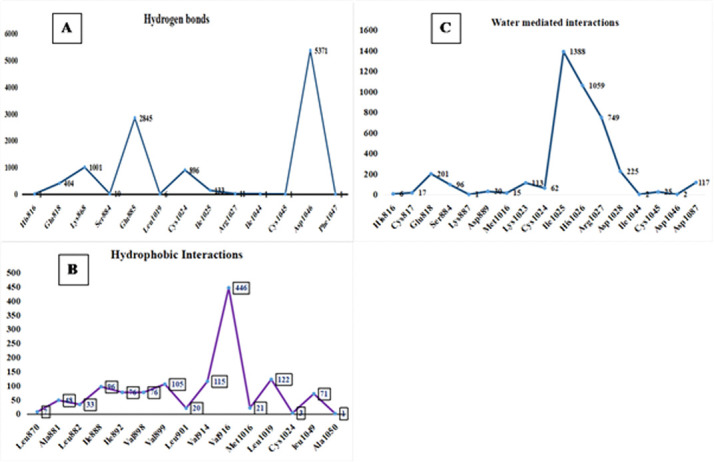
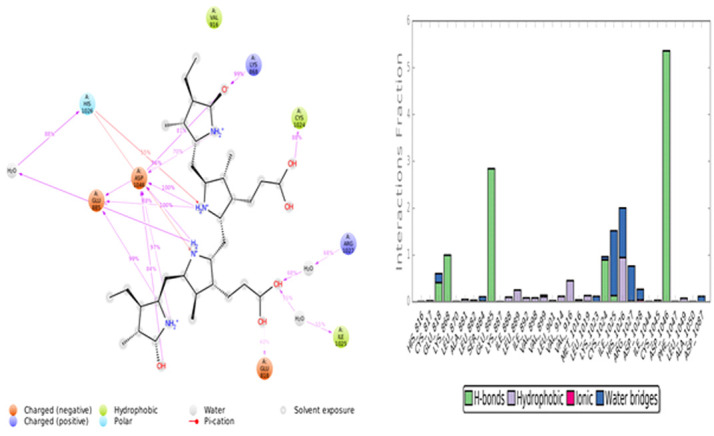
C-phycocyanin (C-PC) produced from cyanobacterial species finds application in drug development. Therefore, it is of interest to document the molecular binding features of C-PC with the vascular endothelial growth factor receptor 2 (VEGFR2). C-PC showed H-bond interactions with residues on both sides of the Deusche Forschugsgemein-Schalt (DFG) loop (Asp1046-Phe1047-Gly1048). A hydrophobic association between the activation loop and the DFG residue (Gly1048) helps to inhibit the activity of VEGFR2 kinases. Thus, C-PC is reported as a potential angiogenesis inhibitor for VEGFR2 in combating cancer.
从蓝藻物种中提取的藻蓝蛋白(C-PC)在药物开发中得到应用。因此,记录C-PC与血管内皮生长因子受体2(VEGFR2)的分子结合特征具有重要意义。C-PC与德意志研究联合会开关(DFG)环(Asp1046-Phe1047-Gly1048)两侧的残基形成氢键相互作用。激活环与DFG残基(Gly1048)之间的疏水缔合有助于抑制VEGFR2激酶的活性。因此,据报道C-PC在对抗癌症方面是一种潜在的VEGFR2血管生成抑制剂。