Zhuang Pei, Chiang Yi-Hua, Fernanda Maria Serafim, He Mei
Department of Pharmaceutics, University of Florida, Gainesville, Florida, 32610, USA.
Int J Bioprint. 2021 Oct 21;7(4):444. doi: 10.18063/ijb.v7i4.444. eCollection 2021.
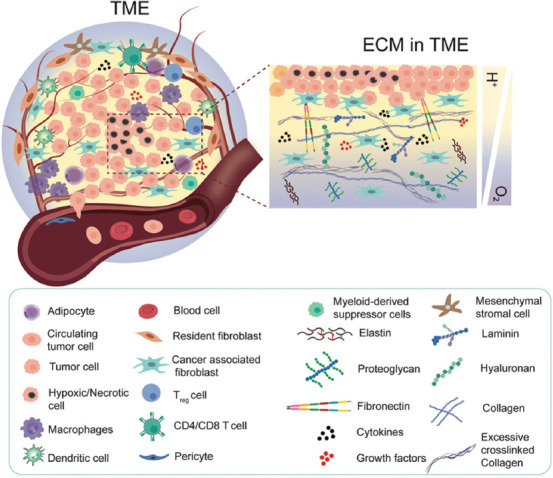
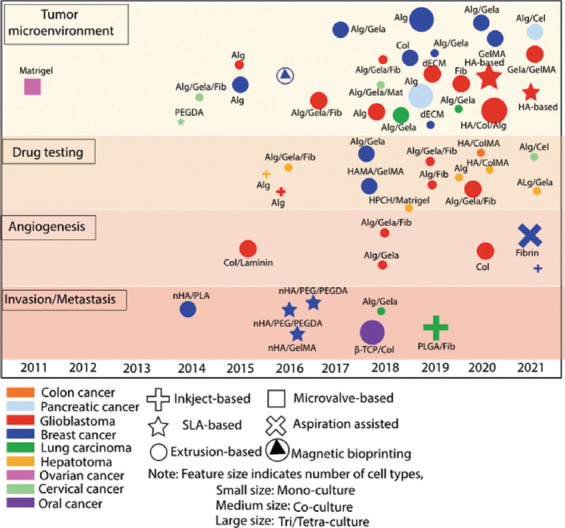
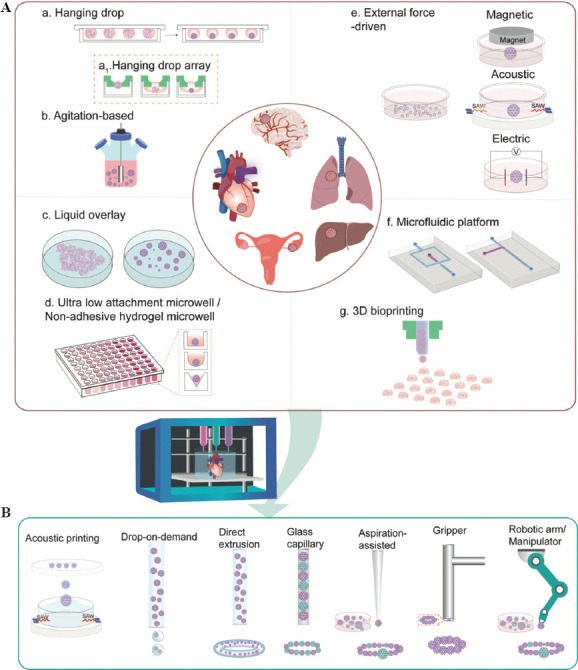
Cancer still ranks as a leading cause of mortality worldwide. Although considerable efforts have been dedicated to anticancer therapeutics, progress is still slow, partially due to the absence of robust prediction models. Multicellular tumor spheroids, as a major three-dimensional (3D) culture model exhibiting features of avascular tumors, gained great popularity in pathophysiological studies and high throughput drug screening. However, limited control over cellular and structural organization is still the key challenge in achieving like tissue microenvironment. 3D bioprinting has made great strides toward tissue/organ mimicry, due to its outstanding spatial control through combining both cells and materials, scalability, and reproducibility. Prospectively, harnessing the power from both 3D bioprinting and multicellular spheroids would likely generate more faithful tumor models and advance our understanding on the mechanism of tumor progression. In this review, the emerging concept on using spheroids as a building block in 3D bioprinting for tumor modeling is illustrated. We begin by describing the context of the tumor microenvironment, followed by an introduction of various methodologies for tumor spheroid formation, with their specific merits and drawbacks. Thereafter, we present an overview of existing 3D printed tumor models using spheroids as a focus. We provide a compilation of the contemporary literature sources and summarize the overall advancements in technology and possibilities of using spheroids as building blocks in 3D printed tissue modeling, with a particular emphasis on tumor models. Future outlooks about the wonderous advancements of integrated 3D spheroidal printing conclude this review.
癌症仍然是全球主要的死亡原因。尽管人们在抗癌治疗方面付出了巨大努力,但进展仍然缓慢,部分原因是缺乏强大的预测模型。多细胞肿瘤球体作为一种主要的三维(3D)培养模型,具有无血管肿瘤的特征,在病理生理学研究和高通量药物筛选中广受欢迎。然而,对细胞和结构组织的控制有限仍然是实现类似组织微环境的关键挑战。3D生物打印通过结合细胞和材料、可扩展性和可重复性,在实现组织/器官模拟方面取得了巨大进展。前瞻性地,利用3D生物打印和多细胞球体的力量可能会产生更逼真的肿瘤模型,并推进我们对肿瘤进展机制的理解。在这篇综述中,阐述了将球体作为3D生物打印肿瘤建模的构建块这一新兴概念。我们首先描述肿瘤微环境的背景,然后介绍各种肿瘤球体形成方法及其具体优缺点。此后,我们重点概述了现有的以球体为基础的3D打印肿瘤模型。我们汇编了当代文献来源,总结了技术的总体进展以及在3D打印组织建模中使用球体作为构建块的可能性,特别强调肿瘤模型。关于集成3D球体打印的奇妙进展的未来展望总结了这篇综述。