Department of Biological Sciences, St. John's University, New York, United States of America.
PLoS One. 2021 Nov 22;16(11):e0260400. doi: 10.1371/journal.pone.0260400. eCollection 2021.
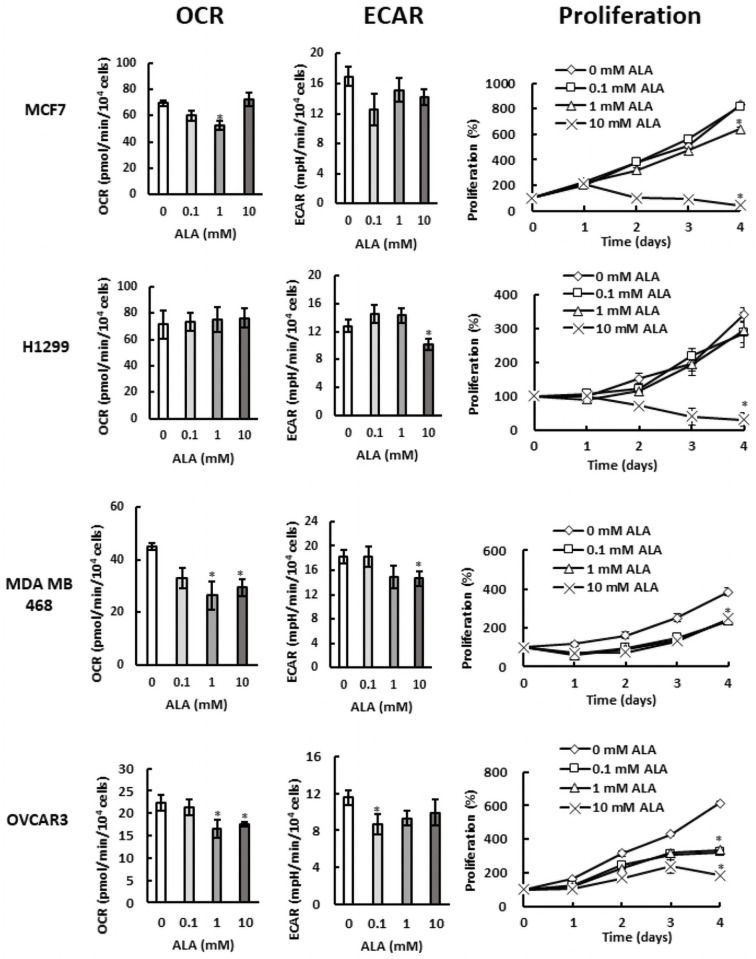
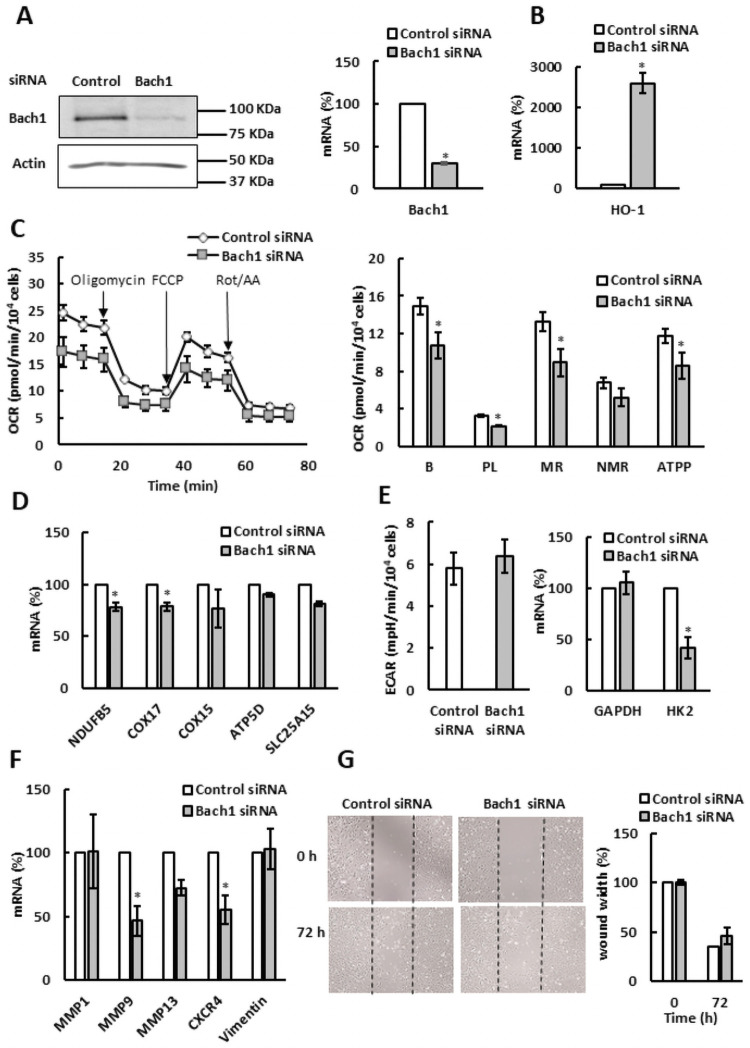
Heme is an essential cofactor for enzymes of the electron transport chain (ETC) and ATP synthesis in mitochondrial oxidative phosphorylation (OXPHOS). Heme also binds to and destabilizes Bach1, a transcription regulator that controls expression of several groups of genes important for glycolysis, ETC, and metastasis of cancer cells. Heme synthesis can thus affect pathways through which cells generate energy and precursors for anabolism. In addition, increased heme synthesis may trigger oxidative stress. Since many cancers are characterized by a high glycolytic rate regardless of oxygen availability, targeting glycolysis, ETC, and OXPHOS have emerged as a potential therapeutic strategy. Here, we report that enhancing heme synthesis through exogenous supplementation of heme precursor 5-aminolevulinic acid (ALA) suppresses oxidative metabolism as well as glycolysis and significantly reduces proliferation of both ovarian and breast cancer cells. ALA supplementation also destabilizes Bach1 and inhibits migration of both cell types. Our data indicate that the underlying mechanisms differ in ovarian and breast cancer cells, but involve destabilization of Bach1, AMPK activation, and induction of oxidative stress. In addition, there appears to be an inverse correlation between the activity of oxidative metabolism and ALA sensitivity. Promoting heme synthesis by ALA supplementation may thus represent a promising new anti-cancer strategy, particularly in cancers that are sensitive to altered redox signaling, or in combination with strategies that target the antioxidant systems or metabolic weaknesses of cancer cells.
血红素是电子传递链 (ETC) 和线粒体氧化磷酸化 (OXPHOS) 中 ATP 合成的酶的必需辅因子。血红素还与 Bach1 结合并使其不稳定,Bach1 是一种转录调节因子,控制着糖酵解、ETC 和癌细胞转移等几个基因群的表达。因此,血红素合成可以影响细胞产生能量和合成代谢前体的途径。此外,增加血红素合成可能会引发氧化应激。由于许多癌症无论氧气供应如何都表现出高糖酵解率,因此靶向糖酵解、ETC 和 OXPHOS 已成为一种潜在的治疗策略。在这里,我们报告通过外源性补充血红素前体 5-氨基乙酰丙酸 (ALA) 来增强血红素合成,可抑制氧化代谢以及糖酵解,并显著降低卵巢癌和乳腺癌细胞的增殖。ALA 补充还会使 Bach1 不稳定,并抑制两种细胞类型的迁移。我们的数据表明,卵巢癌和乳腺癌细胞的潜在机制不同,但都涉及 Bach1 的不稳定、AMPK 的激活和氧化应激的诱导。此外,氧化代谢的活性与 ALA 的敏感性之间似乎存在反比关系。因此,通过 ALA 补充促进血红素合成可能代表一种有前途的新型抗癌策略,特别是在对氧化还原信号改变敏感的癌症中,或与靶向癌细胞抗氧化系统或代谢弱点的策略联合使用时。