Environmental Biotechnology Group, University of Tübingengrid.10392.39, Tübingen, Germany.
Cluster of Excellence - Controlling Microbes to Fight Infections, University of Tübingengrid.10392.39, Tübingen, Germany.
mBio. 2021 Dec 21;12(6):e0276621. doi: 10.1128/mBio.02766-21. Epub 2021 Nov 23.
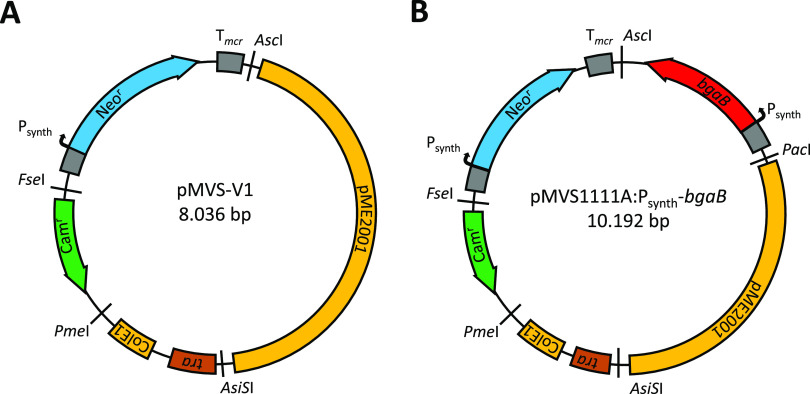
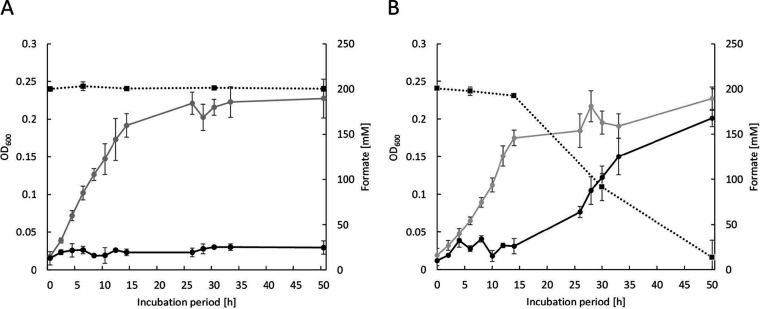
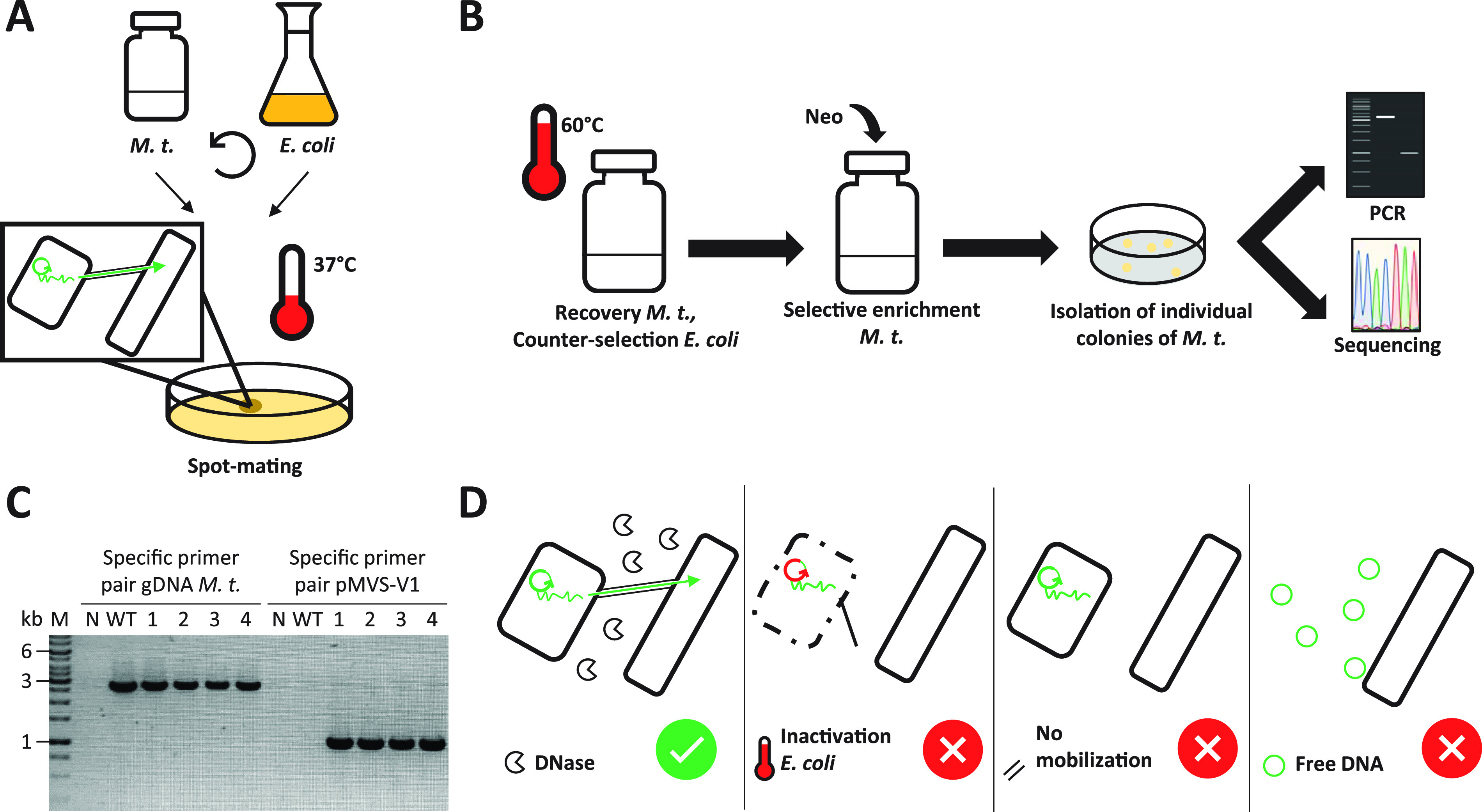
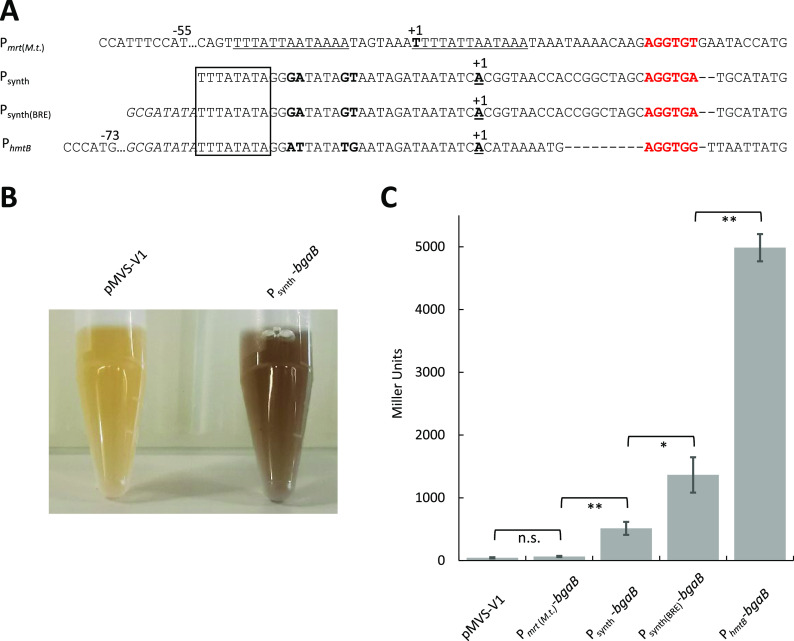
Thermophilic spp. are used as model microbes to study the physiology and biochemistry of the conversion of molecular hydrogen and carbon dioxide into methane (i.e., hydrogenotrophic methanogenesis). Yet, a genetic system for these model microbes was missing despite intensive work for four decades. Here, we report the successful implementation of genetic tools for Methanothermobacter thermautotrophicus ΔH. We developed shuttle vectors that replicated in Escherichia coli and ΔH. For ΔH, a thermostable neomycin resistance cassette served as the selectable marker for positive selection with neomycin, and the cryptic plasmid pME2001 from Methanothermobacter marburgensis served as the replicon. The shuttle-vector DNA was transferred from E. coli into ΔH via interdomain conjugation. After the successful validation of DNA transfer and positive selection in ΔH, we demonstrated heterologous gene expression of a thermostable β-galactosidase-encoding gene () from Geobacillus stearothermophilus under the expression control of four distinct synthetic and native promoters. In quantitative enzyme activity assay, we found significantly different β-galactosidase activity with these distinct promoters. With a formate dehydrogenase operon-encoding shuttle vector, we allowed growth of ΔH on formate as the sole growth substrate, while this was not possible for the empty-vector control. The world economies are facing permanently increasing energy demands. At the same time, carbon emissions from fossil sources need to be circumvented to minimize harmful effects from climate change. The power-to-gas platform is utilized to store renewable electric power and decarbonize the natural gas grid. The microbe Methanothermobacter thermautotrophicus is already applied as the industrial biocatalyst for the biological methanation step in large-scale power-to-gas processes. To improve the biocatalyst in a targeted fashion, genetic engineering is required. With our shuttle-vector system for heterologous gene expression in , we set the cornerstone to engineer the microbe for optimized methane production but also for production of high-value platform chemicals in power-to-x processes.
嗜热 spp. 被用作模型微生物来研究分子氢和二氧化碳转化为甲烷(即氢营养型产甲烷作用)的生理学和生物化学。然而,尽管经过四十年的密集研究,这些模型微生物仍然缺乏遗传系统。在这里,我们报告了成功为 Methanothermobacter thermautotrophicus ΔH 实施遗传工具的情况。我们开发了可在大肠杆菌和 ΔH 中复制的穿梭载体。对于 ΔH,耐热新霉素抗性盒用作新霉素正选择的选择性标记,而来自 Methanothermobacter marburgensis 的隐蔽质粒 pME2001 用作复制子。穿梭载体 DNA 通过域间共轭从大肠杆菌转移到 ΔH。在 ΔH 中成功验证了 DNA 转移和正选择后,我们展示了来自 Geobacillus stearothermophilus 的耐热β-半乳糖苷酶编码基因 () 在四个不同的合成和天然启动子的表达控制下的异源基因表达。在定量 酶活性测定中,我们发现这些不同启动子的 β-半乳糖苷酶活性有显著差异。使用甲酸脱氢酶操纵子编码的穿梭载体,我们允许 ΔH 在甲酸盐作为唯一生长基质的情况下生长,而空载体对照则不可能。 世界经济正面临着能源需求的持续增长。与此同时,需要避免化石燃料来源的碳排放,以最大限度地减少气候变化的有害影响。电能制气平台用于储存可再生电力并使天然气网脱碳。微生物 Methanothermobacter thermautotrophicus 已经作为大规模电能制气工艺中生物甲烷化步骤的工业生物催化剂得到应用。为了有针对性地改进生物催化剂,需要进行基因工程。通过我们在 中用于异源基因表达的穿梭载体系统,我们为微生物的优化甲烷生产奠定了基础,同时也为电能制 X 过程中的高价值平台化学品生产奠定了基础。