Usher Institute of Population Health Sciences and Informatics, The University of Edinburgh, United Kingdom.
UCL Great Ormond Street Institute of Child Health, United Kingdom.
J Infect. 2022 Feb;84(2):158-170. doi: 10.1016/j.jinf.2021.11.011. Epub 2021 Nov 20.
Data on the long-term impact of SARS-CoV-2 infection in children and young people (CYP) are conflicting. We assessed evidence on long-term post-COVID symptoms in CYP examining prevalence, risk factors, type and duration.
Systematic search of published and unpublished literature using 13 online databases between 01/12/2019 and 31/07/2021. Eligible studies reported CYP ≤19 years with confirmed or probable SARS-CoV-2 with any symptoms persisting beyond acute illness. Random effects meta-analyses estimated pooled risk difference in symptom prevalence (controlled studies only) and pooled prevalence (uncontrolled studies also included). Meta-regression examined study characteristics hypothesised to be associated with symptom prevalence. Prospectively registered: CRD42021233153.
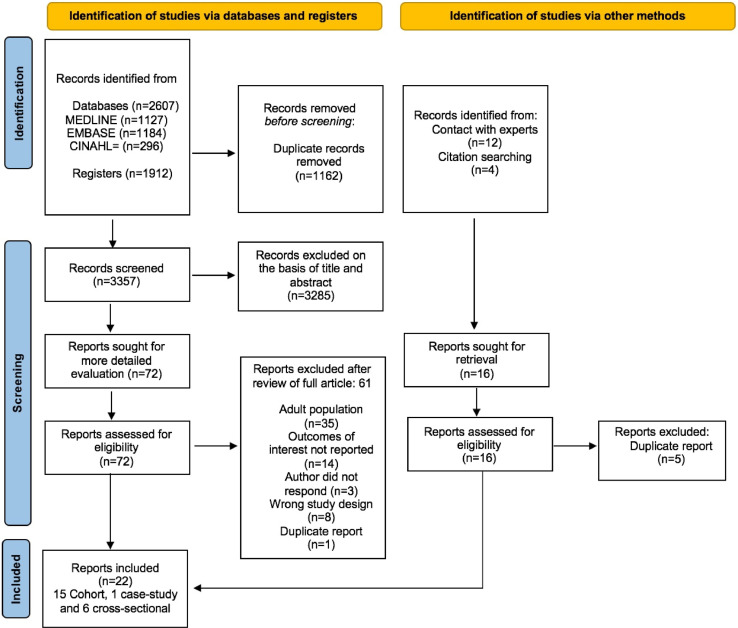
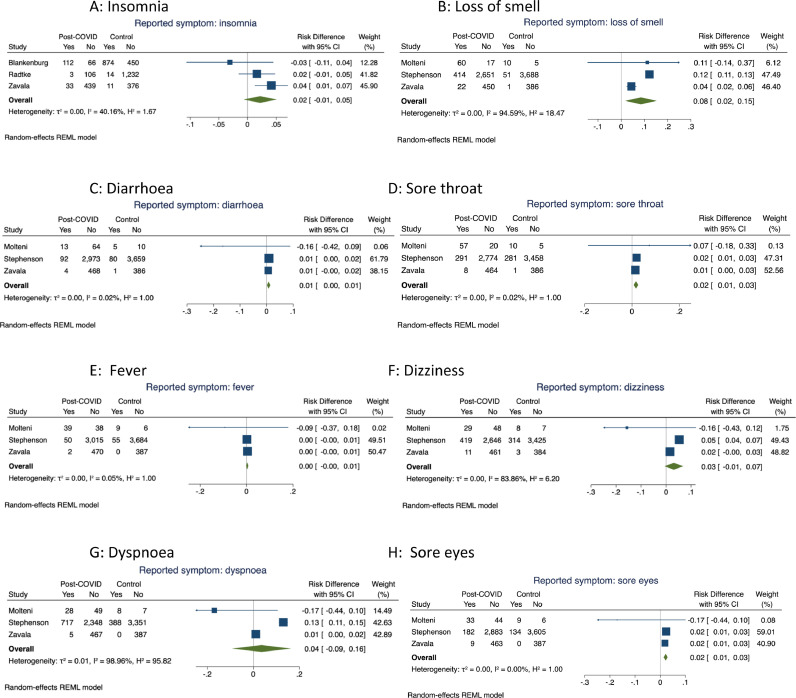
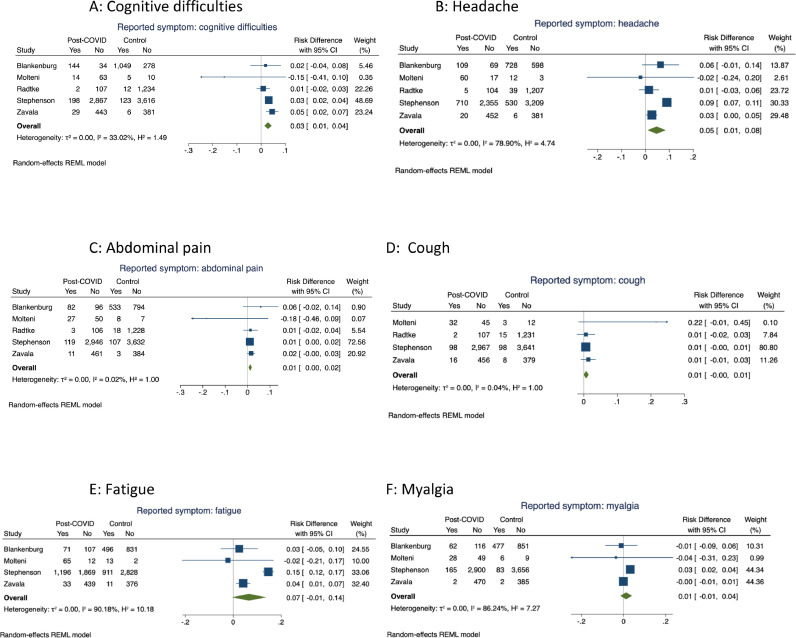
Twenty two of 3357 unique studies were eligible, including 23,141 CYP. Median duration of follow-up was 125 days (IQR 99-231). Pooled risk difference in post-COVID cases compared to controls (5 studies) were significantly higher for cognitive difficulties (3% (95% CI 1, 4)), headache (5% (1, 8)), loss of smell (8%, (2, 15)), sore throat (2% (1, 2)) and sore eyes (2% (1, 3)) but not abdominal pain, cough, fatigue, myalgia, insomnia, diarrhoea, fever, dizziness or dyspnoea. Pooled prevalence of symptoms in post-COVID participants in 17 studies ranged from 15% (diarrhoea) to 47% (fatigue). Age was associated with higher prevalence of all symptoms except cough. Higher study quality was associated with lower prevalence of all symptoms, except loss of smell and cognitive symptoms.
The frequency of the majority of reported persistent symptoms was similar in SARS-CoV-2 positive cases and controls. This systematic review and meta-analysis highlights the critical importance of a control group in studies on CYP post SARS-CoV-2 infection.
关于 SARS-CoV-2 感染对儿童和青少年(CYP)的长期影响的数据存在争议。我们评估了 CYP 中 COVID 后长期症状的证据,检查了患病率、危险因素、类型和持续时间。
系统检索了 2019 年 12 月 1 日至 2021 年 7 月 31 日期间 13 个在线数据库中已发表和未发表的文献。合格研究报告了确诊或可能 SARS-CoV-2 的 CYP ≤19 岁,急性疾病后持续存在任何症状。使用随机效应荟萃分析估计了症状患病率(仅控制研究)和患病率(也包括非对照研究)的汇总风险差异。元回归分析了被假设与症状患病率相关的研究特征。前瞻性注册:CRD42021233153。
在 3357 项独特的研究中,有 22 项符合条件,包括 23141 名 CYP。中位随访时间为 125 天(IQR 99-231)。与对照组相比,COVID 后病例的汇总风险差异在认知困难方面显著更高(3%(95%CI 1, 4%)),头痛(5%(1, 8%)),嗅觉丧失(8%(2, 15%)),咽痛(2%(1, 2%))和眼痛(2%(1, 3%)),但不是腹痛、咳嗽、疲劳、肌痛、失眠、腹泻、发热、头晕或呼吸困难。17 项研究中 COVID 后参与者症状的汇总患病率从 15%(腹泻)到 47%(疲劳)不等。年龄与除咳嗽外的所有症状的患病率较高相关。较高的研究质量与除嗅觉丧失和认知症状外的所有症状的患病率较低相关。
大多数报告的持续性症状的频率在 SARS-CoV-2 阳性病例和对照组中相似。这项系统综述和荟萃分析强调了在 CYP 感染 SARS-CoV-2 后研究中对照组的重要性。