Hasuike Mitsuto, Hara Yoshiaki, Mori Hiroko-Miyuki, Ideguchi Norio, Shirai Fumie, Yoshimura Yasuko, Murakami Ikumi, Kawahata Hirohisa, Aoki Motokuni, Ogihara Toshio
Department of Nursing, Morinomiya University of Medical Sciences, 1-26-16, Nanko-kita, Suminoe-ku, Osaka, 559-8611, Japan.
Graduate School of Health Sciences, Morinomiya University of Medical Sciences, 1-26-16, Nanko-kita, Suminoe-ku, Osaka, 559-8611, Japan.
BMC Nurs. 2021 Nov 24;20(1):237. doi: 10.1186/s12912-021-00724-x.
Although mental health disorders of health care workers in the coronavirus disease 2019 (COVID-19) pandemic have been focused, little is known about the psychological impact on nurses and the influence on their behavior and awareness, such as professionalism and views on life and death, in Japan where there are fewer cases of infection and deaths than in other countries. Moreover, the influence of the pandemic on nursing students is still unclear.
An online questionnaire survey was conducted among nurses and nursing students. Feelings during the state of emergency (at the peak of the pandemic) in Japan, changes in behavior and awareness after the rise of COVID-19, and the associated factors influencing these changes were analyzed, comparing nurses with nursing students.
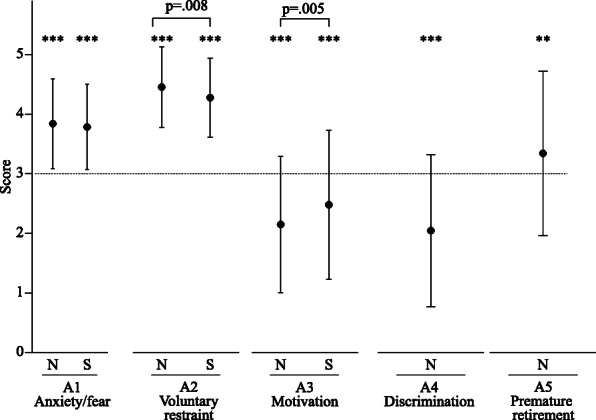
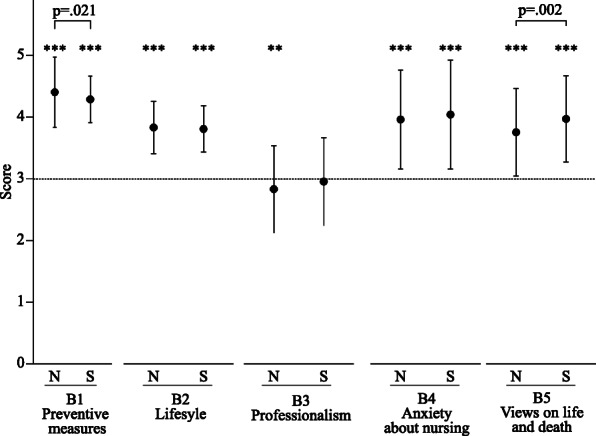
Significantly increased scores of anxiety/fear (p < .005) and voluntary restraint (p < .005) and significantly decreased score of motivation (p < .005) were observed during the state of emergency in both nurses and students. Scores of experience of discrimination (p < .005) and consideration of premature retirement (p < .01) were significantly increased in nurses. Moreover, preventive behavior (p < .005), lifestyle (p < .005), anxiety about nursing (p < .005) and views on life and death (p < .005) significantly changed after the rise of COVID-19 in both nurses and students. Only nurses reported significant damage to their professionalism (p < .01). Anxiety/fear and/or voluntary restraint and/or decreased motivation during the state of emergency were major factors associated with these changes. Also, the type of hospital, experience of care of infected patients and sex affected some of the changes. Voluntary restraint (p = .008), increased preventive behavior (p = .021) and decreased motivation (p = .005) were more marked in nurses than in students, while change in views on life and death was greater in students than in nurses (p = .002).
The COVID-19 pandemic has had a psychological impact on nurses and nursing students, associated with changes in behavior and awareness even in Japan. Of note, the COVID-19 pandemic has affected nurses' professionalism and views on life and death. This study demonstrates the importance of having a coping strategy for anxiety and damaged professionalism in nurses, and education on life and death in nursing students.
尽管在2019冠状病毒病(COVID-19)大流行期间医护人员的心理健康问题受到了关注,但在日本,感染和死亡病例比其他国家少,关于疫情对护士的心理影响以及对其行为和意识(如专业精神以及对生死的看法)的影响却知之甚少。此外,疫情对护理专业学生的影响仍不明确。
对护士和护理专业学生进行了在线问卷调查。分析了日本紧急状态(疫情高峰期)期间的感受、COVID-19出现后行为和意识的变化以及影响这些变化的相关因素,并对护士和护理专业学生进行了比较。
在紧急状态期间,护士和学生的焦虑/恐惧得分(p < .005)和自愿约束得分(p < .005)显著增加,动机得分(p < .005)显著降低。护士的歧视经历得分(p < .005)和提前退休考虑得分(p < .01)显著增加。此外,在COVID-19出现后,护士和学生的预防行为(p < .005)、生活方式(p < .005)、对护理工作的焦虑(p < .005)以及对生死的看法(p < .005)都发生了显著变化。只有护士报告其专业精神受到了显著损害(p < .01)。紧急状态期间的焦虑/恐惧和/或自愿约束和/或动机降低是与这些变化相关的主要因素。此外,医院类型、护理感染患者的经历和性别也影响了一些变化。自愿约束(p = .008)、预防行为增加(p = .021)和动机降低(p = .005)在护士中比在学生中更明显,而护理专业学生对生死看法的变化比护士更大(p = .002)。
即使在日本,COVID-19大流行也对护士和护理专业学生产生了心理影响,并与行为和意识的变化相关。值得注意的是,COVID-19大流行影响了护士的专业精神和对生死的看法。本研究表明,为护士制定应对焦虑和受损专业精神的策略以及对护理专业学生进行生死教育非常重要。