Brain and Spinal Cord Injury Research Center, Neuroscience Institute, Tehran University of Medical Sciences, Tehran, Iran.
National Agency for Strategic Research in Medical Education, Tehran, Iran.
BMC Med Inform Decis Mak. 2021 Nov 23;21(1):327. doi: 10.1186/s12911-021-01687-4.
Due to the importance of segmentation of MRI images in identifying brain tumors, various methods including deep learning have been introduced for automatic brain tumor segmentation. On the other hand, using a combination of methods can improve their performance. Among them is the use of wavelet transform as an auxiliary element in deep networks. The analysis of the requirements of such combinations has been addressed in this study.
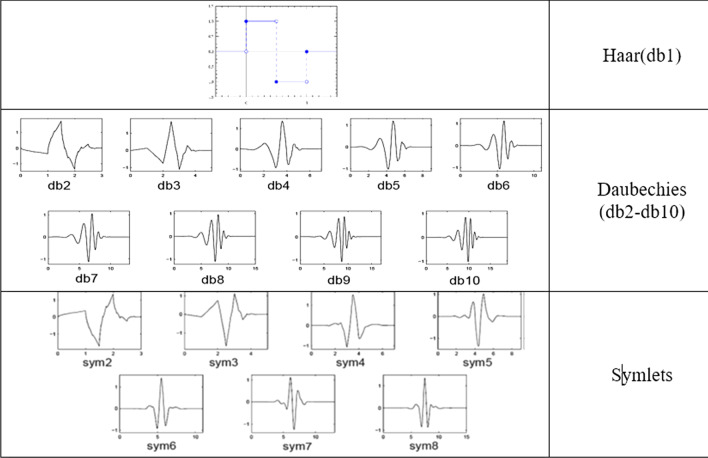
In this developmental study, different wavelet functions were used to compress brain MRI images and finally as an auxiliary element in improving the performance of the convolutional neural network in brain tumor segmentation.
Based on the results of the tests performed, the Daubechies1 function was most effective in enhancing network performance in segmenting MRI images and was able to balance the performance and computational overload.
Choosing the wavelet function to optimize the performance of a convolutional neural network should be based on the requirements of the problem, also taking into account some considerations such as computational load, processing time, and performance of the wavelet function in optimizing CNN output in the intended task.
由于 MRI 图像分割在识别脑肿瘤中的重要性,已经引入了各种方法,包括深度学习,用于自动脑肿瘤分割。另一方面,使用方法的组合可以提高它们的性能。其中包括在深度网络中使用小波变换作为辅助元素。在这项研究中已经解决了这种组合的要求的分析。
在这项发展性研究中,使用不同的小波函数来压缩脑 MRI 图像,最后作为提高卷积神经网络在脑肿瘤分割中性能的辅助元素。
根据进行的测试结果,在增强网络性能以分割 MRI 图像方面,Daubechies1 函数最为有效,并且能够平衡性能和计算负担。
选择小波函数来优化卷积神经网络的性能应该基于问题的要求,同时考虑一些因素,如计算负载、处理时间以及小波函数在优化目标任务中 CNN 输出方面的性能。