School of Medicine, Faculty of Science, Medicine and Health, University of Wollongong, Wollongong, NSW, 2522, Australia.
Illawarra Health and Medical Research Institute, Wollongong, NSW, Australia.
Eur J Nutr. 2022 Feb;61(1):541-553. doi: 10.1007/s00394-021-02718-6. Epub 2021 Nov 24.
Whole grains, generally recognised as healthy choices, are not included in most nutrient profiling systems. We tested modifications to the Nutri-Score algorithm to determine whether including whole grains would provide an improved measure of food, and overall diet quality.
The whole-grain content of food, with a minimum cut-point of 25%, was added to the algorithm, following similar methods used to score other health-promoting components such as fibre. We applied and compared the original and the modified Nutri-Score to food composition and dietary intake data from Australia, France, the United Kingdom, and the United States.
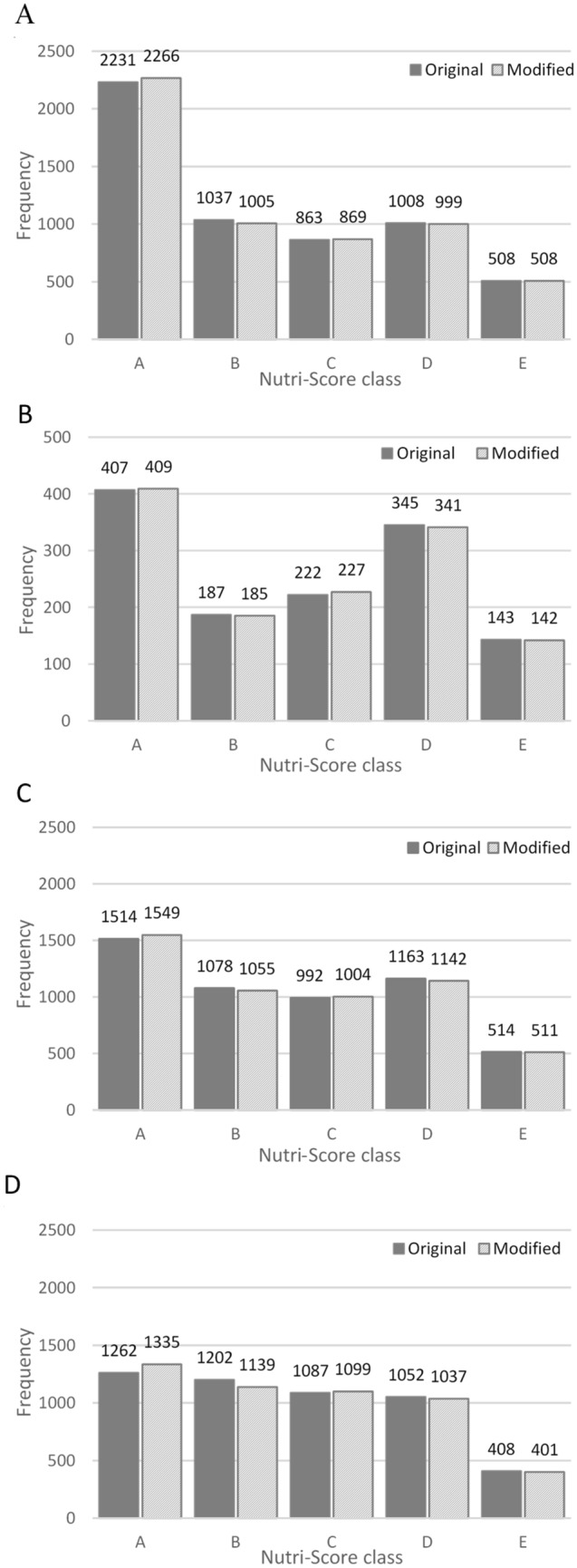
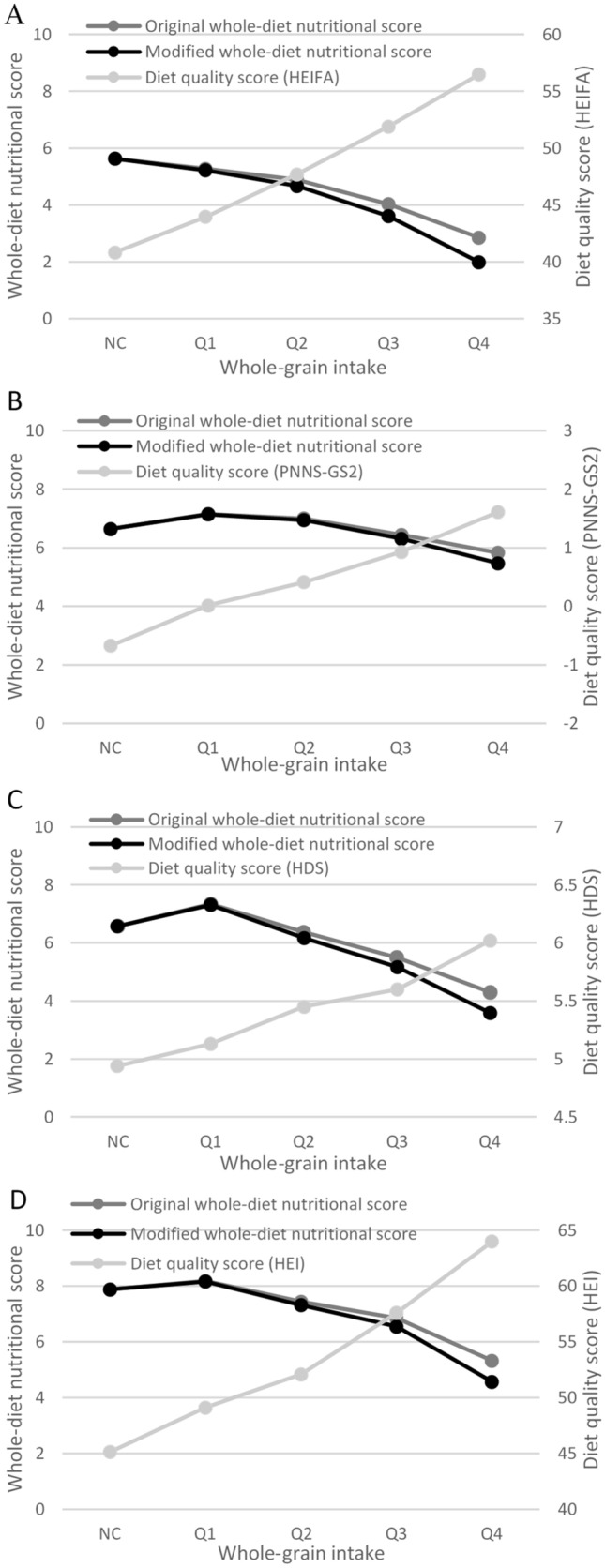
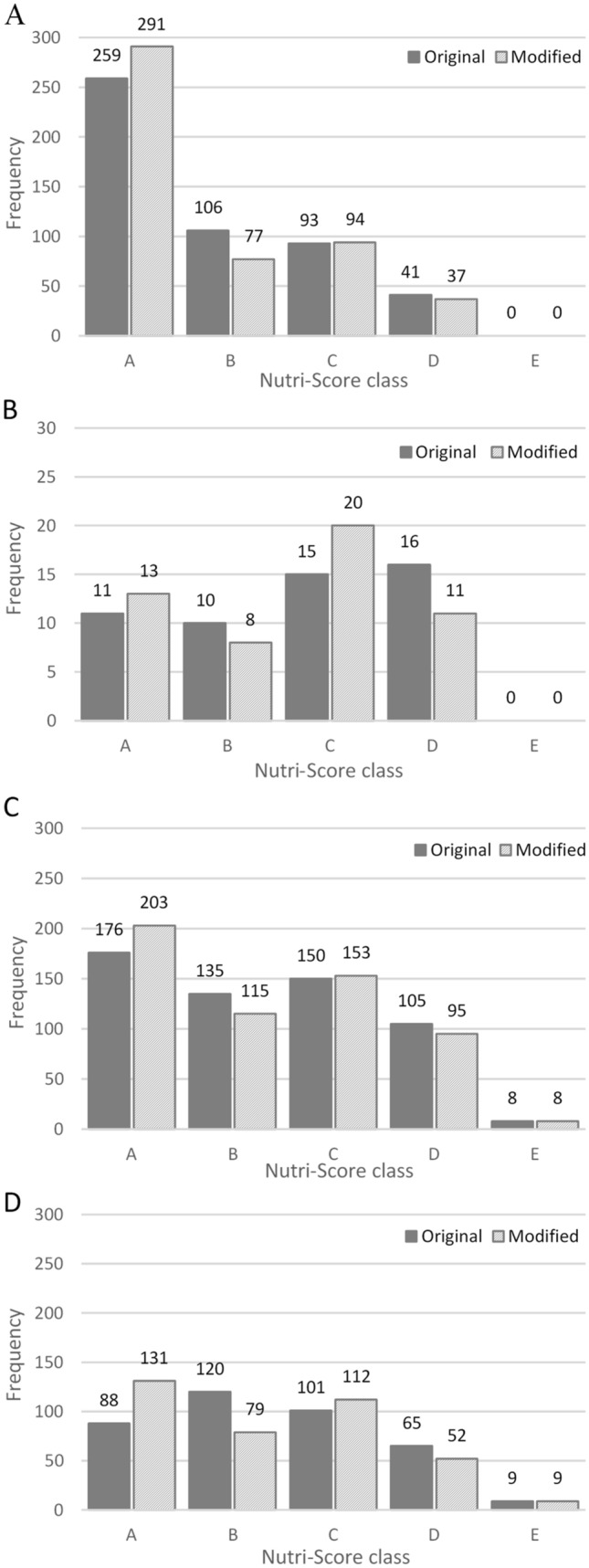
At the food level, correlations between whole-grain content and food nutritional score were strengthened using the modified algorithm in Australian data, but less so for the other countries. Improvements were greater in grain-specific food groups. The largest shift in Nutri-Score class was from B to A (best score). At the dietary intake level, whole-diet nutritional scores for individuals were calculated and compared against population-specific diet-quality scores. With modifications, correlations with diet-quality scores were improved slightly, suggesting that the modified score better aligns with national dietary guidelines. An inverse linear relationship between whole-diet nutritional score and whole-grain intake was evident, particularly with modifications (lower whole-diet nutritional score indicative of better diet quality).
Including a whole-grain component in the Nutri-Score algorithm is justified to align with dietary guidelines and better reflect whole grain as a contributor to improved dietary quality. Further research is required to test alternative algorithms and potentially other nutrient profiling systems.
全谷物通常被认为是健康的选择,但它们并不包含在大多数营养成分分析系统中。我们测试了对 Nutri-Score 算法的修改,以确定包含全谷物是否可以提供一种更好的食物和整体饮食质量衡量标准。
我们按照类似的方法,将最低含量为 25%的全谷物含量添加到算法中,对其他促进健康的成分(如纤维)进行评分。我们应用并比较了原始和修改后的 Nutri-Score 算法,以分析澳大利亚、法国、英国和美国的食物成分和饮食摄入量数据。
在食物层面上,使用修改后的算法可以加强全谷物含量与食物营养评分之间的相关性,而在其他国家则不然。在谷物类食物组中,这种改善更为明显。Nutri-Score 等级的最大变化是从 B 级(最佳等级)变为 A 级。在饮食摄入层面上,计算了个体的全饮食营养评分,并与特定人群的饮食质量评分进行了比较。通过修改,与饮食质量评分的相关性略有改善,表明修改后的评分更符合国家饮食指南。全饮食营养评分与全谷物摄入量之间存在明显的负线性关系,尤其是在进行了修改之后(全饮食营养评分越低,饮食质量越好)。
在 Nutri-Score 算法中包含全谷物成分是合理的,这符合饮食指南,并更好地反映了全谷物作为改善饮食质量的贡献。需要进一步研究来测试替代算法和潜在的其他营养成分分析系统。