School of Psychology/School of Food Science & Nutrition, University of Leeds, Woodhouse Lane, Leeds, LS2 9JT, UK.
School of Health and Related Research, Public Health, University of Sheffield, Sheffield, UK.
Br J Nutr. 2024 Feb 28;131(4):672-685. doi: 10.1017/S0007114523002106. Epub 2023 Sep 22.
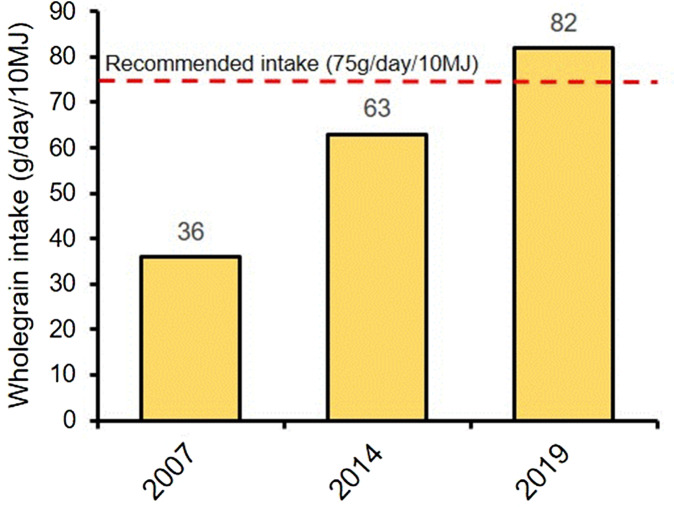
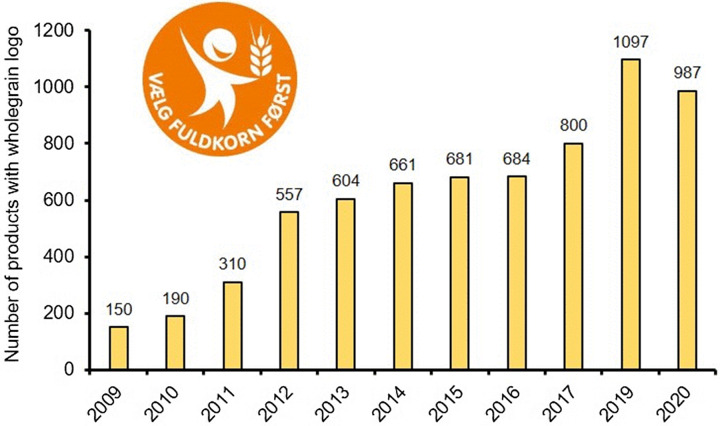
Diets deficient in fibre are reported globally. The associated health risks of insufficient dietary fibre are sufficiently grave to necessitate large-scale interventions to increase population intake levels. The Danish Whole Grain Partnership (DWP) is a public-private enterprise model that successfully augmented whole-grain intake in the Danish population. The potential transferability of the DWP model to Slovenia, Romania and Bosnia-Herzegovina has recently been explored. Here, we outline the feasibility of adopting the approach in the UK. Drawing on the collaborative experience of DWP partners, academics from the Healthy Soil, Healthy Food, Healthy People (H3) project and food industry representatives (Food and Drink Federation), this article examines the transferability of the DWP approach to increase whole grain and/or fibre intake in the UK. Specific consideration is given to the UK's political, regulatory and socio-economic context. We note key political, regulatory, social and cultural challenges to transferring the success of DWP to the UK, highlighting the particular challenge of increasing fibre consumption among low socio-economic status groups - which were also most resistant to interventions in Denmark. Wholesale transfer of the DWP model to the UK is considered unlikely given the absence of the key 'success factors' present in Denmark. However, the DWP provides a template against which a UK-centric approach can be developed. In the absence of a clear regulatory context for whole grain in the UK, fibre should be prioritised and public-private partnerships supported to increase the availability and acceptability of fibre-rich foods.
全球范围内都有报道称,人们的饮食中缺乏膳食纤维。膳食纤维摄入不足会带来严重的健康风险,因此需要采取大规模干预措施来提高人群的膳食纤维摄入量。丹麦全谷物合作伙伴关系(DWP)是一种公私合营的模式,成功地增加了丹麦人口的全谷物摄入量。最近,人们探讨了将 DWP 模式推广到斯洛文尼亚、罗马尼亚和波斯尼亚和黑塞哥维那的可能性。在这里,我们概述了在英国采用这种方法的可行性。本文借鉴了 DWP 合作伙伴的合作经验,来自“健康土壤、健康食品、健康人群”(H3)项目的学者以及食品行业代表(食品和饮料联合会),探讨了 DWP 方法在英国增加全谷物和/或膳食纤维摄入量的可转移性。本文特别考虑了英国的政治、监管和社会经济背景。我们注意到将 DWP 的成功经验转移到英国所面临的关键政治、监管、社会和文化挑战,突出了在英国增加低收入社会经济群体膳食纤维摄入量的特殊挑战——这也是丹麦干预措施最不受欢迎的群体。鉴于丹麦存在的关键“成功因素”在英国缺失,全盘照搬 DWP 模式在英国不太可能成功。然而,DWP 为英国制定了一个以英国为中心的方法模板。在英国没有明确的全谷物监管框架的情况下,应优先考虑膳食纤维,并支持公私合作伙伴关系,以增加富含纤维的食物的供应和可接受性。