Govender Melanie A, Brandenburg Jean-Tristan, Fabian June, Ramsay Michèle
Division of Human Genetics, National Health Laboratory Service and School of Pathology, Faculty of Health Sciences, University of the Witwatersrand, Johannesburg, South Africa.
Sydney Brenner Institute for Molecular Bioscience, Faculty of Health Sciences, University of the Witwatersrand, Johannesburg, South Africa.
Front Genet. 2021 Nov 8;12:682929. doi: 10.3389/fgene.2021.682929. eCollection 2021.
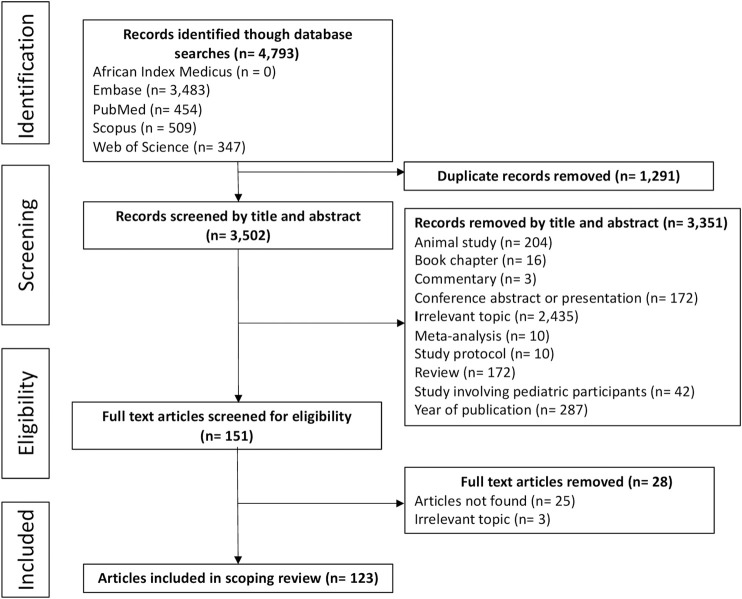
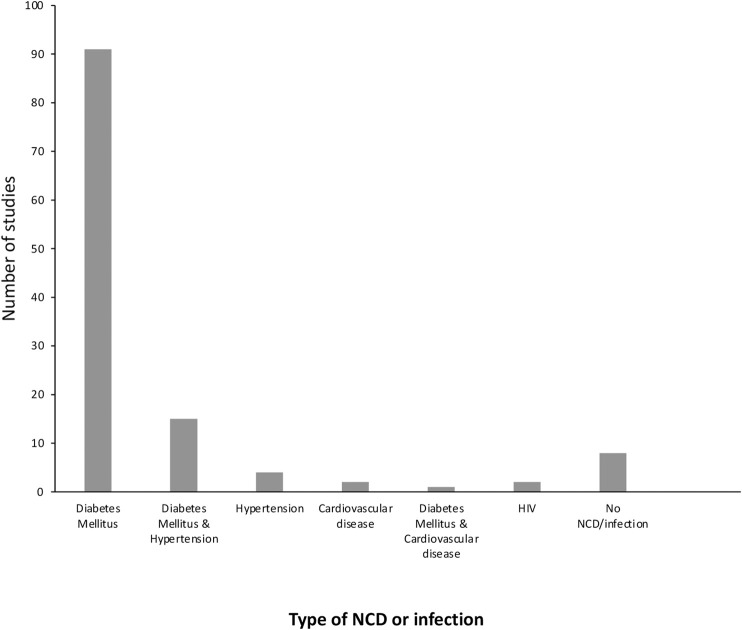
Globally, chronic kidney disease (CKD) contributes substantial morbidity and mortality. Recently, various 'omics platforms have provided insight into the molecular basis of kidney dysfunction. This scoping review is a synthesis of the current literature on the use of different 'omics platforms to identify biomarkers that could be used to detect early-stage CKD, predict disease progression, and identify pathways leading to CKD. This review includes 123 articles published from January 2007 to May 2021, following a structured selection process. The most common type of 'omic platform was proteomics, appearing in 55 of the studies and two of these included a metabolomics component. Most studies ( = 91) reported on CKD associated with diabetes mellitus. Thirteen studies that provided information on the biomarkers associated with CKD and explored potential pathways involved in CKD are discussed. The biomarkers that are associated with risk or early detection of CKD are SNPs in the and genes, the proteomic CKD273 biomarker panel and metabolite pantothenic acid. Pantothenic acid and the CKD273 biomarker panel were also involved in predicting CKD progression. Retinoic acid pathway genes, , and pantothenic acid provided insight into potential pathways leading to CKD. The biomarkers were mainly used to detect CKD and predict progression in high-income, European ancestry populations, highlighting the need for representative 'omics research in other populations with disparate socio-economic strata, including Africans, since disease etiologies may differ across ethnic groups. To assess the transferability of findings, it is essential to do research in diverse populations.
在全球范围内,慢性肾脏病(CKD)导致了大量的发病和死亡。最近,各种“组学”平台为肾功能障碍的分子基础提供了深入见解。本范围综述综合了当前关于使用不同“组学”平台来识别可用于检测早期CKD、预测疾病进展以及确定导致CKD的途径的生物标志物的文献。本综述按照结构化筛选流程纳入了2007年1月至2021年5月发表的123篇文章。最常见的“组学”平台类型是蛋白质组学,在55项研究中出现,其中两项还包括代谢组学成分。大多数研究(n = 91)报道了与糖尿病相关的CKD。讨论了13项提供了与CKD相关生物标志物信息并探索了CKD潜在途径的研究。与CKD风险或早期检测相关的生物标志物是APOL1和MYH9基因中的单核苷酸多态性(SNPs)、蛋白质组学CKD273生物标志物组以及代谢物泛酸。泛酸和CKD273生物标志物组也参与了预测CKD进展。视黄酸途径基因、RARB和泛酸为导致CKD的潜在途径提供了深入见解。这些生物标志物主要用于在高收入、欧洲血统人群中检测CKD和预测进展,这凸显了在包括非洲人在内的具有不同社会经济阶层的其他人群中开展具有代表性的“组学”研究的必要性,因为不同种族群体的疾病病因可能不同。为了评估研究结果的可转移性,在多样化人群中开展研究至关重要。