Wang Li, Guo Xiaolei, Chen Jiaqing, Zhen Zhen, Cao Bin, Wan Wenqian, Dou Yuandong, Pan Haobo, Xu Feng, Zhang Zepu, Wang Jianmei, Li Daisong, Guo Quanyi, Jiang Qing, Du Yanan, Yu Jiakuo, Heng Boon Chin, Han Qianqian, Ge Zigang
Department of Biomedical Engineering, College of Engineering, Peking University, Beijing, PR China.
Center for Medical Device Evaluation, National Medical Products Administration, Beijing, PR China.
Bioact Mater. 2021 Aug 3;9:332-342. doi: 10.1016/j.bioactmat.2021.07.031. eCollection 2022 Mar.
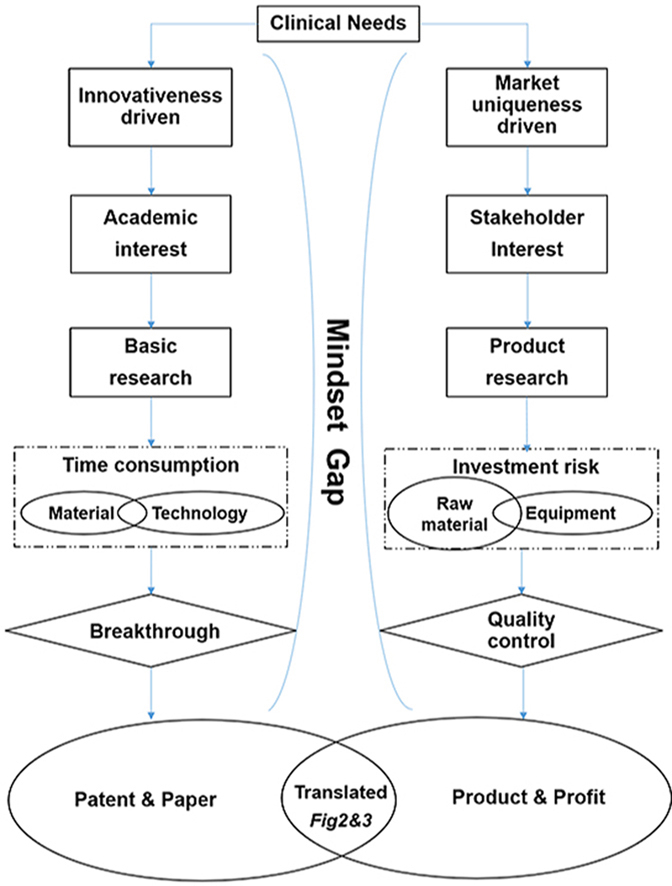
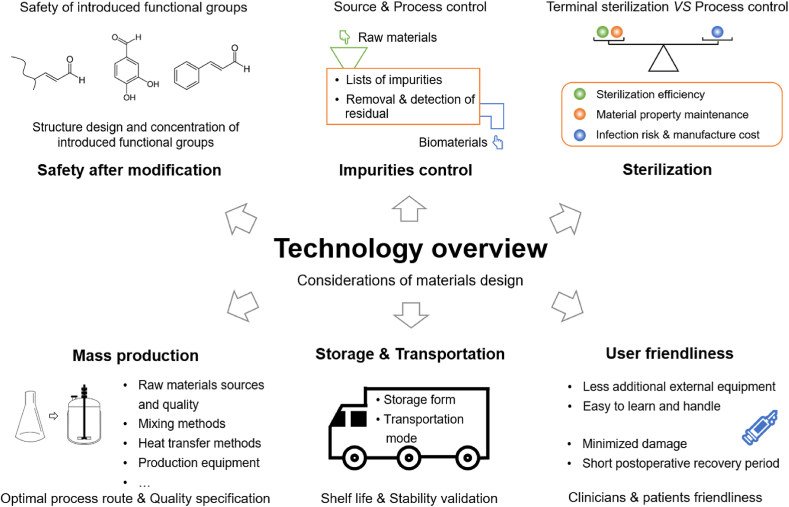
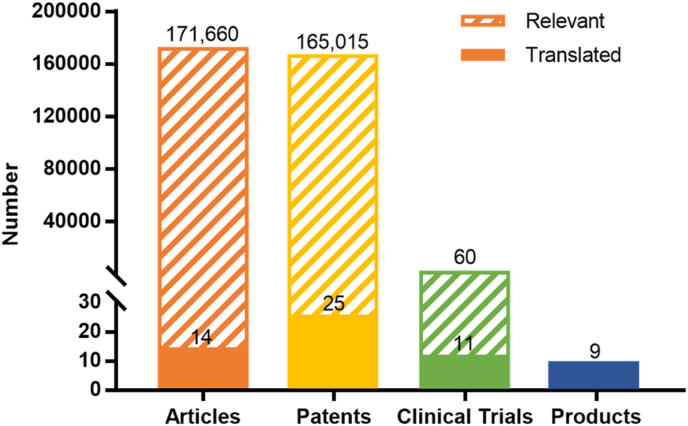
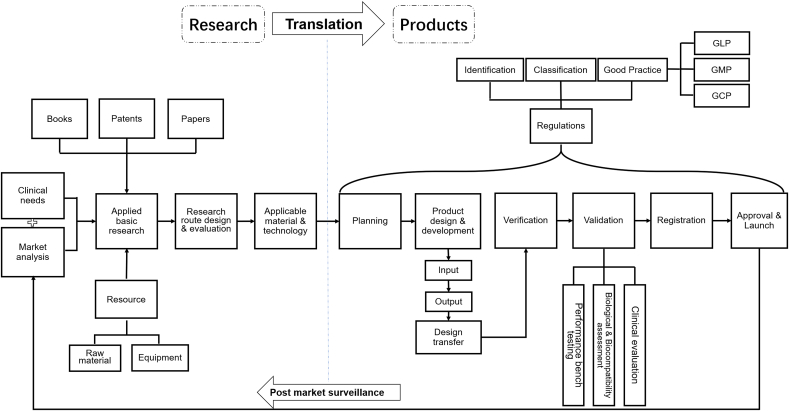
With the interdisciplinary convergence of biology, medicine and materials science, both research and clinical translation of biomaterials are progressing at a rapid pace. However, there is still a huge gap between applied basic research on biomaterials and their translational products - medical devices, where two significantly different perspectives and mindsets often work independently and non-synergistically, which in turn significantly increases financial costs and research effort. Although this gap is well-known and often criticized in the biopharmaceutical industry, it is gradually widening. In this article, we critically examine the developmental pipeline of biodegradable biomaterials and biomaterial-based medical device products. Then based on clinical needs, market analysis, and relevant regulations, some ideas are proposed to integrate the two different mindsets to guide applied basic research and translation of biomaterial-based products, from the material and technical perspectives. Cartilage repair substitutes are discussed here as an example. Hopefully, this will lay a strong foundation for biomaterial research and clinical translation, while reducing the amount of extra research effort and funding required due to the dissonance between innovative basic research and commercialization pipeline.
随着生物学、医学和材料科学的跨学科融合,生物材料的研究和临床转化都在迅速发展。然而,生物材料的应用基础研究与其转化产品——医疗器械之间仍然存在巨大差距,在这两个领域中,两种截然不同的观点和思维方式往往各自为政、缺乏协同,这反过来又显著增加了财务成本和研究工作量。尽管这一差距在生物制药行业广为人知且常遭诟病,但它仍在逐渐扩大。在本文中,我们批判性地审视了可生物降解生物材料和基于生物材料的医疗器械产品的研发流程。然后基于临床需求、市场分析和相关法规,从材料和技术角度提出了一些整合两种不同思维方式的想法,以指导基于生物材料产品的应用基础研究和转化。本文以软骨修复替代物为例进行讨论。希望这将为生物材料研究和临床转化奠定坚实基础,同时减少由于创新基础研究与商业化流程不一致而所需的额外研究工作量和资金。