Department of Clinical Sciences, Cornell University, College of Veterinary Medicine, Ithaca, New York, USA.
Department of Biomedical Sciences, Cornell University, College of Veterinary Medicine, Ithaca, New York, USA.
J Vet Intern Med. 2022 Jan;36(1):106-115. doi: 10.1111/jvim.16323. Epub 2021 Nov 25.
Superficial necrolytic dermatitis (SND) in dogs is a rare disorder most commonly associated with hepatocutaneous syndrome. Although often reported as fatal, sporadically reported long-term remissions might be more common than previously believed and linked to treatment regimens.
HYPOTHESIS/OBJECTIVES: Evaluate treatments and associated outcomes in dogs with hepatocutaneous-associated hepatopathy (HCH) with or without SND, designated collectively aminoaciduric canine hypoaminoacidemic hepatopathy syndrome (ACHES).
Forty-one dogs of various breeds and ages diagnosed with ACHES.
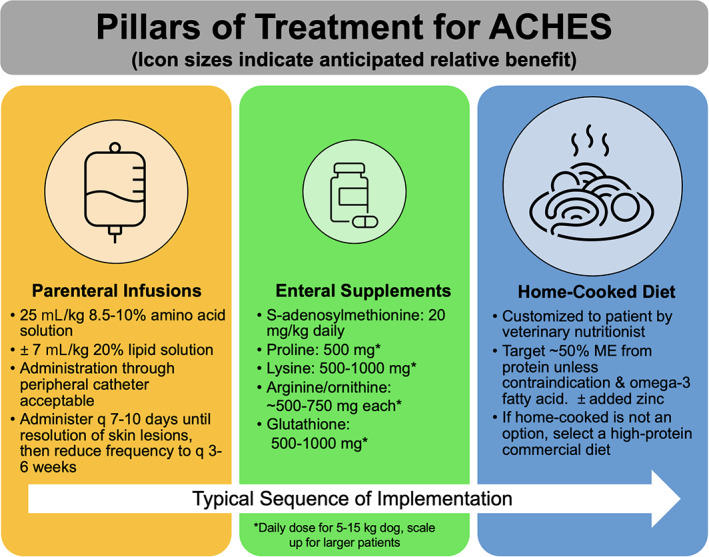
Retrospective study. Electronic surveys, medical records (2014-2019), and communication with veterinarians provided data. Three treatment categories were each dichotomized: IV amino acid (IV-AA) infusions (≥2 vs <2), supplements including S-adenosylmethionine (SAMe), arginine with ornithine, glutathione, lysine, proline, omega-3 fatty acids, or zinc (≥3 vs <3), and diet type (home-cooked vs commercial). Optimal treatment was defined as receiving ≥2 IV-AA treatments, ≥3 nutritional supplements, and a home-cooked diet.
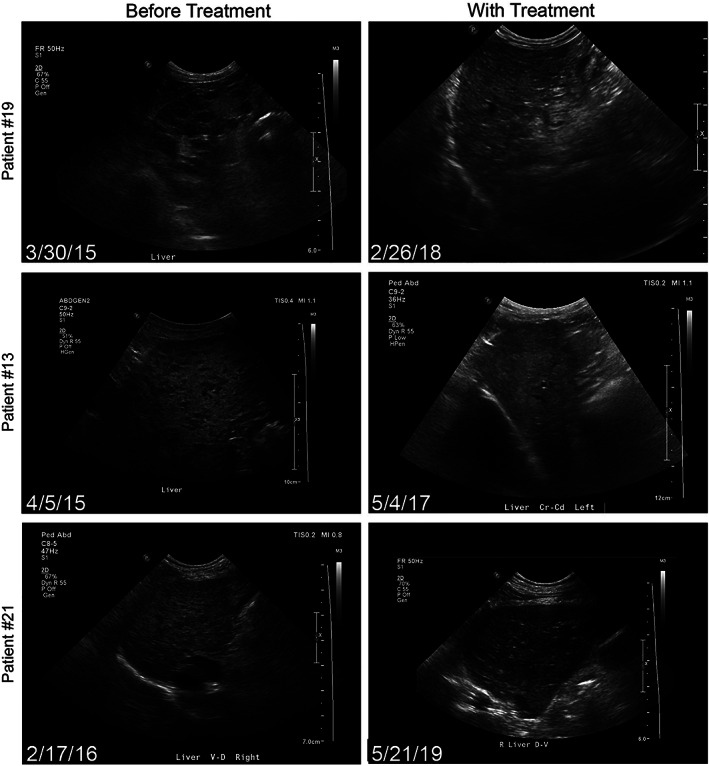
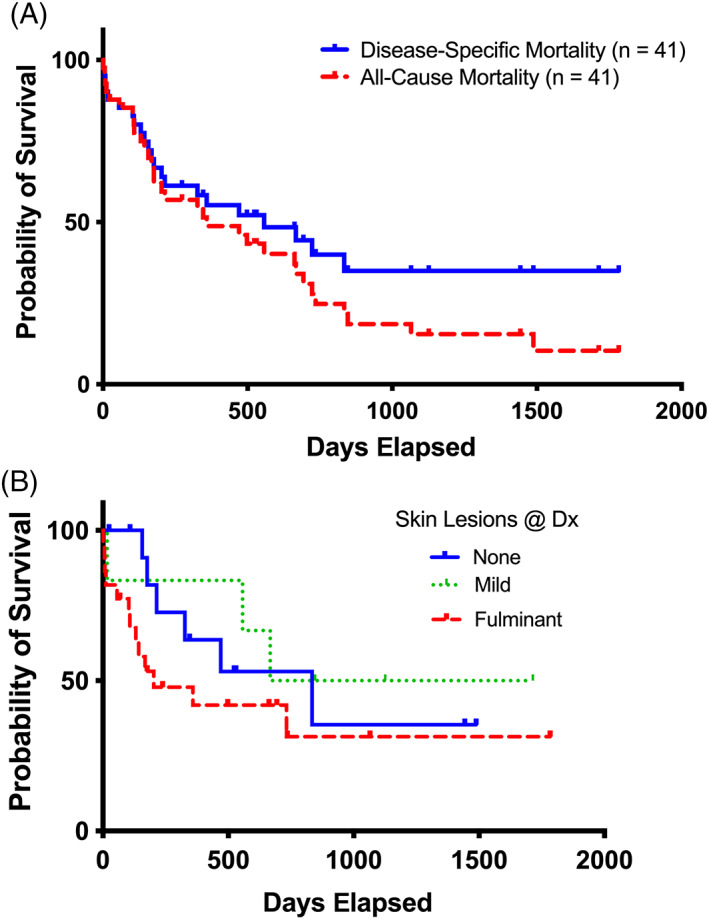
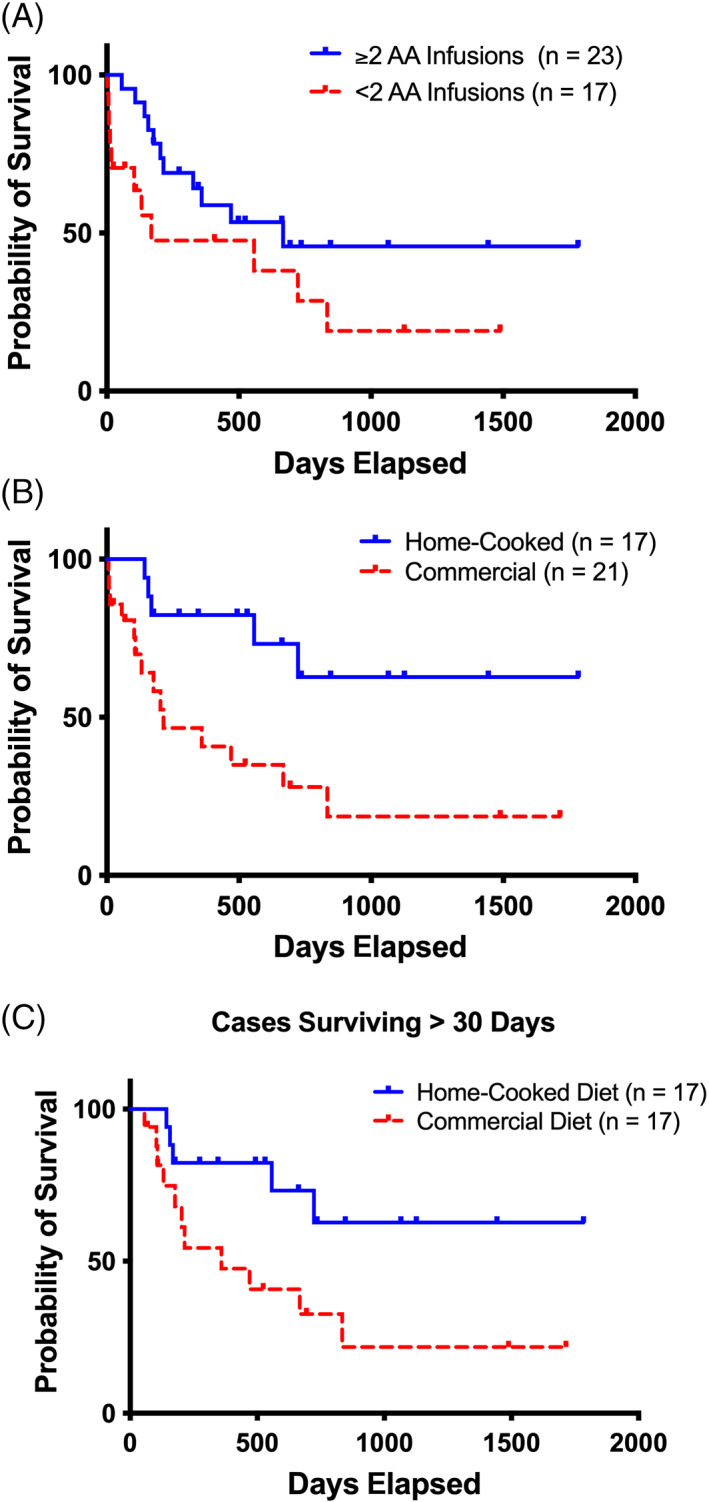
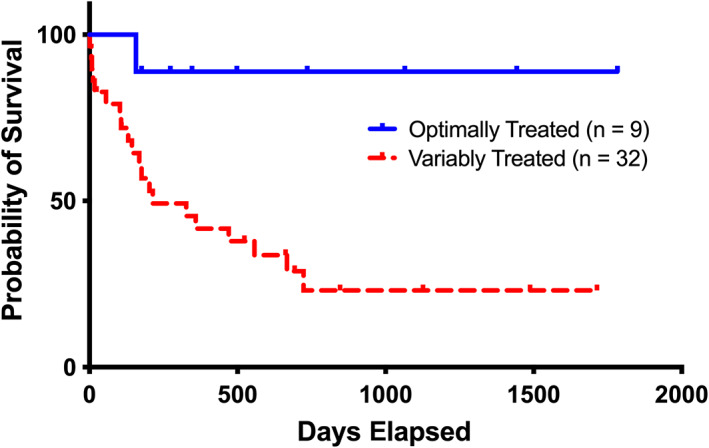
Most dogs (29/41, 71%) received IV-AA infusions (23/29, ≥2 infusions). Twenty-one dogs (51%) were fed commercial diets; 17/41 (41%) were fed home-cooked diets. Most dogs received SAMe (32/41, 78%) and a median of 3 supplements. In 4 dogs, HCH remission occurred. Overall all-cause median survival time (MST) was 359 days, and disease-specific MST was 557 days (range, 1-1783 days). Optimally treated dogs (n = 9) lived significantly longer (MST, >1783 days, P = .02) than variably treated dogs (MST, 214 days).
Optimized ACHES management can resolve SND and HCH and confer long-term survival.
犬类浅层坏死性皮炎(SND)是一种罕见的疾病,通常与肝皮肤病综合征有关。尽管这种疾病通常被报道为致命的,但偶尔也有报道称长期缓解的情况可能比以前认为的更为常见,并且与治疗方案有关。
假设/目的:评估患有肝皮肤病相关肝病(HCH)的犬(无论是否患有 SND)的治疗方法和相关结果,这些犬被统称为氨基酸尿性犬低氨基酸血症肝肝病综合征(ACHES)。
41 只不同品种和年龄的犬被诊断为 ACHES。
回顾性研究。电子调查、病历(2014-2019 年)和与兽医的沟通提供了数据。将三种治疗类别分别分为两类:静脉内氨基酸(IV-AA)输注(≥2 次与<2 次)、包括 S-腺苷甲硫氨酸(SAMe)、精氨酸与鸟氨酸、谷胱甘肽、赖氨酸、脯氨酸、ω-3 脂肪酸或锌(≥3 次与<3 次)在内的补充剂,以及饮食类型(自制与商业)。最佳治疗定义为接受≥2 次 IV-AA 治疗、≥3 种营养补充剂和自制饮食。
大多数犬(29/41,71%)接受了 IV-AA 输注(23/29,≥2 次输注)。21 只犬(51%)喂食商业饮食;41 只犬中的 17 只(41%)喂食自制饮食。大多数犬接受了 SAMe(32/41,78%)和中位数为 3 种补充剂。4 只犬的 HCH 缓解。总体而言,所有原因的中位总生存期(MST)为 359 天,疾病特异性 MST 为 557 天(范围,1-1783 天)。接受最佳治疗的犬(n=9)的生存期明显更长(MST,>1783 天,P=0.02),而接受可变治疗的犬(MST,214 天)的生存期更短。
ACHES 管理的优化可以解决 SND 和 HCH 问题,并带来长期生存。