Sosei-Heptares, Steinmetz Building, Granta Park, Cambridge, CB21 6DG, UK.
Sosei-Heptares, Steinmetz Building, Granta Park, Cambridge, CB21 6DG, UK; The Centre for Translational Pharmacology, Institute of Molecular, Cell and Systems Biology, College of Medical, Veterinary and Life Sciences, University of Glasgow, Glasgow, G12 8QQ, UK.
Cell. 2021 Nov 24;184(24):5886-5901.e22. doi: 10.1016/j.cell.2021.11.001.
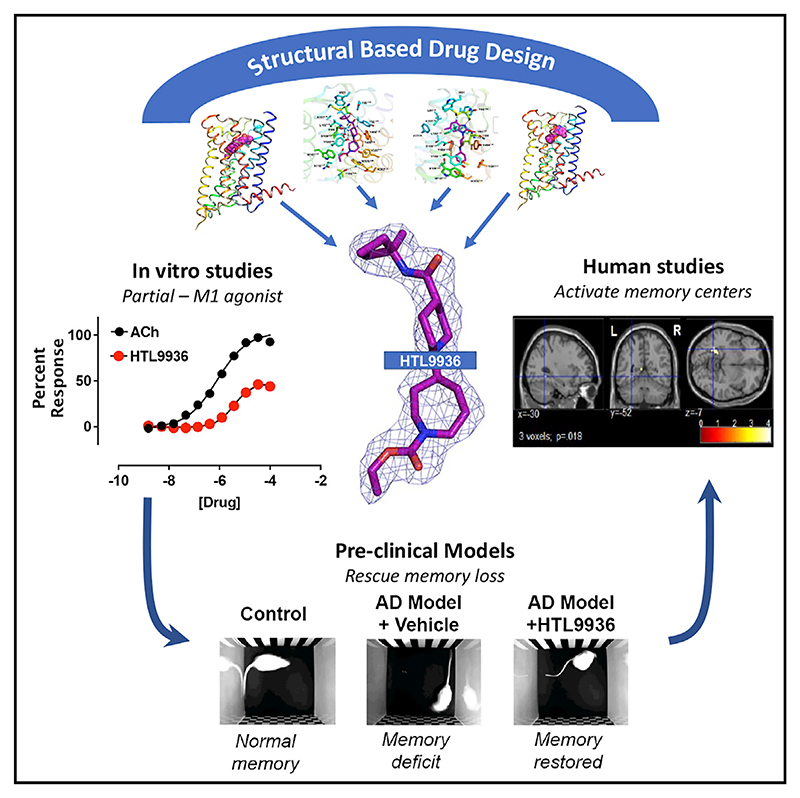
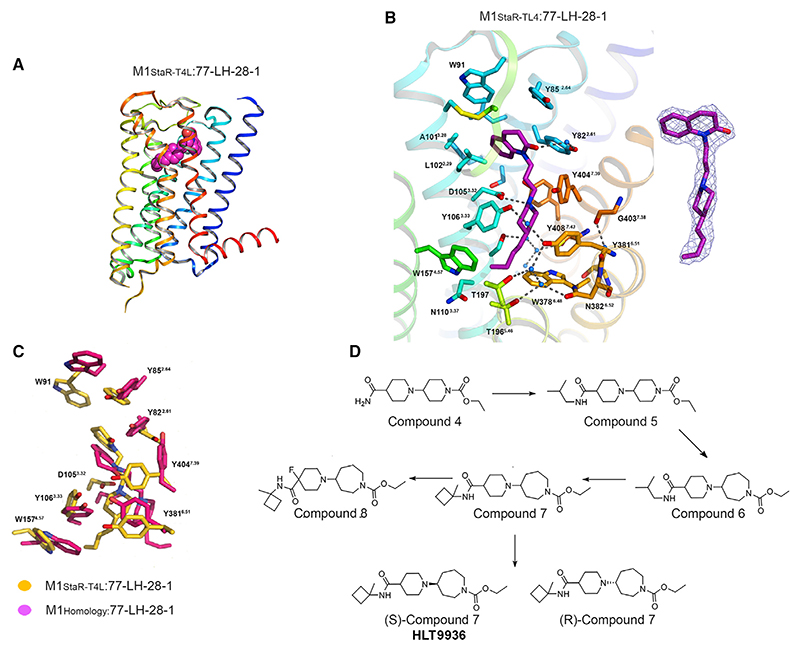
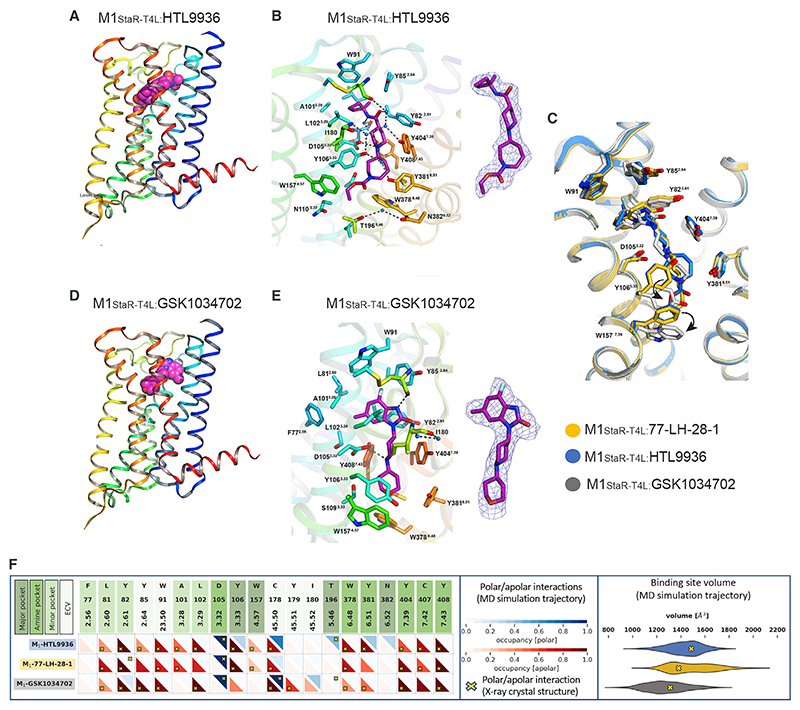
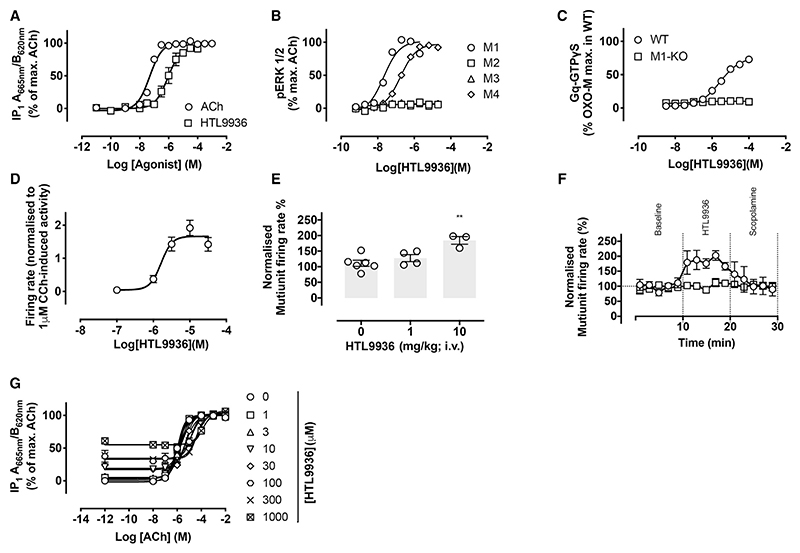
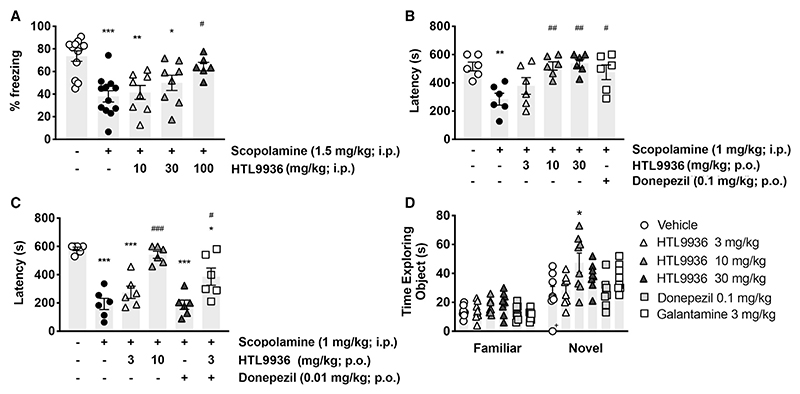
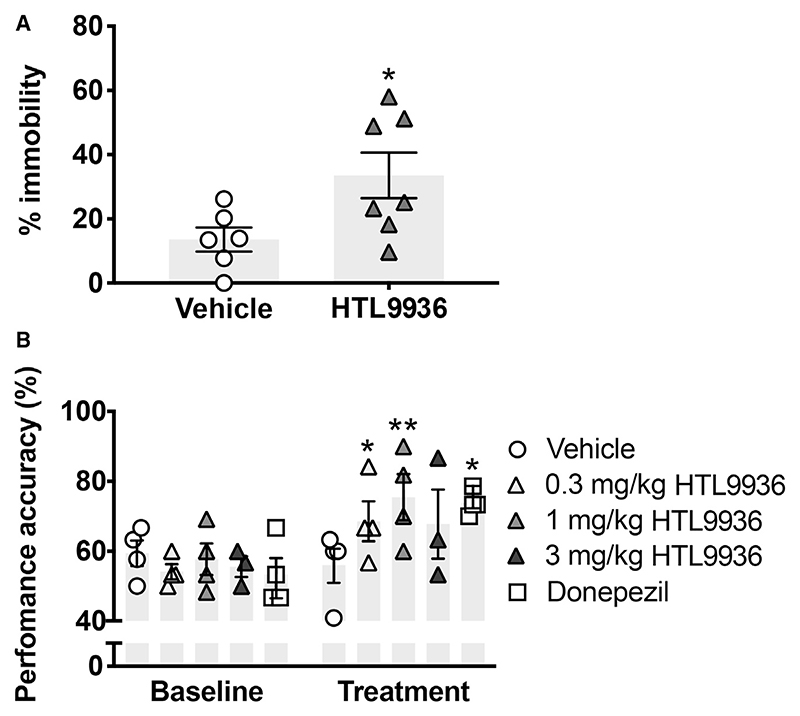
Current therapies for Alzheimer's disease seek to correct for defective cholinergic transmission by preventing the breakdown of acetylcholine through inhibition of acetylcholinesterase, these however have limited clinical efficacy. An alternative approach is to directly activate cholinergic receptors responsible for learning and memory. The M1-muscarinic acetylcholine (M1) receptor is the target of choice but has been hampered by adverse effects. Here we aimed to design the drug properties needed for a well-tolerated M1-agonist with the potential to alleviate cognitive loss by taking a stepwise translational approach from atomic structure, cell/tissue-based assays, evaluation in preclinical species, clinical safety testing, and finally establishing activity in memory centers in humans. Through this approach, we rationally designed the optimal properties, including selectivity and partial agonism, into HTL9936-a potential candidate for the treatment of memory loss in Alzheimer's disease. More broadly, this demonstrates a strategy for targeting difficult GPCR targets from structure to clinic.
目前治疗阿尔茨海默病的方法是通过抑制乙酰胆碱酯酶来防止乙酰胆碱的分解,从而纠正胆碱能传递的缺陷,但这些方法的临床疗效有限。另一种方法是直接激活负责学习和记忆的胆碱能受体。M1 毒蕈碱乙酰胆碱 (M1) 受体是首选的靶点,但由于不良反应而受到阻碍。在这里,我们旨在通过从原子结构、细胞/组织为基础的测定、临床前物种的评估、临床安全性测试,最后在人类的记忆中心建立活性的逐步转化方法,来设计一种耐受良好的 M1 激动剂的药物特性,从而有潜力减轻认知能力下降。通过这种方法,我们将包括选择性和部分激动性在内的最佳特性理性设计到 HTL9936 中,这是一种治疗阿尔茨海默病导致的记忆丧失的潜在候选药物。更广泛地说,这证明了一种从结构到临床靶向困难 GPCR 靶标的策略。