Department of Pathology and Laboratory Medicine, The Aga Khan University, Stadium Road, P.O. Box 3500, Karachi, 75400, Pakistan.
Department of Medicine, AKU, Karachi, Pakistan.
Sci Rep. 2021 Nov 25;11(1):22958. doi: 10.1038/s41598-021-02489-4.
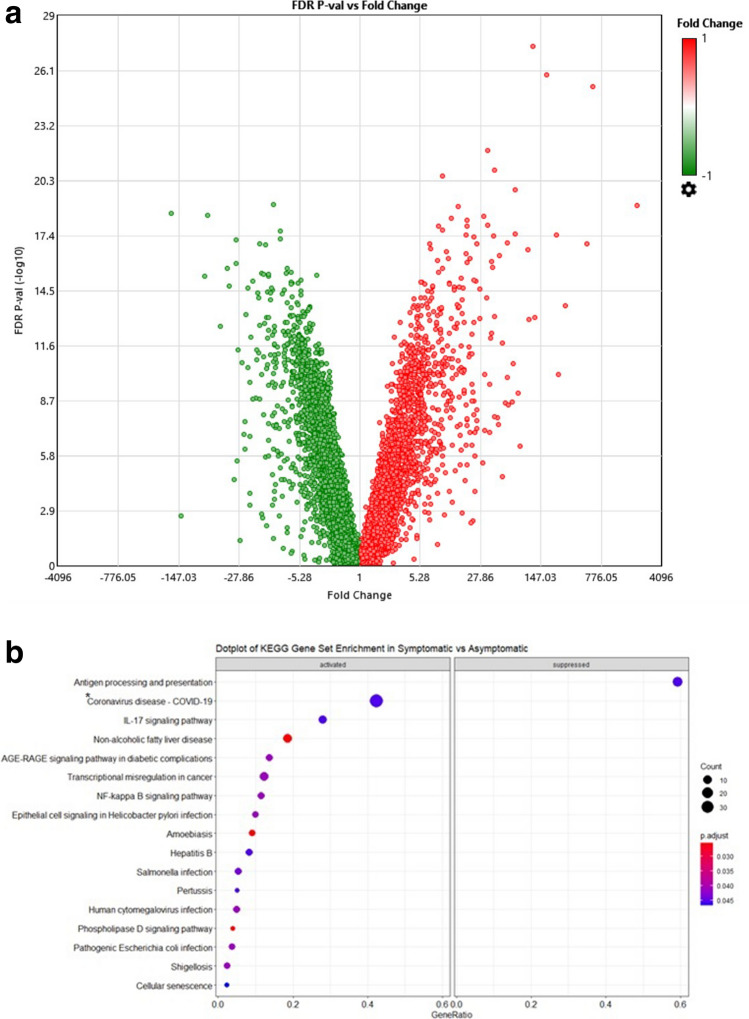
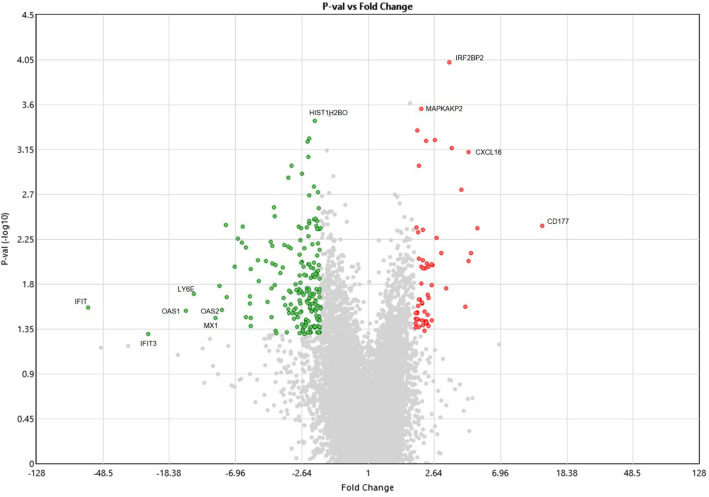
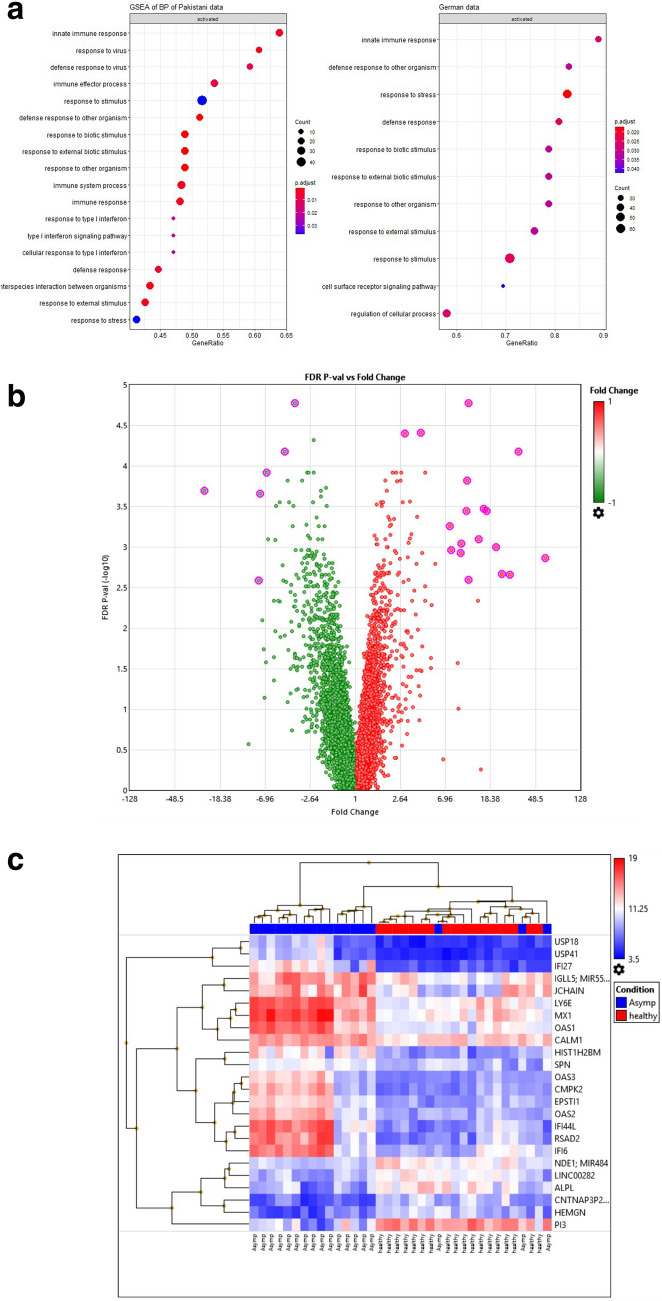
Understanding key host protective mechanisms against SARS-CoV-2 infection can help improve treatment modalities for COVID-19. We used a blood transcriptome approach to study biomarkers associated with differing severity of COVID-19, comparing severe and mild Symptomatic disease with Asymptomatic COVID-19 and uninfected Controls. There was suppression of antigen presentation but upregulation of inflammatory and viral mRNA translation associated pathways in Symptomatic as compared with Asymptomatic cases. In severe COVID-19, CD177 a neutrophil marker, was upregulated while interferon stimulated genes (ISGs) were downregulated. Asymptomatic COVID-19 cases displayed upregulation of ISGs and humoral response genes with downregulation of ICAM3 and TLR8. Compared across the COVID-19 disease spectrum, we found type I interferon (IFN) responses to be significantly upregulated (IFNAR2, IRF2BP1, IRF4, MAVS, SAMHD1, TRIM1), or downregulated (SOCS3, IRF2BP2, IRF2BPL) in Asymptomatic as compared with mild and severe COVID-19, with the dysregulation of an increasing number of ISGs associated with progressive disease. These data suggest that initial early responses against SARS-CoV-2 may be effectively controlled by ISGs. Therefore, we hypothesize that treatment with type I interferons in the early stage of COVID-19 may limit disease progression by limiting SARS-CoV-2 in the host.
了解宿主针对 SARS-CoV-2 感染的关键保护机制有助于改进 COVID-19 的治疗方法。我们采用血液转录组学方法研究与 COVID-19 严重程度相关的生物标志物,将重症和轻症有症状疾病与无症状 COVID-19 和未感染对照进行比较。与无症状病例相比,有症状病例中抗原呈递受到抑制,但炎症和病毒 mRNA 翻译相关途径上调。在重症 COVID-19 中,中性粒细胞标志物 CD177 上调,而干扰素刺激基因 (ISG) 下调。无症状 COVID-19 病例中 ISG 和体液反应基因上调,ICAM3 和 TLR8 下调。与 COVID-19 疾病谱相比,我们发现与轻症和重症 COVID-19 相比,I 型干扰素 (IFN) 反应在无症状病例中显著上调 (IFNAR2、IRF2BP1、IRF4、MAVS、SAMHD1、TRIM1) 或下调 (SOCS3、IRF2BP2、IRF2BPL),与疾病进展相关的 ISG 失调数量增加。这些数据表明,针对 SARS-CoV-2 的初始早期反应可能被 ISG 有效控制。因此,我们假设在 COVID-19 的早期阶段使用 I 型干扰素治疗可能通过限制宿主中的 SARS-CoV-2 来限制疾病进展。