Bujtor Melissa
Institute of Psychiatry, Psychology & Neuroscience Division of Psychological Medicine Kings College London and Institute for Physical Activity and Nutrition Research, School of Exercise and Nutrition Sciences, Deakin University, Melbourne, Victoria, Australia.
Brain Behav Immun Health. 2021 Oct 28;18:100369. doi: 10.1016/j.bbih.2021.100369. eCollection 2021 Dec.
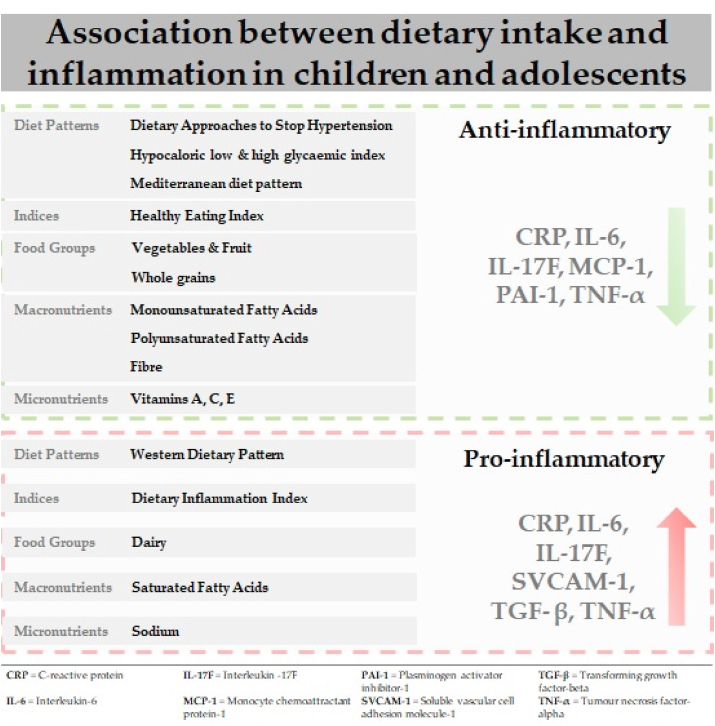
In children and adolescents, chronic low-grade inflammation has been implicated in the pathogenesis of co- and multi-morbid conditions to mental health disorders. Diet quality is a potential mechanism of action that can exacerbate or ameliorate low-grade inflammation; however, the exact way dietary intake can regulate the immune response in children and adolescents is still to be fully understood. In this review, I discuss the current observational and interventional evidence that supports a potential therapeutic role for dietary intake in the amelioration of low-grade inflammation and highlight the need to develop a better understanding of the biological mechanisms underlying and attenuating the associations between dietary intake and low-grade inflammation in children and adolescents.
在儿童和青少年中,慢性低度炎症被认为与心理健康障碍的共病和多种疾病的发病机制有关。饮食质量是一种可能加剧或改善低度炎症的潜在作用机制;然而,饮食摄入调节儿童和青少年免疫反应的确切方式仍有待充分了解。在这篇综述中,我讨论了当前的观察性和干预性证据,这些证据支持饮食摄入在改善低度炎症方面的潜在治疗作用,并强调需要更好地理解儿童和青少年饮食摄入与低度炎症之间关联的潜在生物学机制及减弱这种关联的机制。