Yang Yanpeng, Ma Yongchen, Yan Shen, Wang Pengyuan, Hu Jianwen, Chen Shanwen, Zhu Jing, Wang Jingui, Chen Guowei, Liu Yucun
Department of Gastroenterology, Peking University First Hospital, No. 8 Xishiku Street, Xicheng District, Beijing, China.
Department of Endoscopic Center, Peking University First Hospital, Beijing, China.
Gastric Cancer. 2022 May;25(3):503-514. doi: 10.1007/s10120-021-01270-w. Epub 2021 Nov 26.
Fibroblasts are the predominant cell type in the stroma of tumor, and cancer-associated fibroblasts (CAFs) promote cancer chemoresistance by secreting various bioactive molecules. However, the differential expression between CAFs and normal fibroblasts (NFs) and how can CAFs uniquely impact cancer cells are still unexplored.
Primary CAFs and NFs were cultured from gastric cancer specimens, and their variant expression was analyzed by RNA-sequencing. Chemoresistance was evaluated by measuring cell viability, apoptosis, and 3D-coculture techniques.
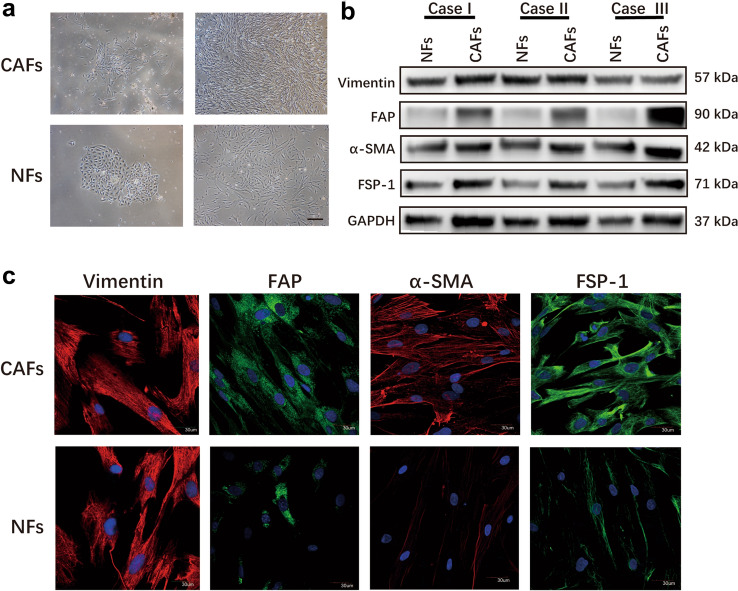
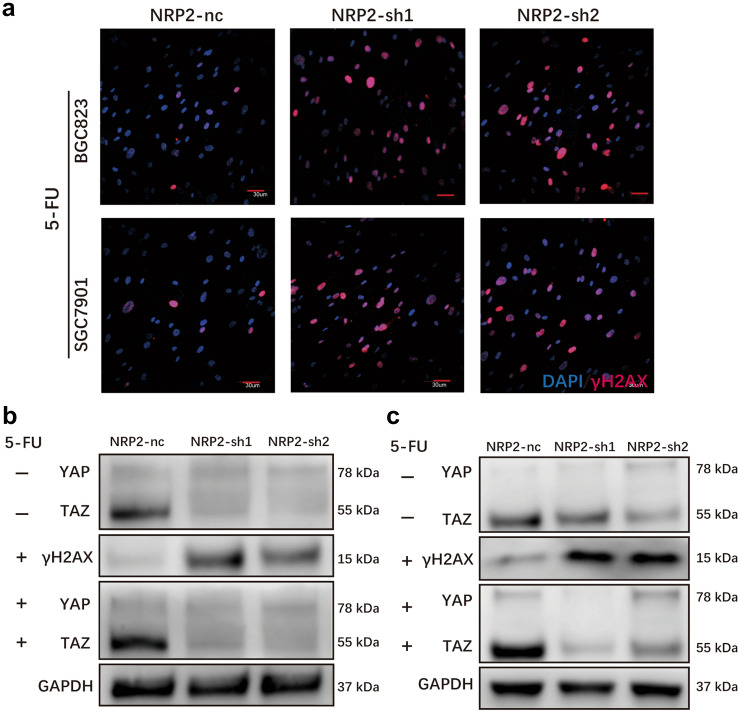
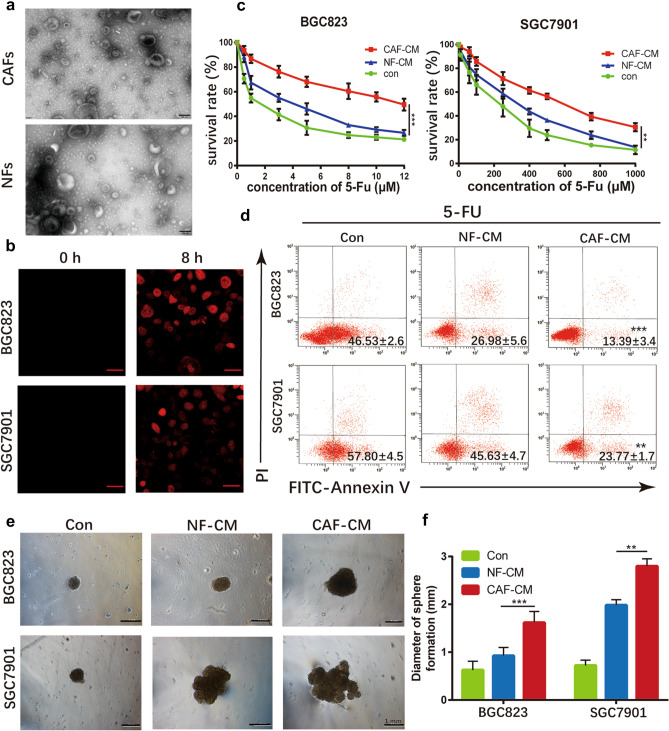
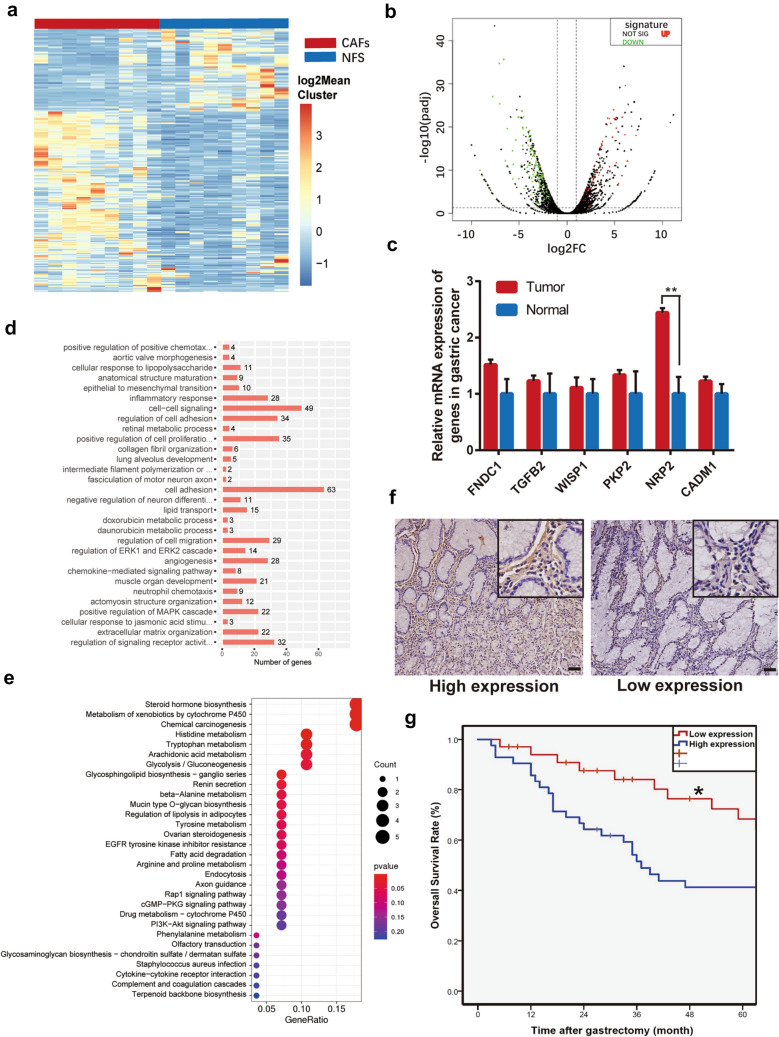
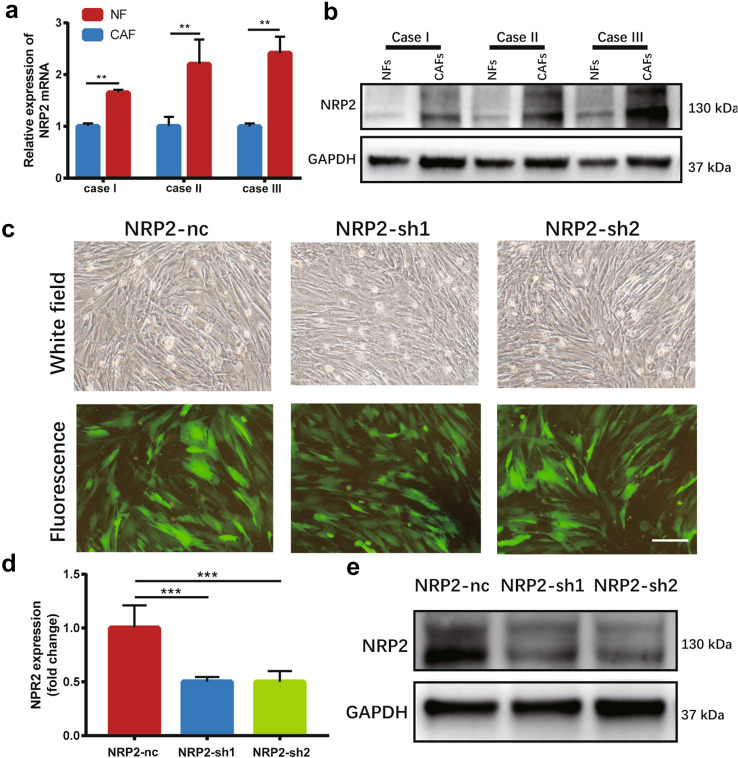
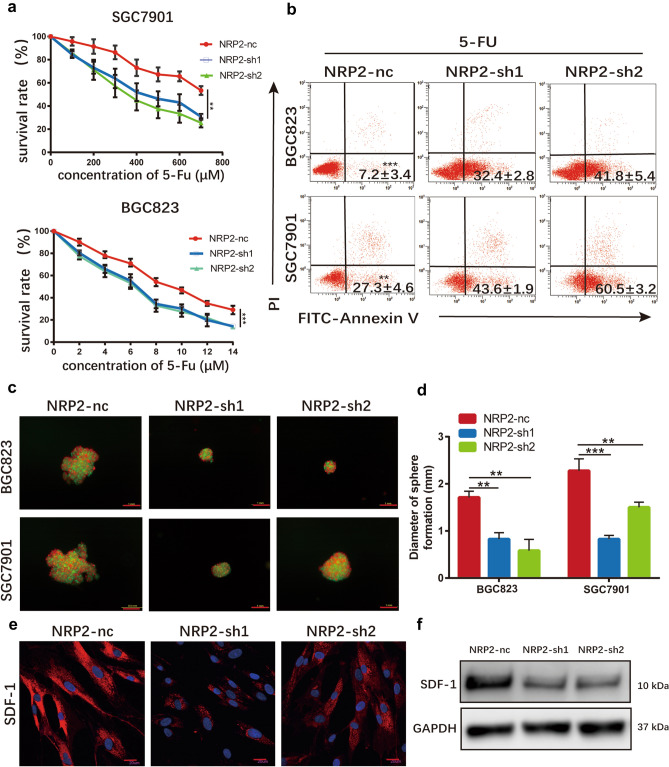
CAFs were isolated from gastric cancers and defined by specific cell-surface markers. CAFs decreased the sensitivity of gastric cancer cells to 5-FU. RNA-sequencing showed that CAFs expressed a higher level of NRP2 than NFs. And the high expression of NRP2 was correlated with worse oncological outcomes in gastric cancer patients. Further study showed that the knockdown of NRP2 eradicated the resistance to 5-FU. And the secretion of stromal cell-derived factor-1 (SDF-1) was reduced following NRP2 knockdown. Furthermore, we found that the increased sensitivity to 5-FU was induced by DNA damage. And this process was mediated by predominant effectors of the Hippo pathway, YAP/TAZ.
The present study indicated that CAFs within gastric cancers promote chemoresistance through the expression of NRP2. The secretion of SDF-1 that mediated by VEGF/NRP2 signaling in CAFs and the activation of Hippo pathway in cancer cells in large part participated in this project.
成纤维细胞是肿瘤基质中的主要细胞类型,癌症相关成纤维细胞(CAFs)通过分泌各种生物活性分子促进癌症化疗耐药性。然而,CAFs与正常成纤维细胞(NFs)之间的差异表达以及CAFs如何独特地影响癌细胞仍未得到探索。
从胃癌标本中培养原代CAFs和NFs,并通过RNA测序分析它们的差异表达。通过测量细胞活力、细胞凋亡和三维共培养技术评估化疗耐药性。
从胃癌中分离出CAFs并通过特定的细胞表面标志物进行定义。CAFs降低了胃癌细胞对5-氟尿嘧啶的敏感性。RNA测序显示,CAFs中NRP2的表达水平高于NFs。并且NRP2的高表达与胃癌患者较差的肿瘤学预后相关。进一步研究表明,敲低NRP2可消除对5-氟尿嘧啶的耐药性。NRP2敲低后,基质细胞衍生因子-1(SDF-1)的分泌减少。此外,我们发现对5-氟尿嘧啶敏感性的增加是由DNA损伤诱导的。并且这个过程是由Hippo通路的主要效应因子YAP/TAZ介导的。
本研究表明,胃癌中的CAFs通过NRP2的表达促进化疗耐药性。CAFs中由VEGF/NRP2信号介导的SDF-1分泌以及癌细胞中Hippo通路的激活在很大程度上参与了这一过程。