Adhikari Pradeep, Lee Yong-Ho, Park Yong-Soon, Hong Sun-Hee
Institute of Ecological Phytochemistry, Hankyong National University, Anseong 17579, Korea.
OJeong Resilience Institute, Korea University, Seoul 02841, Korea.
Biology (Basel). 2021 Nov 12;10(11):1169. doi: 10.3390/biology10111169.
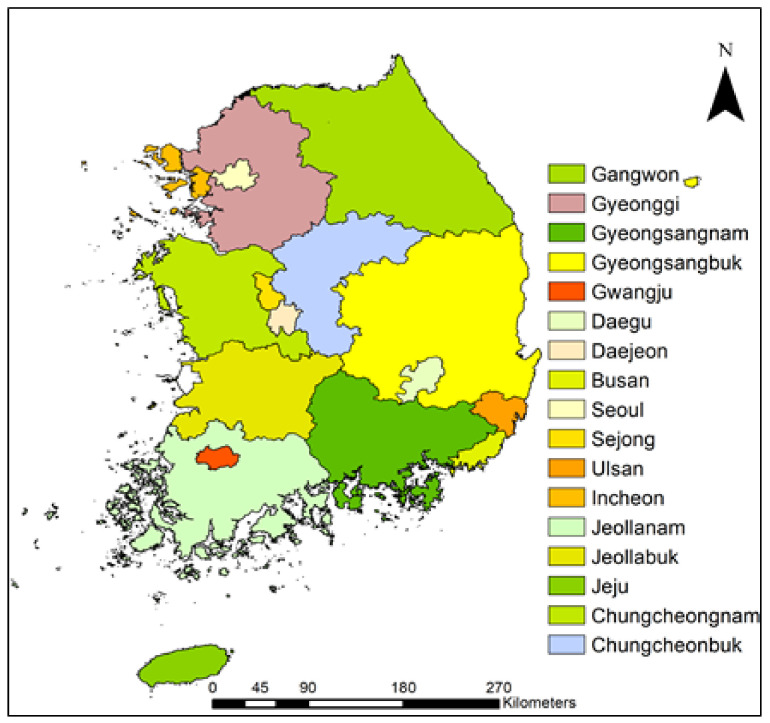
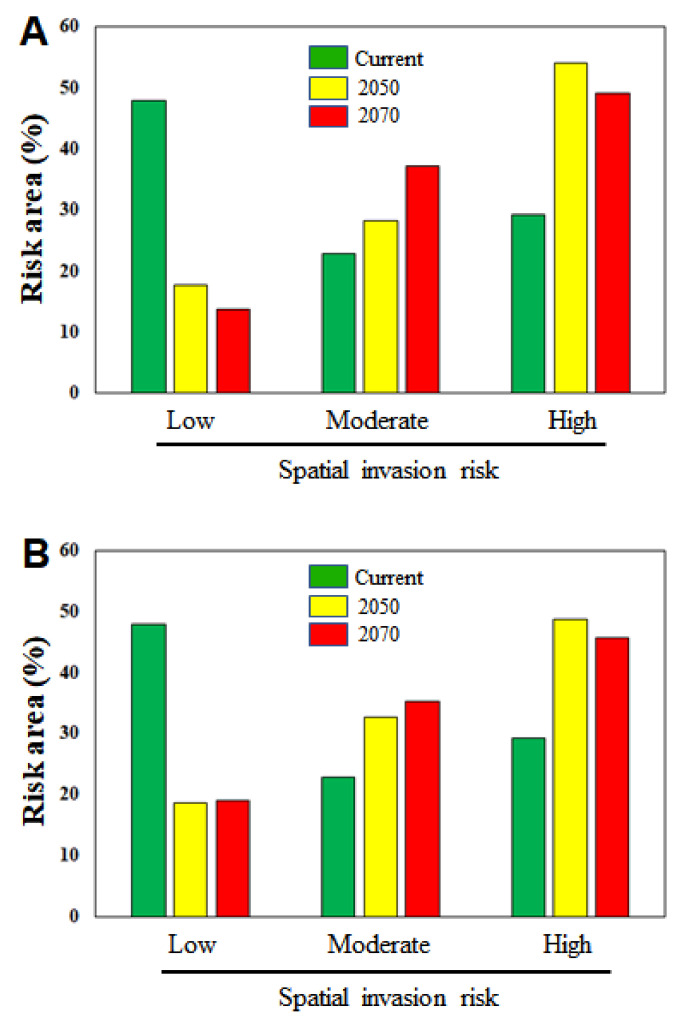
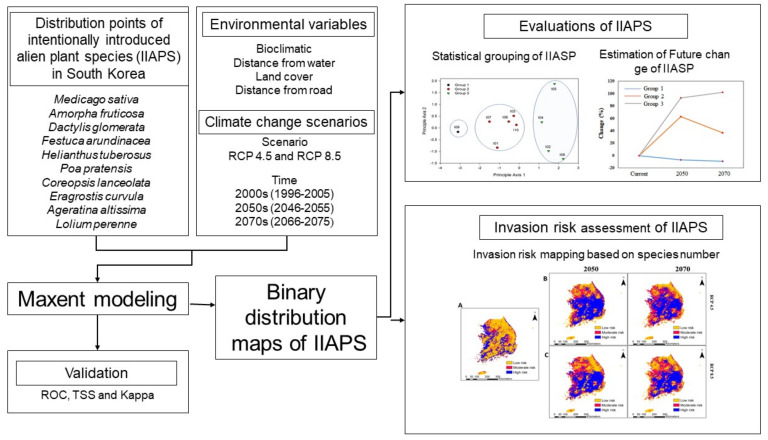
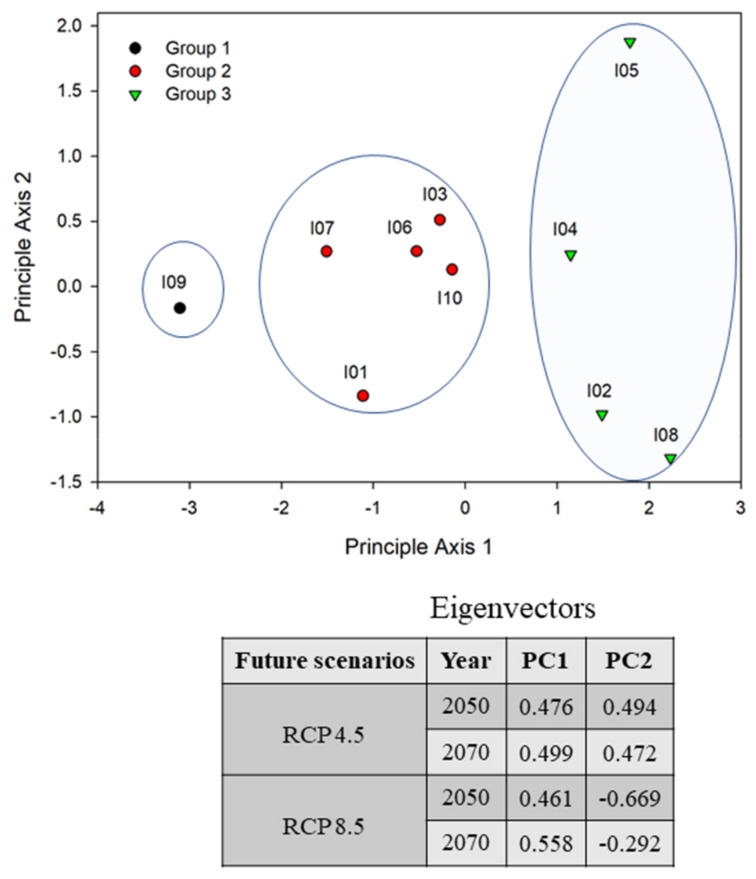
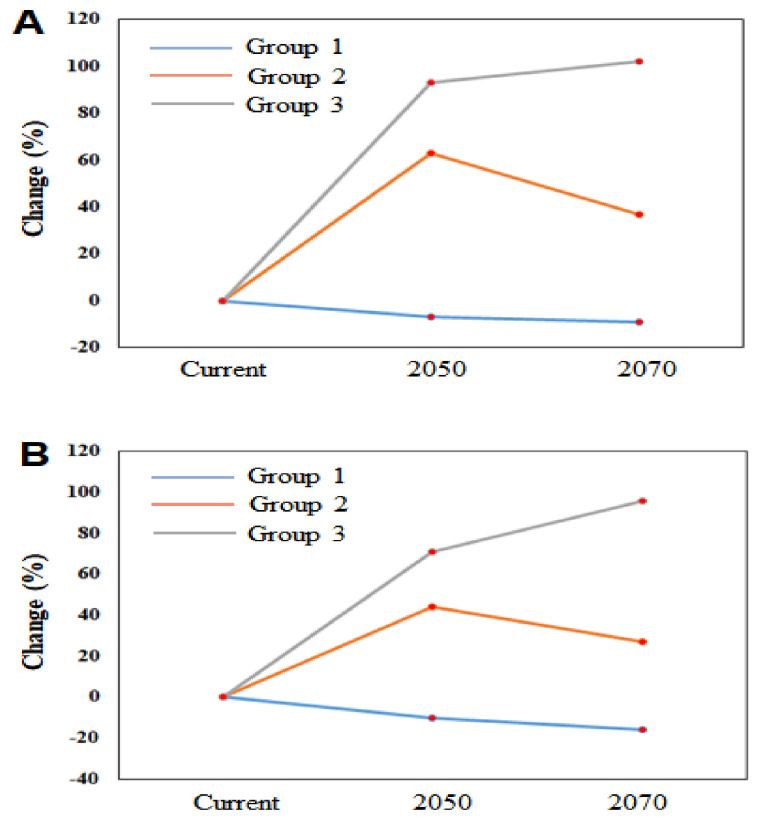
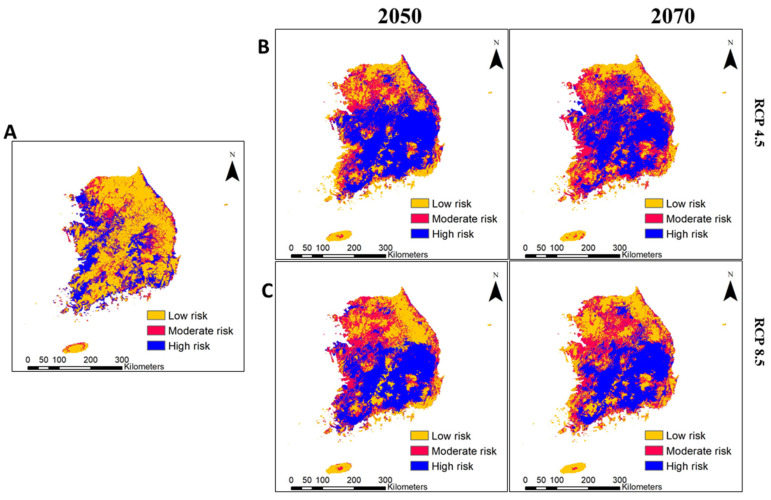
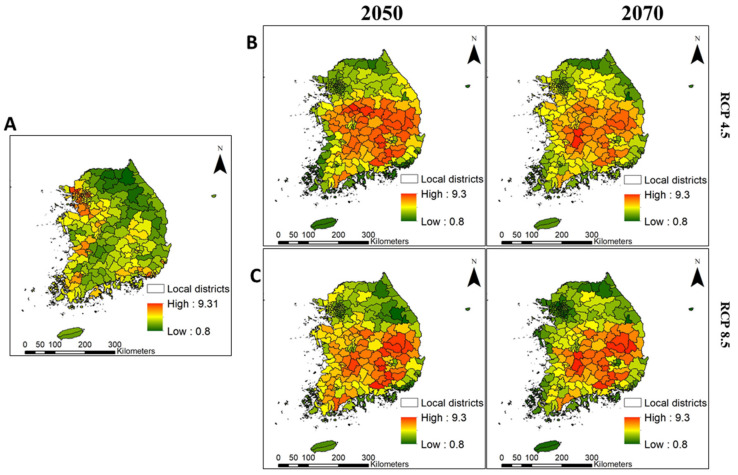
Predicting the regions at risk of invasion from IIAPS is an integral horizon-scanning activity that plays a crucial role in preventing, controlling, and eradicating invasive species. Here, we quantify the spatial distribution area and invasion risk of IIAPS using a species distribution model under different levels of environmental change in South Korea. From the model predictions, the current average spatial extent of the 10 IIAPS is 33,948 km, and the individual spatial extents are estimated to change by -7% to 150% by 2050 and by -9% to 156% by 2070. The spatial invasion risk assessment shows that, currently, moderate-to-high invasion risk is limited to coastal areas and densely populated metropolitan cities (e.g., Seoul, Busan, and Gwangju), but that the area with this level of risk is expected to spread toward the central and northern regions of the country in the future, covering 86.21% of the total area of the country by 2070. These results demonstrate that the risk of invasion by IIAPS is estimated to enlarge across the whole country under future environmental changes. The modeling system provided in this study may contribute to the initial control and strategic management of IIAPS to maintain the dynamic ecosystems of South Korea.
预测来自外来入侵植物物种的入侵风险区域是一项重要的前瞻性扫描活动,在预防、控制和根除入侵物种方面发挥着关键作用。在此,我们利用韩国不同环境变化水平下的物种分布模型,对入侵植物物种的空间分布面积和入侵风险进行了量化。根据模型预测,目前10种入侵植物物种的平均空间范围为33948平方公里,到2050年,其个体空间范围预计将变化-7%至150%,到2070年将变化-9%至156%。空间入侵风险评估表明,目前,中到高入侵风险仅限于沿海地区和人口密集的大城市(如首尔、釜山和光州),但预计未来这种风险水平的区域将向该国中部和北部地区蔓延,到2070年将覆盖该国总面积的86.21%。这些结果表明,在未来环境变化下,外来入侵植物物种的入侵风险预计将在全国范围内扩大。本研究中提供的建模系统可能有助于对外来入侵植物物种进行初步控制和战略管理,以维持韩国的动态生态系统。