Miao Junjie, Yin Zhendong, Yang Yuqin, Liang Yiwen, Xu Xiangdong, Shi Hongmei
Key Laboratory of Environment and Human Health of Hebei Province, School of Public Health, Hebei Medical University, Shijiazhuang 050017, China.
Antibiotics (Basel). 2021 Nov 8;10(11):1361. doi: 10.3390/antibiotics10111361.
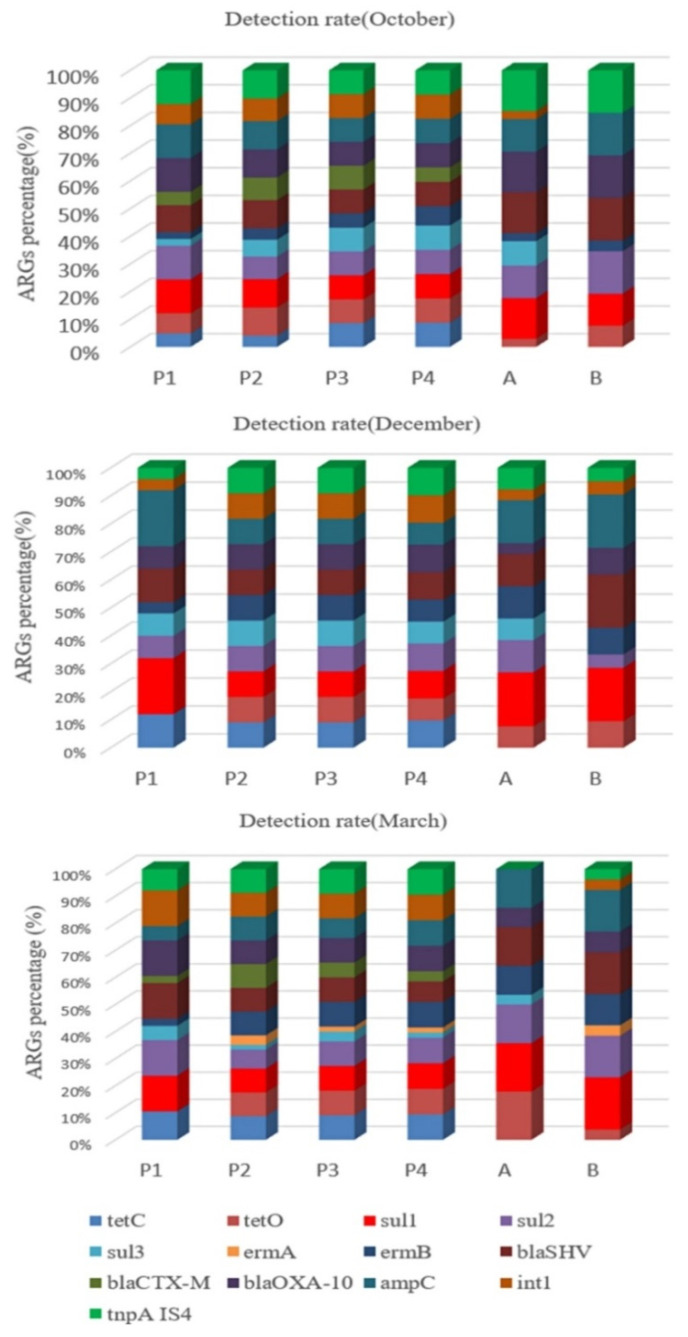
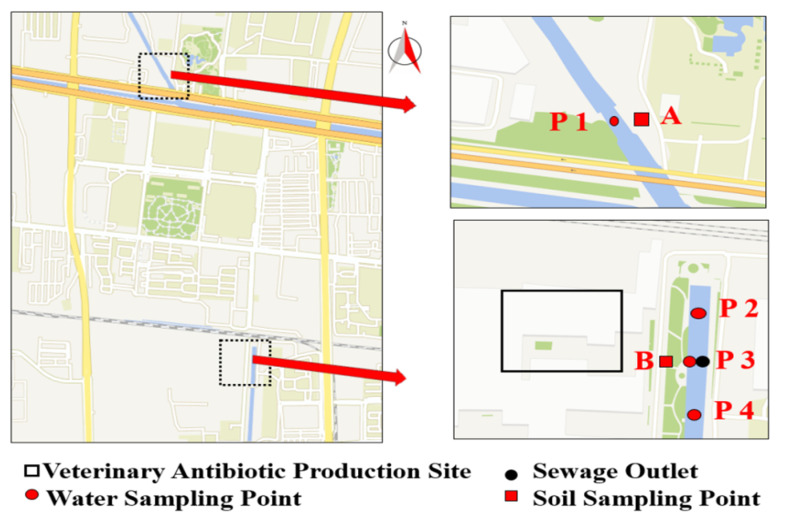
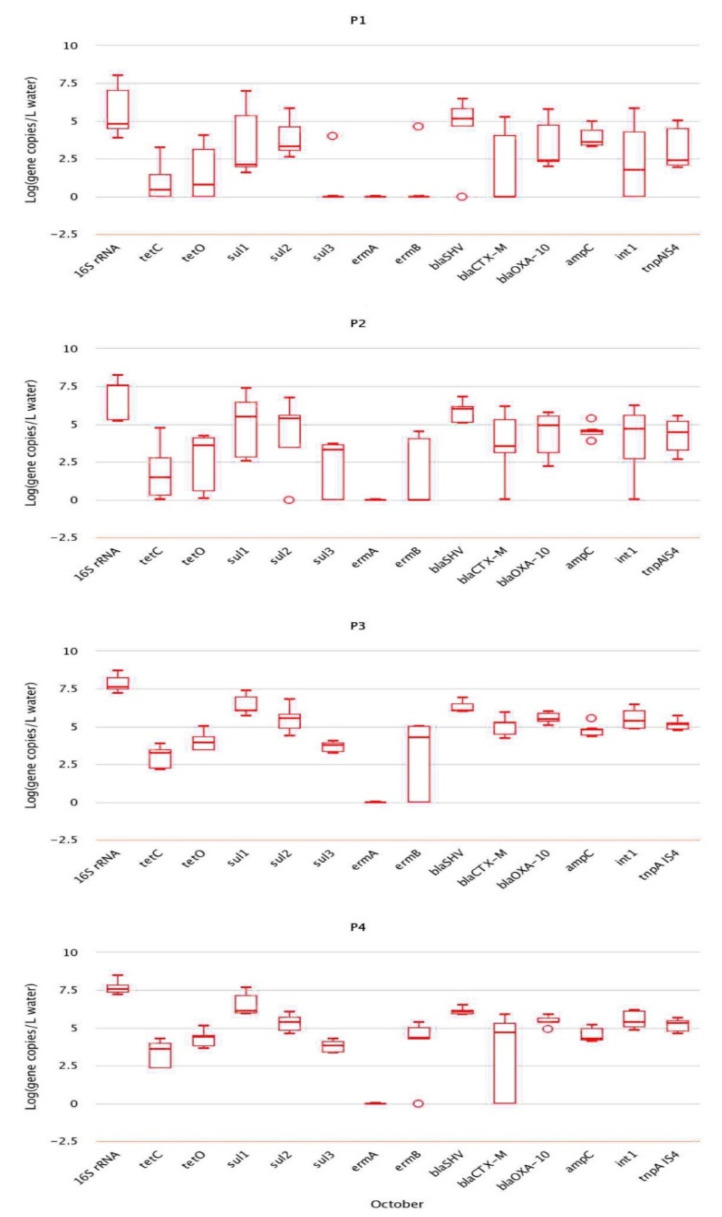
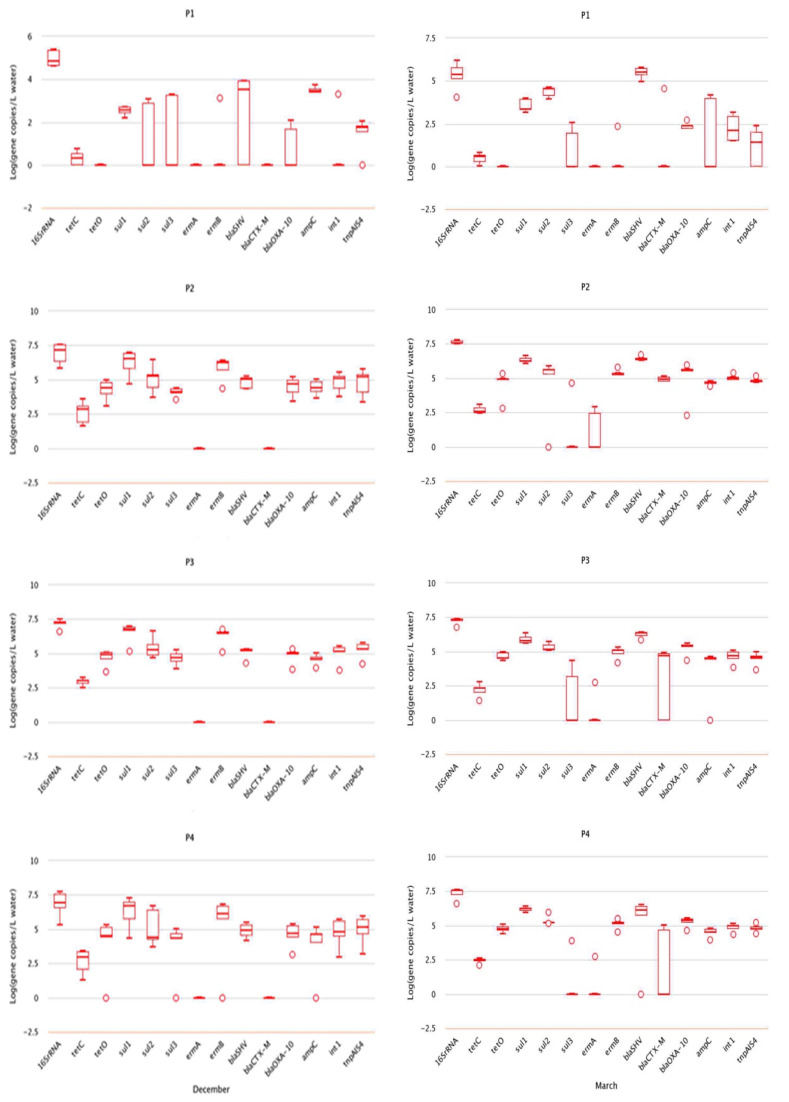
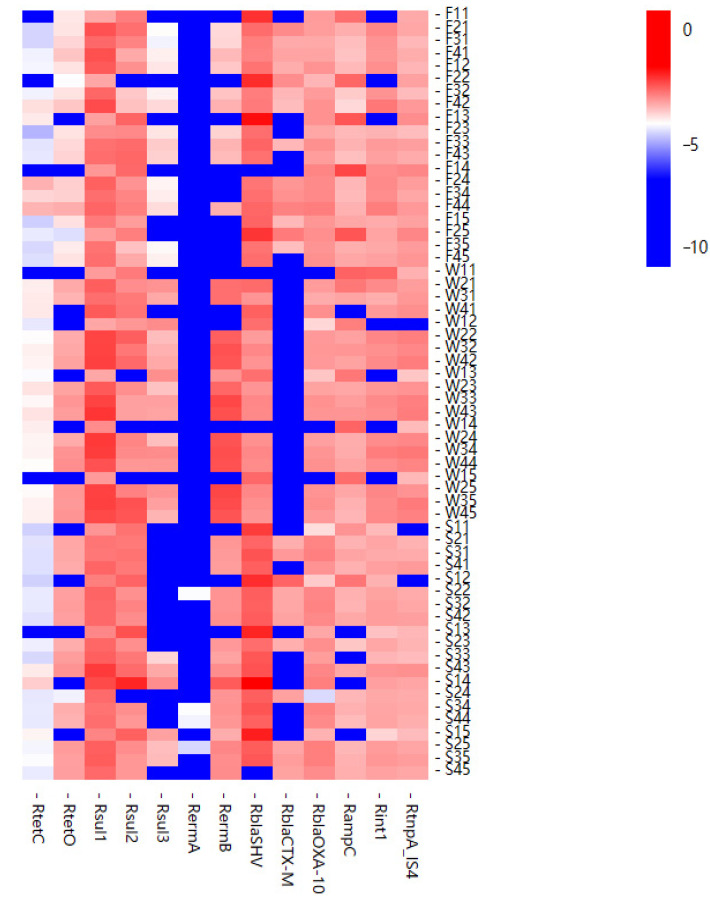
Antibiotics releasing from the manufacturing sites to the surrounding environment has been identified as a risk factor for the development of antibiotic resistance of bacterial pathogens. However, the knowledge of the abundance and distribution of antibiotic resistance genes (ARGs) influenced by antibiotic pollution is still limited. In this work, the contamination by resistance genes of the environmental media including an urban river and soil along the river located near the sewage outlet of a veterinary antibiotic manufacturing site in Shijiazhuang, China, was assessed. The abundance and dynamic distribution of ARGs in different sampling points and during different seasons were analyzed using fluorescent quantitative PCR method (qPCR). A total of 11 resistance genes, one integron and one transposon were detected in water and soils around the pharmaceutical factory, and among which, the sulfonamide resistance genes and β-lactam resistance genes were the most abundant genes. The relative abundance of ARGs in both river water and soil samples collected at the downstream of the sewage outlet was higher than that of samples collected at the upstream, non-polluted areas ( < 0.05). The mobile genetic elements (MGEs) integron in river was significantly correlated ( < 0.05) with the relative abundance of ARGs. The results indicate that the discharge of waste from antibiotic manufacturing site may pose a risk of horizontal transfer of ARGs.
抗生素从生产场地释放到周围环境中已被确认为细菌病原体产生抗生素耐药性的一个风险因素。然而,关于受抗生素污染影响的抗生素耐药基因(ARGs)的丰度和分布的了解仍然有限。在这项工作中,对位于中国石家庄一家兽用抗生素生产场地污水排放口附近的一条城市河流及沿河土壤等环境介质中的耐药基因污染情况进行了评估。采用荧光定量PCR方法(qPCR)分析了不同采样点以及不同季节ARGs的丰度和动态分布。在制药厂周围的水和土壤中总共检测到11种耐药基因、1个整合子和1个转座子,其中磺胺类耐药基因和β-内酰胺类耐药基因是丰度最高的基因。在污水排放口下游采集的河水和土壤样品中ARGs的相对丰度高于在上游未受污染区域采集的样品(P<0.05)。河流中的移动遗传元件(MGEs)整合子与ARGs的相对丰度显著相关(P<0.05)。结果表明,抗生素生产场地的废物排放可能带来ARGs水平转移的风险。