Colombi Ilaria, Nieus Thierry, Massimini Marcello, Chiappalone Michela
Brain Development and Disease Laboratory, Istituto Italiano di Tecnologia, 16163 Genova, Italy.
Department of Biomedical and Clinical Sciences "L. Sacco", University of Milan, 20157 Milan, Italy.
Brain Sci. 2021 Nov 1;11(11):1453. doi: 10.3390/brainsci11111453.
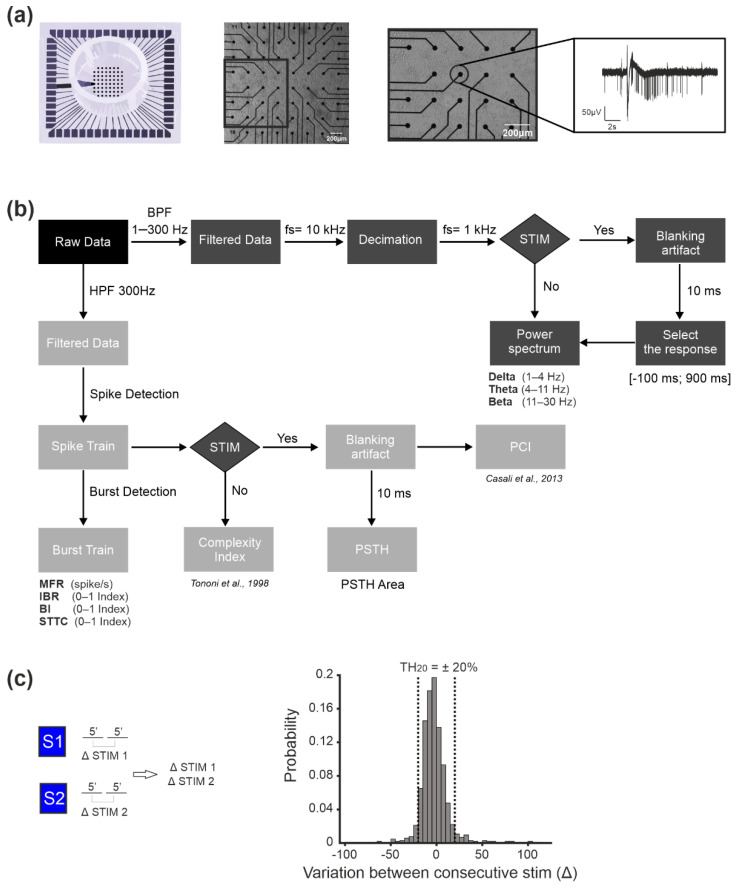
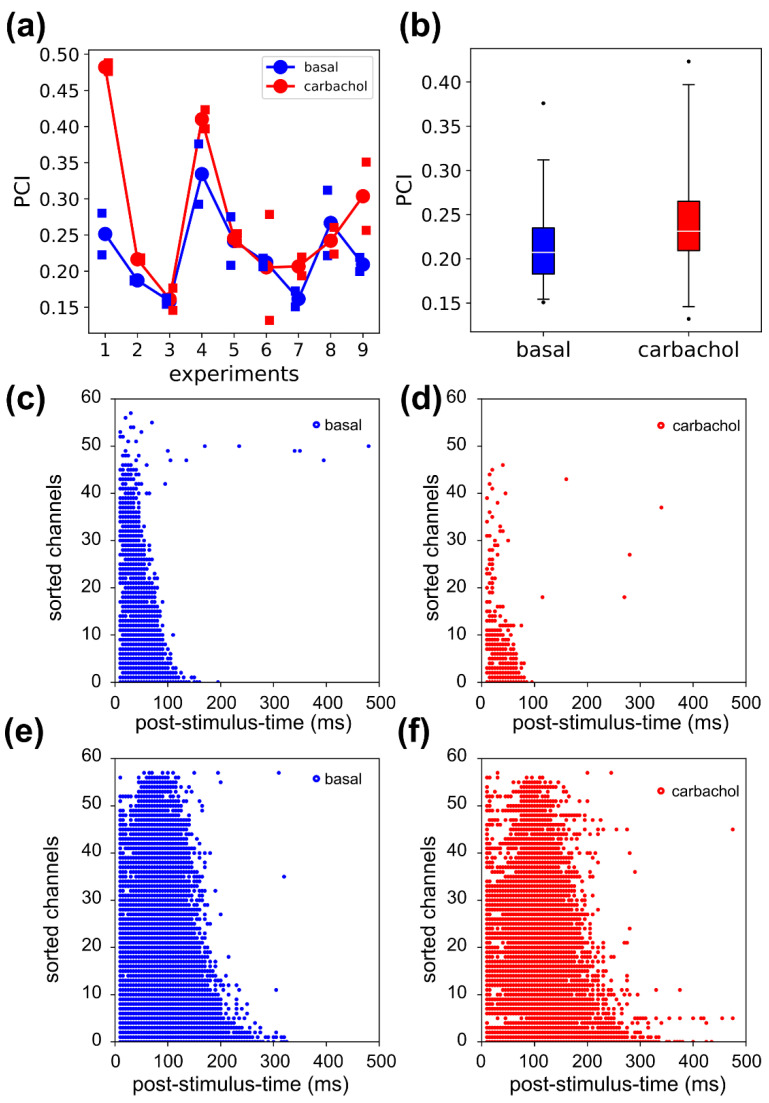
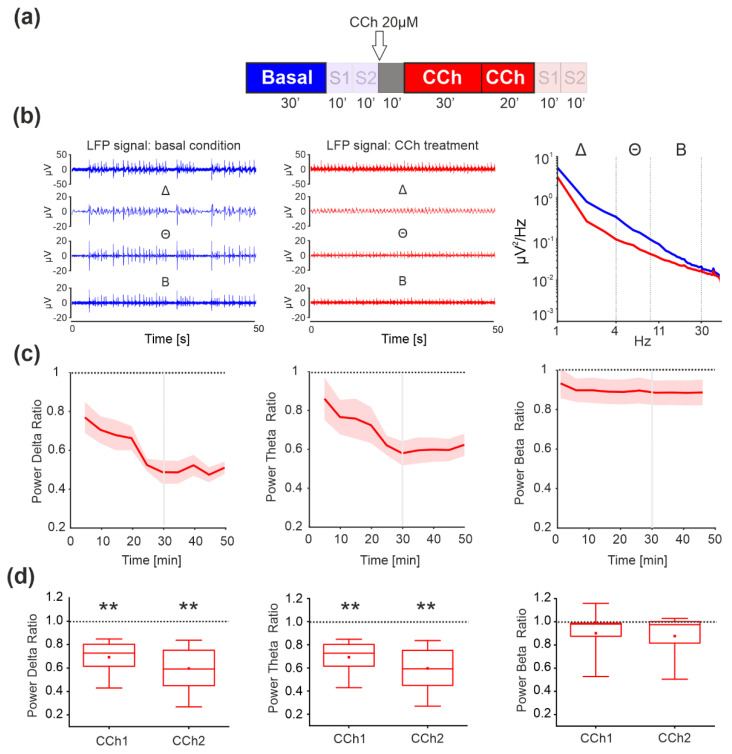
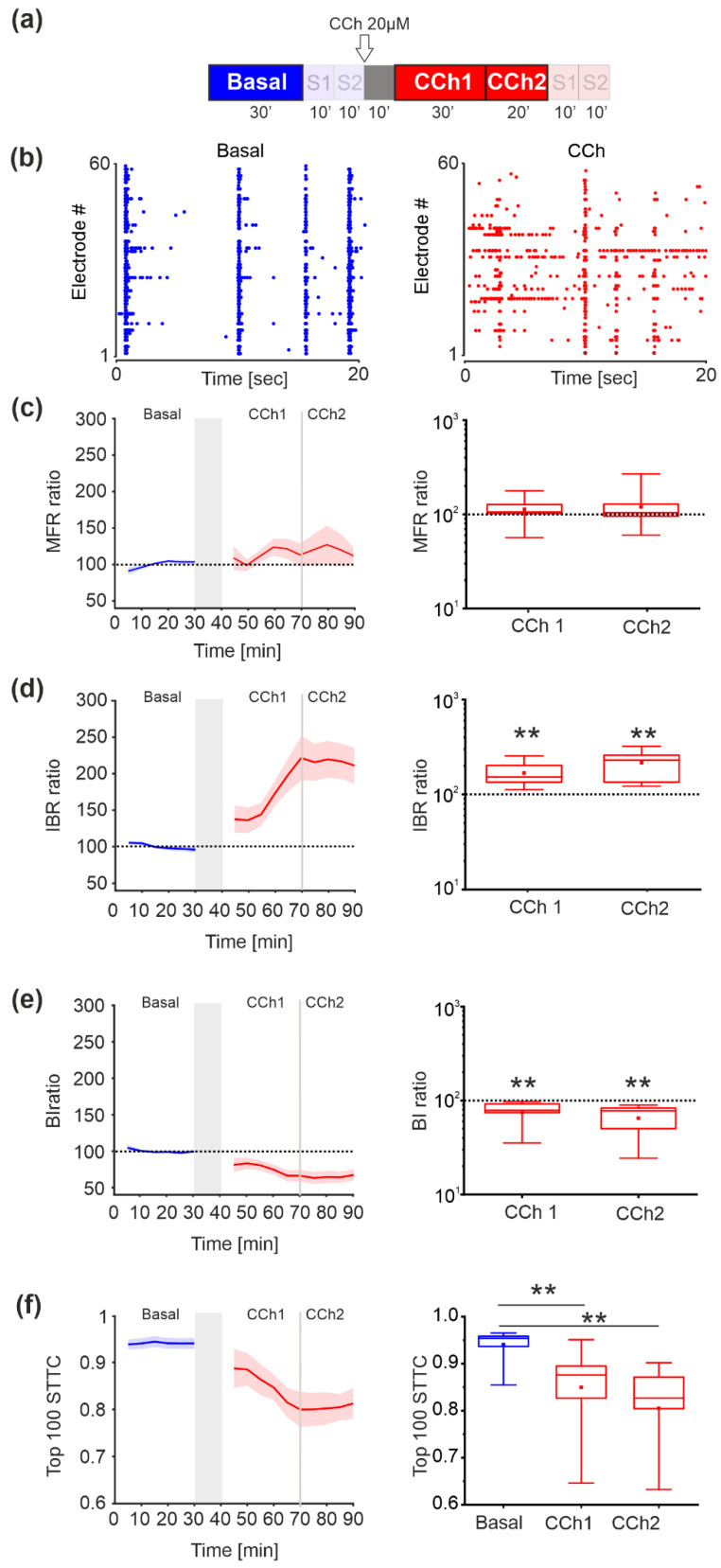
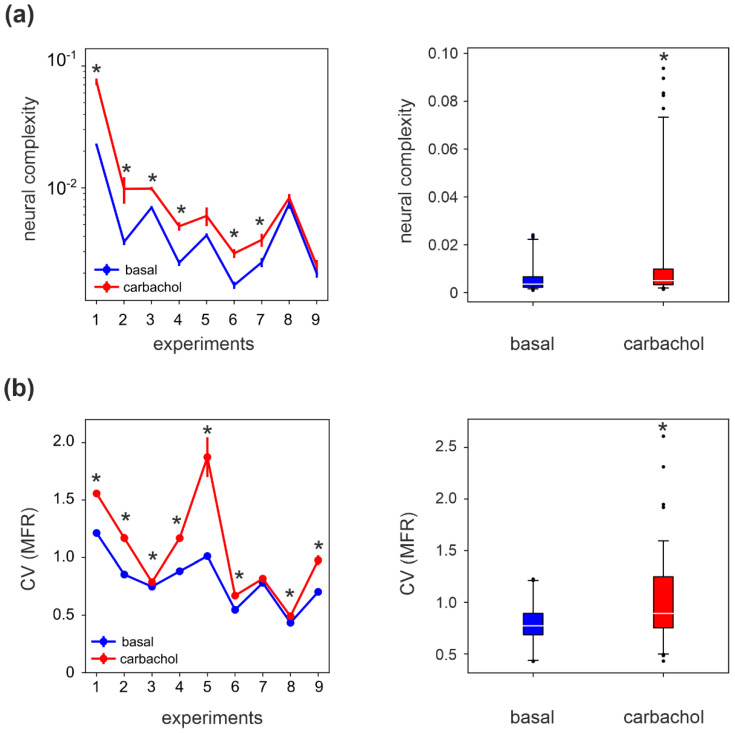
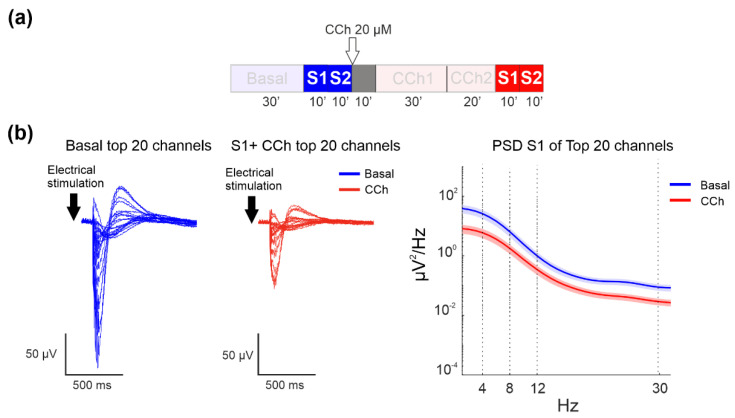
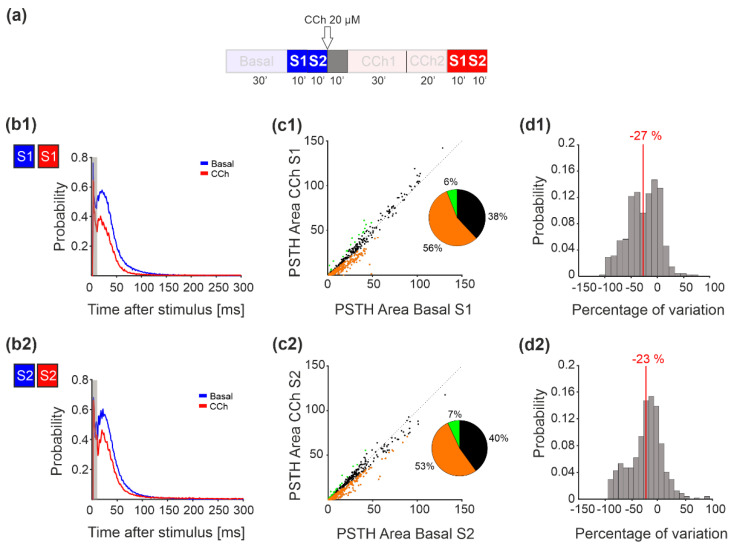
Dissociated cortical neurons in vitro display spontaneously synchronized, low-frequency firing patterns, which can resemble the slow wave oscillations characterizing sleep in vivo. Experiments in humans, rodents, and cortical slices have shown that awakening or the administration of activating neuromodulators decrease slow waves, while increasing the spatio-temporal complexity of responses to perturbations. In this study, we attempted to replicate those findings using in vitro cortical cultures coupled with micro-electrode arrays and chemically treated with carbachol (CCh), to modulate sleep-like activity and suppress slow oscillations. We adapted metrics such as neural complexity (NC) and the perturbational complexity index (PCI), typically employed in animal and human brain studies, to quantify complexity in simplified, unstructured networks, both during resting state and in response to electrical stimulation. After CCh administration, we found a decrease in the amplitude of the initial response and a marked enhancement of the complexity during spontaneous activity. Crucially, unlike in cortical slices and intact brains, PCI in cortical cultures displayed only a moderate increase. This dissociation suggests that PCI, a measure of the complexity of causal interactions, requires more than activating neuromodulation and that additional factors, such as an appropriate circuit architecture, may be necessary. Exploring more structured in vitro networks, characterized by the presence of strong lateral connections, recurrent excitation, and feedback loops, may thus help to identify the features that are more relevant to support causal complexity.
体外分离的皮质神经元表现出自发同步的低频放电模式,这可能类似于体内睡眠所特有的慢波振荡。在人类、啮齿动物和皮质切片上进行的实验表明,觉醒或给予激活神经调质会减少慢波,同时增加对扰动反应的时空复杂性。在本研究中,我们试图使用与微电极阵列结合并经卡巴胆碱(CCh)化学处理的体外皮质培养物来复制这些发现,以调节类似睡眠的活动并抑制慢振荡。我们采用了通常用于动物和人类大脑研究的神经复杂性(NC)和扰动复杂性指数(PCI)等指标,来量化简化的、无结构网络在静息状态和对电刺激反应时的复杂性。给予CCh后,我们发现初始反应的幅度降低,自发活动期间的复杂性显著增强。至关重要的是,与皮质切片和完整大脑不同,皮质培养物中的PCI仅适度增加。这种差异表明,PCI作为一种因果相互作用复杂性的度量,不仅需要激活神经调节,还可能需要其他因素,例如适当的电路结构。因此,探索具有强侧向连接、反复兴奋和反馈回路等特征的更结构化的体外网络,可能有助于确定与支持因果复杂性更相关的特征。