Department of Advanced Medical and Surgical Sciences, University of Campania Luigi Vanvitelli, 80131 Naples, Italy.
Department of Medicine, University of Udine, 33100 Udine, Italy.
Biomolecules. 2021 Nov 8;11(11):1652. doi: 10.3390/biom11111652.
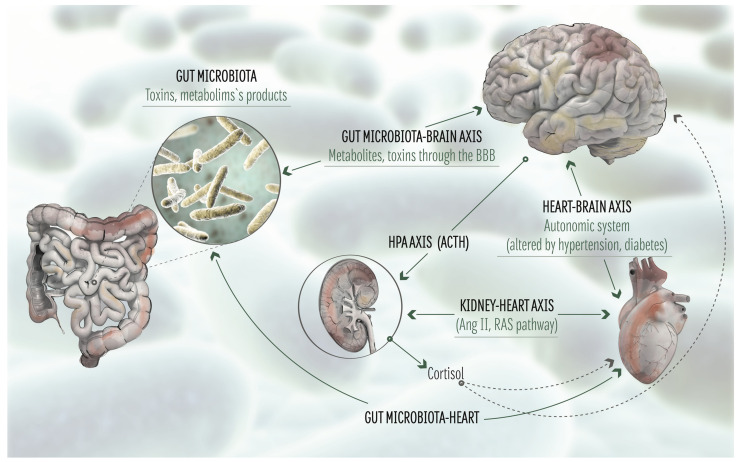
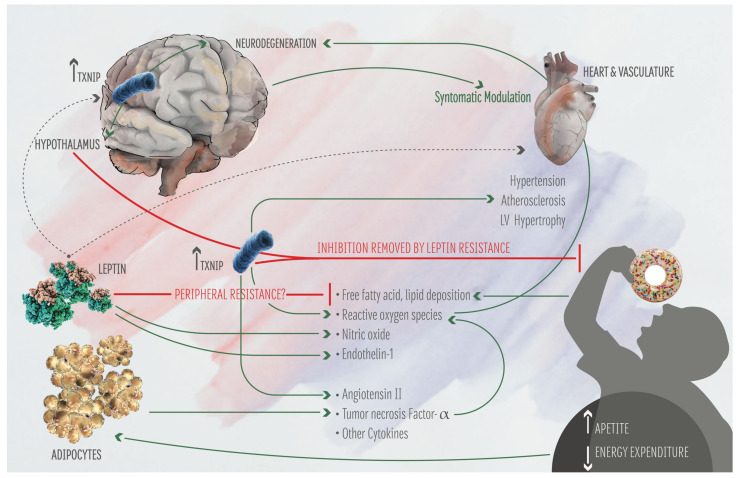
Alzheimer disease (AD) is the most frequent cause of dementia and up to now there is not an effective therapy to cure AD. In addition, AD onset occurs decades before the diagnosis, affecting the possibility to set up appropriate therapeutic strategies. For this reason, it is necessary to investigate the effects of risk factors, such as cardiovascular diseases, in promoting AD. AD shows not only brain dysfunction, but also alterations in peripheral tissues/organs. Indeed, it exists a reciprocal connection between brain and heart, where cardiovascular alterations participate to AD as well as AD seem to promote cardiovascular dysfunction. In addition, metabolic dysfunction promotes both cardiovascular diseases and AD. In this review, we summarize the pathways involved in the regulation of the brain-heart axis and the effect of metabolism on these pathways. We also present the studies showing the role of the gut microbiota on the brain-heart axis. Herein, we propose recent evidences of the function of Thioredoxin Interacting protein (TXNIP) in mediating the role of metabolism on the brain-heart axis. TXNIP is a key regulator of metabolism at both cellular and body level and it exerts also a pathological function in several cardiovascular diseases as well as in AD.
阿尔茨海默病(AD)是痴呆症最常见的病因,迄今为止,尚无有效的治疗方法可以治愈 AD。此外,AD 的发病时间在诊断前几十年,这影响了制定适当治疗策略的可能性。因此,有必要研究心血管疾病等危险因素对 AD 的促进作用。AD 不仅表现为大脑功能障碍,还表现为外周组织/器官的改变。实际上,大脑和心脏之间存在着相互联系,心血管的改变既参与 AD 的发生,AD 似乎也促进心血管功能障碍。此外,代谢功能障碍既促进了心血管疾病,也促进了 AD。在这篇综述中,我们总结了调节脑心轴的途径以及代谢对这些途径的影响。我们还介绍了表明肠道微生物群在脑心轴上作用的研究。在此,我们提出了 TXNIP 在介导代谢对脑心轴作用中的功能的最新证据。TXNIP 是细胞和全身代谢的关键调节剂,它在几种心血管疾病以及 AD 中也发挥着病理作用。