Institute for Diabetes and Obesity, Helmholtz Diabetes Center, Helmholtz Zentrum München, German Research Center for Environmental Health (GmbH), 85764 Neuherberg, Germany; German Center for Diabetes Research (DZD), 85764 Neuherberg, Germany; Institute for Advanced Studies, Technische Universität, 85748 Garching, Germany.
Institute for Tissue Engineering and Regenerative Medicine (ITERM), Helmholtz Zentrum München, German Research Center for Environmental Health (GmbH), 85764 Neuherberg, Germany; Institute for Stroke and Dementia Research, Klinikum der Universität München, Ludwig Maximilian University of Munich (LMU), 81377 Munich, Germany.
Cell Metab. 2021 Jun 1;33(6):1155-1170.e10. doi: 10.1016/j.cmet.2021.04.007. Epub 2021 May 4.
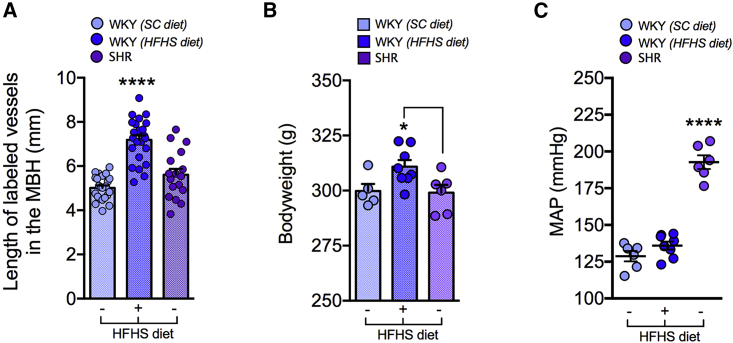
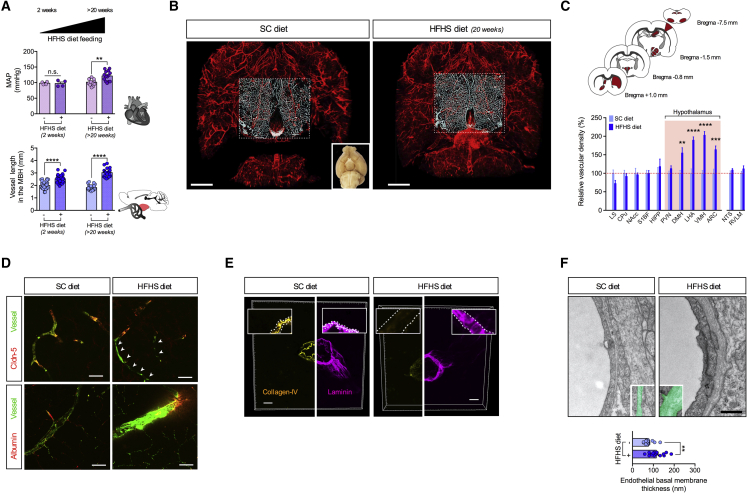
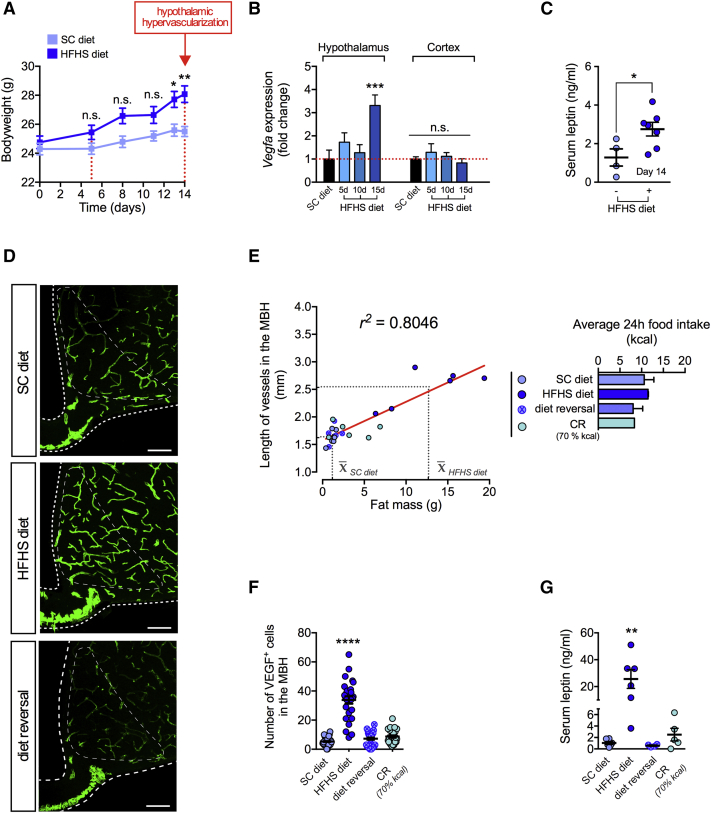
Pathologies of the micro- and macrovascular systems are a hallmark of the metabolic syndrome, which can lead to chronically elevated blood pressure. However, the underlying pathomechanisms involved still need to be clarified. Here, we report that an obesity-associated increase in serum leptin triggers the select expansion of the micro-angioarchitecture in pre-autonomic brain centers that regulate hemodynamic homeostasis. By using a series of cell- and region-specific loss- and gain-of-function models, we show that this pathophysiological process depends on hypothalamic astroglial hypoxia-inducible factor 1α-vascular endothelial growth factor (HIF1α-VEGF) signaling downstream of leptin signaling. Importantly, several distinct models of HIF1α-VEGF pathway disruption in astrocytes are protected not only from obesity-induced hypothalamic angiopathy but also from sympathetic hyperactivity or arterial hypertension. These results suggest that hyperleptinemia promotes obesity-induced hypertension via a HIF1α-VEGF signaling cascade in hypothalamic astrocytes while establishing a novel mechanistic link that connects hypothalamic micro-angioarchitecture with control over systemic blood pressure.
微血管和大血管系统的病变是代谢综合征的一个标志,这可能导致慢性高血压。然而,涉及的潜在病理机制仍需要阐明。在这里,我们报告称,肥胖相关的血清瘦素增加会引发自主神经脑区的微血管结构选择性扩张,这些脑区调节血液动力学稳态。通过一系列细胞和区域特异性的缺失和功能获得模型,我们表明这个病理生理过程依赖于瘦素信号下游的下丘脑星形胶质细胞缺氧诱导因子 1α-血管内皮生长因子(HIF1α-VEGF)信号。重要的是,几种不同的星形胶质细胞中 HIF1α-VEGF 通路破坏模型不仅可以预防肥胖引起的下丘脑血管病变,还可以预防交感神经活性亢进或动脉高血压。这些结果表明,高瘦素血症通过下丘脑星形胶质细胞中的 HIF1α-VEGF 信号级联促进肥胖引起的高血压,同时建立了一个新的机制联系,将下丘脑微血管结构与对全身血压的控制联系起来。