Department of Biotechnology, Faculty of Biological Sciences, Kazimierz Wielki University, 85-671 Bydgoszcz, Poland.
Institute of Fermentation Technology and Microbiology, Faculty of Biotechnology and Food Sciences, Lodz University of Technology, 90-530 Lodz, Poland.
Biomolecules. 2021 Nov 22;11(11):1736. doi: 10.3390/biom11111736.
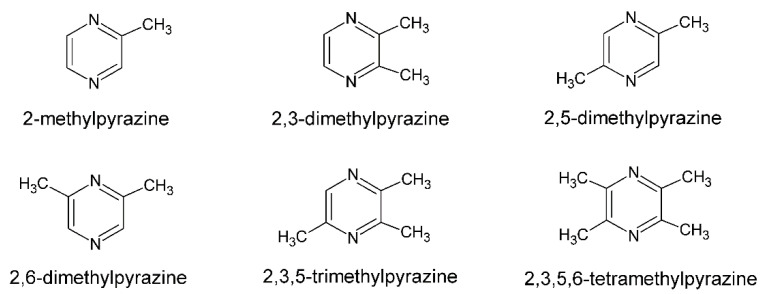
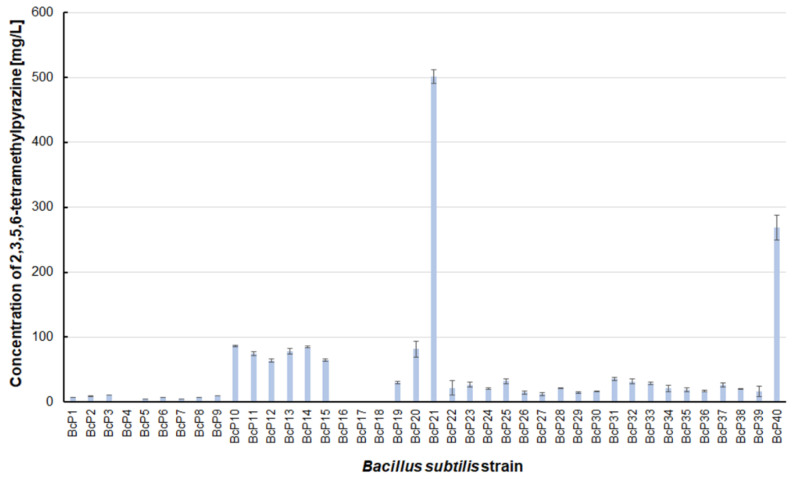
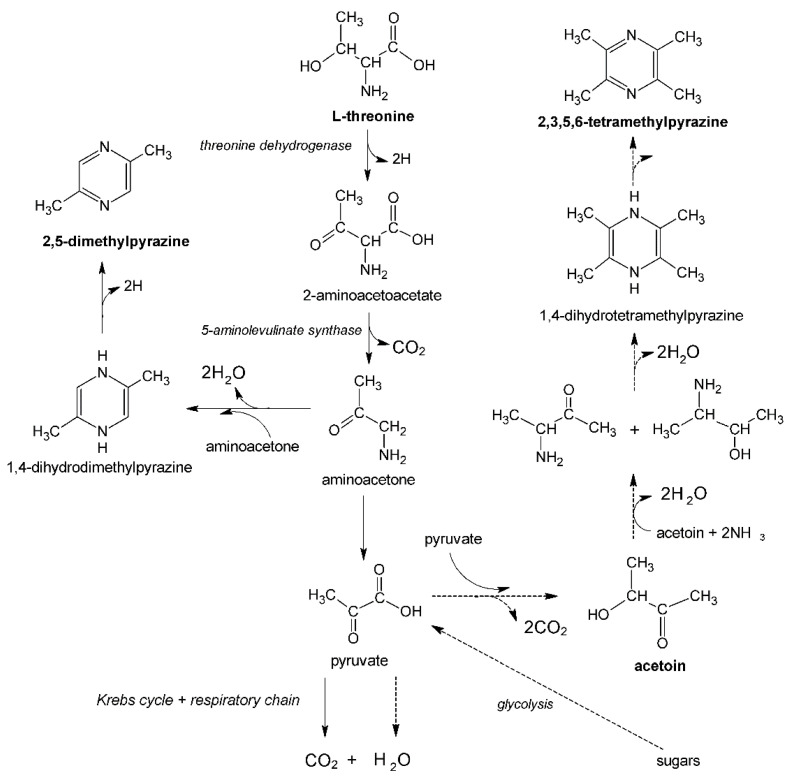
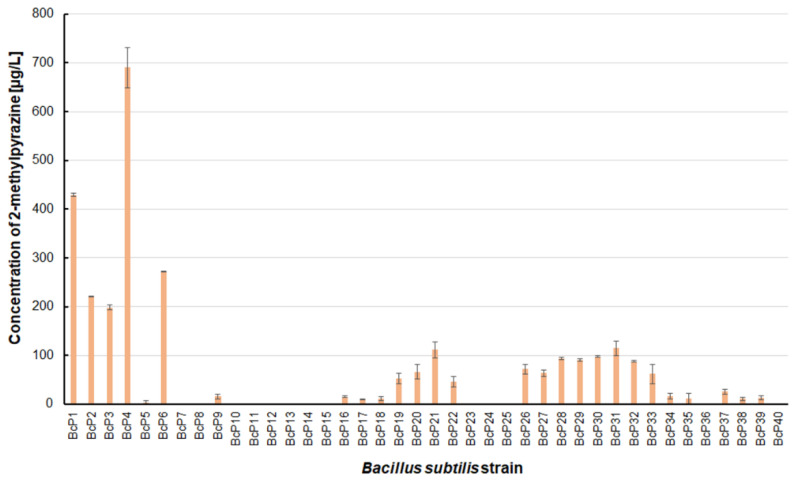
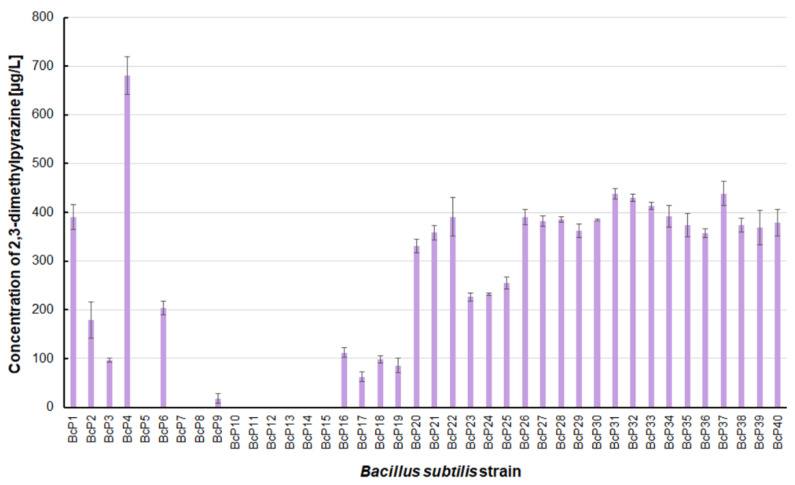
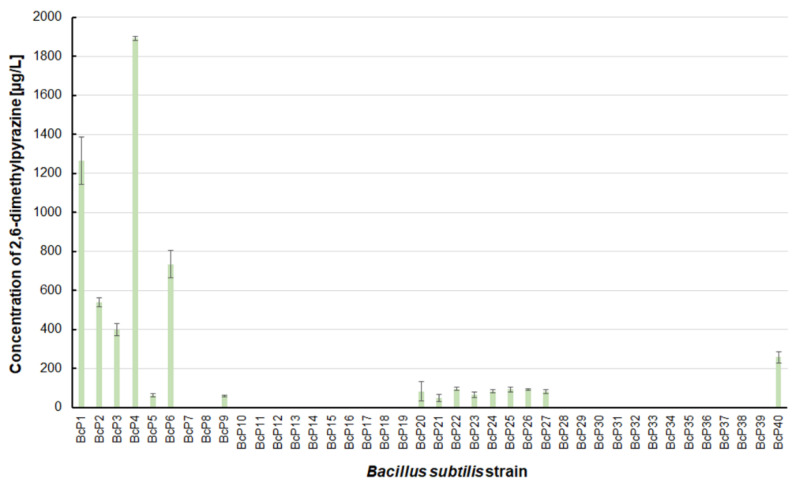
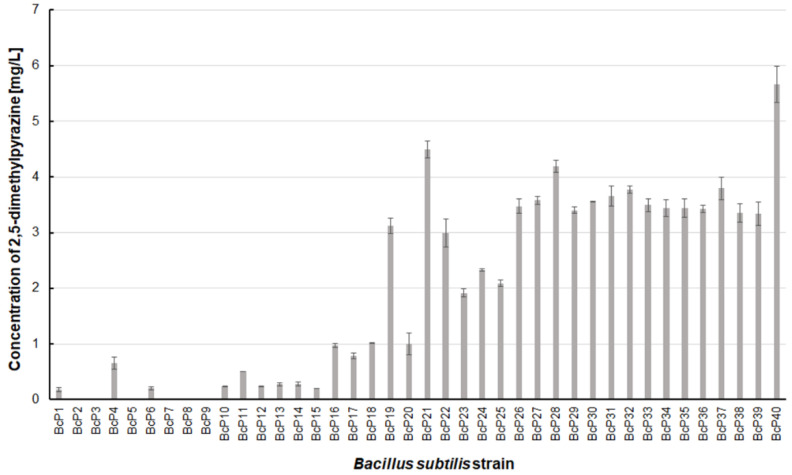
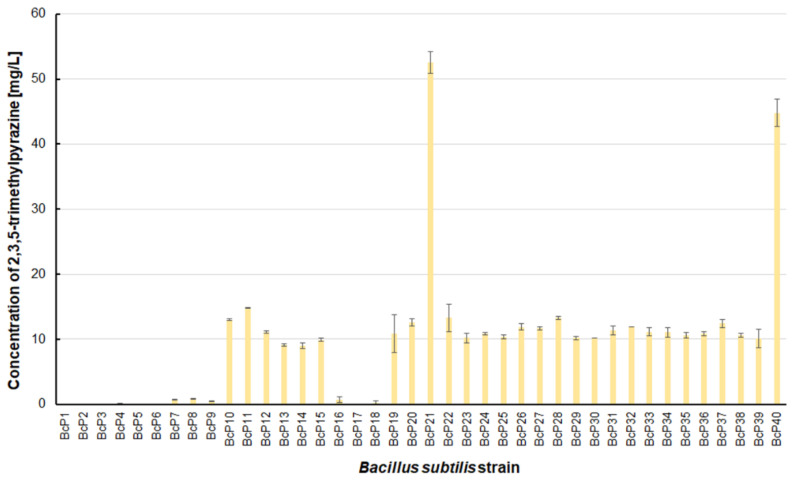
Pyrazines are organic compounds with a varied, intense aroma of roasted nuts, occasionally with hints of baked potatoes, almonds, and others. As a result, they are used in the food industry as food flavorings. Biosynthesis of pyrazines using microorganisms in environmentally friendly conditions is an alternative to chemical synthesis. However, screening is required to isolate efficient producer strains for efficient biosynthesis of this compound. The study's goal was to assess the ability of cultures isolated from natto (fermented soybeans) to biosynthesize a broad range of alkylpyrazines. isolated cultures were found to be capable of producing 2-methylpyrazine, 2,3-dimethylpyrazine, 2,5-dimethylpyrazine, 2,6-dimethylpyrazine, 2,3,5-trimethylpyrazine, and 2,3,5,6-tetramethylpyrazine. As a result of the screening, two cultures of capable of producing alkylpyrazines were isolated. At a total concentration of 3261 µg/L, the BcP4 strain primarily produced 2-methylpyrazine (690 µg/L), 2,3-dimethylpyrazine (680 µg/L), and 2,6-dimethylpyrazine (1891 µg/L). At a total concentration of 558 mg/L, the BcP21 strain produced 2,5-dimethylpyrazine (4.5 mg/L), 2,3,5-trimethylpyrazine (52.6 mg/L), and 2,3,5,6-tetramethylpyrazine (501.1 mg/L). The results show that different strains are predisposed to produce different alkylpyrazines.
吡嗪类化合物是具有各种浓郁香气的有机化合物,具有烤坚果的香气,偶尔带有烤土豆、杏仁等的香气。因此,它们在食品工业中被用作食品香料。在环保条件下使用微生物合成吡嗪类化合物是化学合成的替代方法。然而,需要筛选才能分离出高效的生产菌株,以实现该化合物的高效生物合成。本研究的目的是评估从纳豆(发酵大豆)中分离的培养物合成广泛的烷基吡嗪的能力。 分离出的培养物能够产生 2-甲基吡嗪、2,3-二甲基吡嗪、2,5-二甲基吡嗪、2,6-二甲基吡嗪、2,3,5-三甲基吡嗪和 2,3,5,6-四甲基吡嗪。经过筛选,分离出了两种能够产生烷基吡嗪的 培养物。BcP4 菌株在总浓度为 3261 µg/L 时主要产生 2-甲基吡嗪(690 µg/L)、2,3-二甲基吡嗪(680 µg/L)和 2,6-二甲基吡嗪(1891 µg/L)。BcP21 菌株在总浓度为 558 mg/L 时产生 2,5-二甲基吡嗪(4.5 mg/L)、2,3,5-三甲基吡嗪(52.6 mg/L)和 2,3,5,6-四甲基吡嗪(501.1 mg/L)。结果表明,不同的 菌株倾向于产生不同的烷基吡嗪。