Vonlanthen-Specker Isabelle, Stephan Roger, Sidler Xaver, Moor Dominik, Fraefel Cornel, Bachofen Claudia
Institute of Virology, Vetsuisse Faculty, University of Zurich, 8057 Zurich, Switzerland.
Institute for Food Safety and Hygiene, Vetsuisse Faculty, University of Zurich, 8057 Zurich, Switzerland.
Animals (Basel). 2021 Nov 7;11(11):3177. doi: 10.3390/ani11113177.
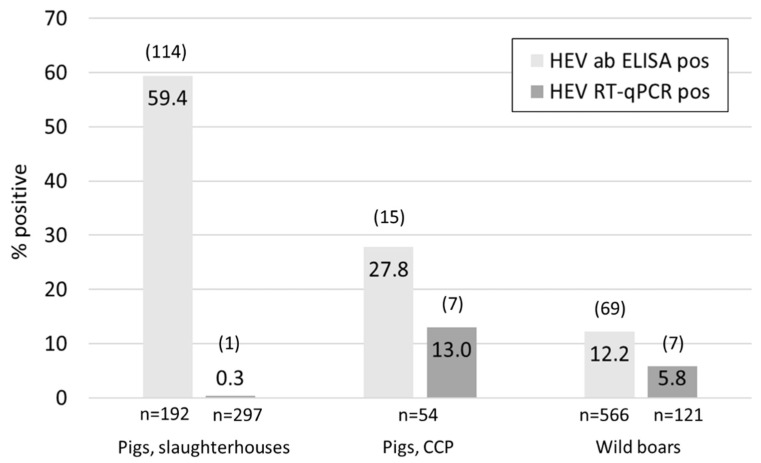
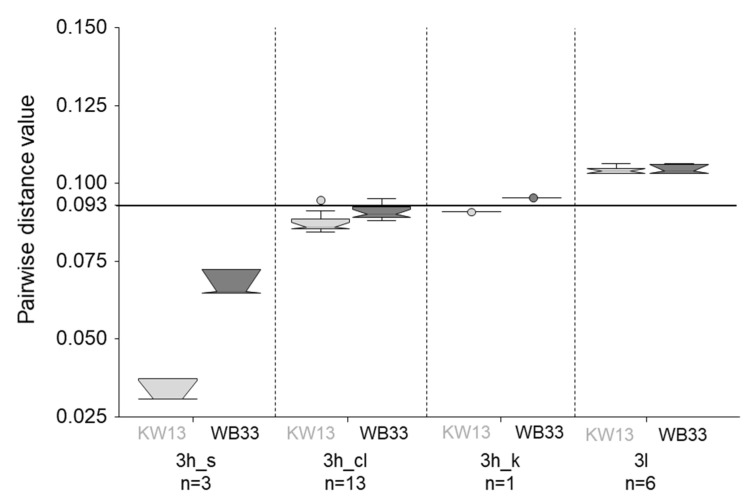
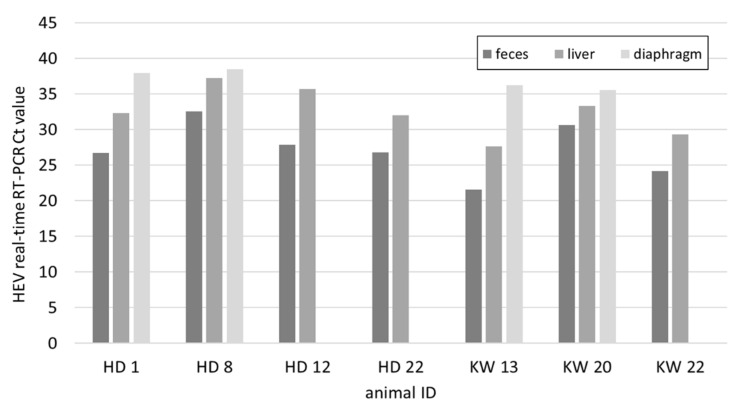
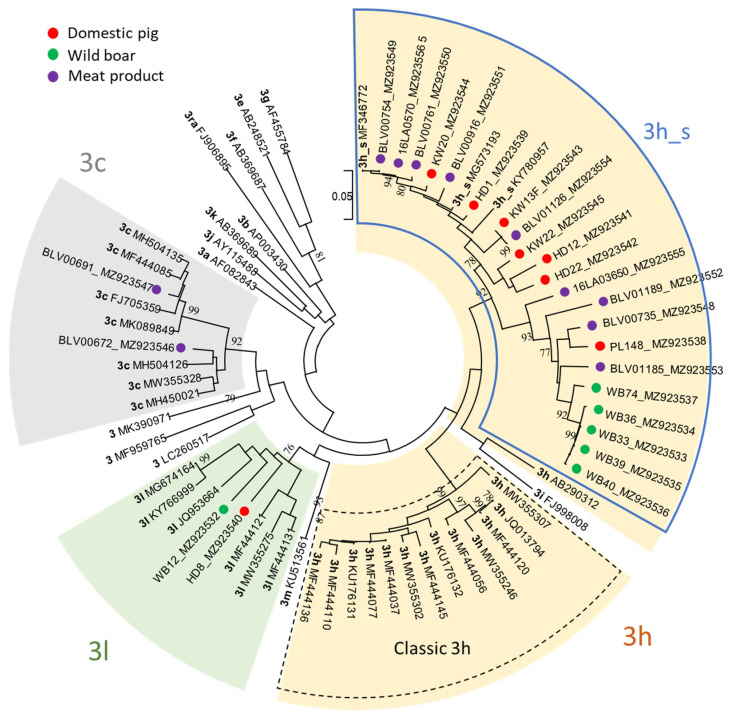
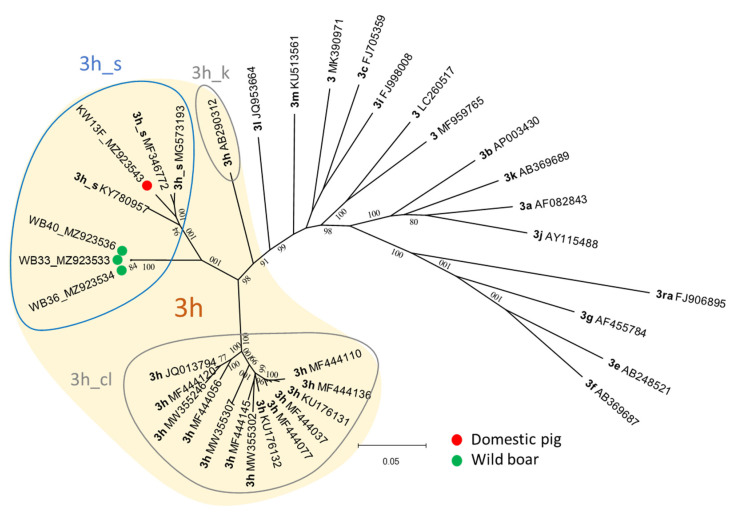
Hepatitis E caused by hepatitis E viruses of the genotype 3 (HEV-3) is a major health concern in industrialized countries and due to its zoonotic character requires a "One Health" approach to unravel routes and sources of transmission. Knowing the viral diversity present in reservoir hosts, i.e., pigs but also wild boars, is an important prerequisite for molecular epidemiology. The aim of this study was to gain primary information on the diversity of HEV-3 subtypes present along the food chain in Switzerland, as well as the diversity within these subtypes. To this end, samples of domestic pigs from slaughterhouses and carcass collection points, as well as from hunted wild boars, were tested for HEV RNA and antibodies. HEV positive meat products were provided by food testing labs. The HEV subtypes were determined using Sanger and next generation sequencing. The genetic analyses confirmed the predominance of a Swiss-specific cluster within subtype HEV-3h in pigs, meat products, and wild boars. This cluster, which may result from local virus evolution due to the isolated Swiss pig industry, supports fast differentiation of domestic and imported infections with HEV.
由3型戊型肝炎病毒(HEV-3)引起的戊型肝炎是工业化国家的一个主要健康问题,因其人畜共患特性,需要采用“同一健康”方法来查明传播途径和源头。了解储存宿主(即猪以及野猪)中存在的病毒多样性是分子流行病学的重要前提。本研究的目的是获取有关瑞士食物链中存在的HEV-3亚型多样性以及这些亚型内多样性的初步信息。为此,对来自屠宰场、胴体收集点的家猪以及猎杀的野猪样本进行了HEV RNA和抗体检测。HEV阳性肉制品由食品检测实验室提供。使用桑格测序法和下一代测序法确定HEV亚型。遗传分析证实,在猪、肉制品和野猪中,HEV-3h亚型内存在一个瑞士特异性簇占主导地位。由于瑞士养猪业孤立,该簇可能是由当地病毒进化产生的,这支持了国内和进口戊型肝炎感染的快速区分。