Puligedda Rama Devudu, Al-Saleem Fetweh H, Wirblich Cristoph, Kattala Chandana Devi, Jović Marko, Geiszler Laura, Devabhaktuni Himani, Feuerstein Giora Z, Schnell Matthias J, Sack Markus, Livornese Lawrence L, Dessain Scott K
Center for Human Antibody Technology, Lankenau Institute for Medical Research, Wynnewood, PA 19096, USA.
Department of Microbiology and Immunology, Thomas Jefferson University, Philadelphia, PA 19107, USA.
Diagnostics (Basel). 2021 Nov 12;11(11):2092. doi: 10.3390/diagnostics11112092.
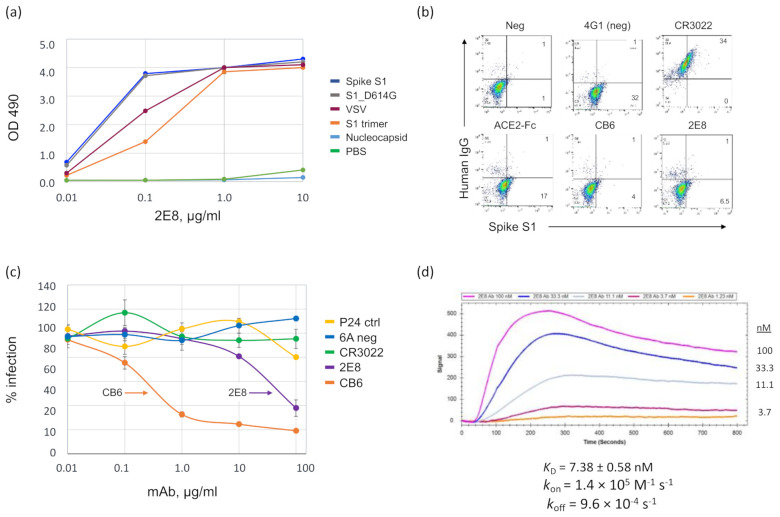
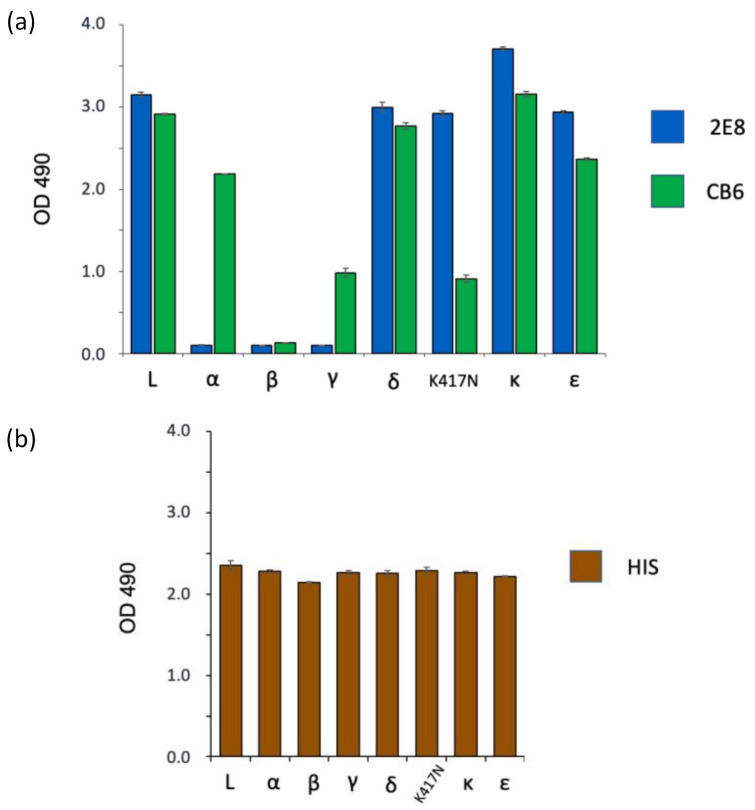
Efforts to control SARS-CoV-2 have been challenged by the emergence of variant strains that have important implications for clinical and epidemiological decision making. Four variants of concern (VOCs) have been designated by the Centers for Disease Control and Prevention (CDC), namely, B.1.617.2 (delta), B.1.1.7 (alpha), B.1.351 (beta), and P.1 (gamma), although the last three have been downgraded to variants being monitored (VBMs). VOCs and VBMs have shown increased transmissibility and/or disease severity, resistance to convalescent SARS-CoV-2 immunity and antibody therapeutics, and the potential to evade diagnostic detection. Methods are needed for point-of-care (POC) testing to rapidly identify these variants, protect vulnerable populations, and improve surveillance. Antigen-detection rapid diagnostic tests (Ag-RDTs) are ideal for POC use, but Ag-RDTs that recognize specific variants have not yet been implemented. Here, we describe a mAb (2E8) that is specific for the SARS-CoV-2 spike protein N501 residue. The 2E8 mAb can distinguish the delta VOC from variants with the N501Y meta-signature, which is characterized by convergent mutations that contribute to increased virulence and evasion of host immunity. Among the N501Y-containing mutants formerly designated as VOCs (alpha, beta, and gamma), a previously described mAb, CB6, can distinguish beta from alpha and gamma. When used in a sandwich ELISA, these mAbs sort these important SARS-CoV-2 variants into three diagnostic categories, namely, (1) delta, (2) alpha or gamma, and (3) beta. As delta is currently the predominant variant globally, they will be useful for POC testing to identify N501Y meta-signature variants, protect individuals in high-risk settings, and help detect epidemiological shifts among SARS-CoV-2 variants.
对严重急性呼吸综合征冠状病毒2(SARS-CoV-2)的防控工作因变异毒株的出现而面临挑战,这些变异毒株对临床和流行病学决策具有重要影响。美国疾病控制与预防中心(CDC)已指定了四种值得关注的变异株(VOC),即B.1.617.2(德尔塔)、B.1.1.7(阿尔法)、B.1.351(贝塔)和P.1(伽马),不过后三种已被降级为受监测变异株(VBM)。VOC和VBM已表现出更高的传播性和/或疾病严重性、对康复期SARS-CoV-2免疫力及抗体疗法的抗性,以及逃避诊断检测的可能性。需要用于即时检测(POC)的方法来快速识别这些变异株、保护弱势群体并加强监测。抗原检测快速诊断测试(Ag-RDT)非常适合POC使用,但识别特定变异株的Ag-RDT尚未得到应用。在此,我们描述了一种针对SARS-CoV-2刺突蛋白N501残基的单克隆抗体(2E8)。2E8单克隆抗体可将德尔塔VOC与具有N501Y元特征的变异株区分开来,该元特征的特点是趋同突变,这些突变导致毒力增加和宿主免疫逃逸。在先前被指定为VOC的含N501Y突变株(阿尔法、贝塔和伽马)中,一种先前描述的单克隆抗体CB6可将贝塔与阿尔法和伽马区分开来。当用于夹心酶联免疫吸附测定(ELISA)时,这些单克隆抗体可将这些重要的SARS-CoV-2变异株分为三个诊断类别,即:(1)德尔塔,(2)阿尔法或伽马,以及(3)贝塔。由于德尔塔目前是全球主要的变异株,它们将有助于POC检测以识别N501Y元特征变异株、保护高风险环境中的个体,并有助于检测SARS-CoV-2变异株之间的流行病学变化。