Šikić Jozica, Planinić Zrinka, Matišić Vid, Friščić Tea, Molnar Vilim, Jagačić Dorijan, Vujičić Lovro, Tudorić Neven, Postružin Gršić Lana, Ljubičić Đivo, Primorac Dragan
Department of Cardiology, Clinical Hospital Sveti Duh, 10000 Zagreb, Croatia.
St. Catherine Specialty Hospital, 10000 Zagreb, Croatia.
Biomedicines. 2021 Nov 15;9(11):1691. doi: 10.3390/biomedicines9111691.
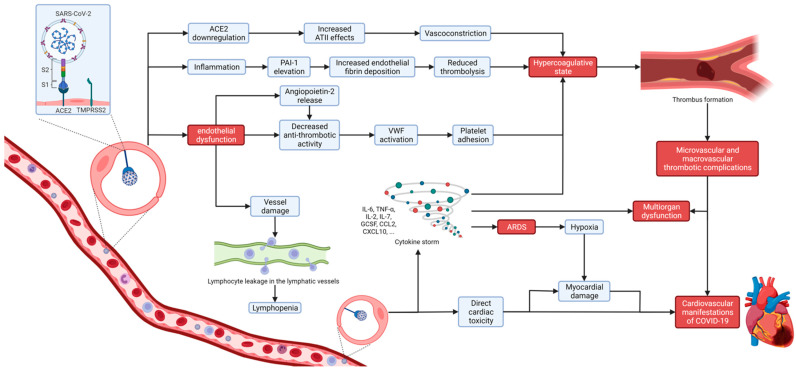
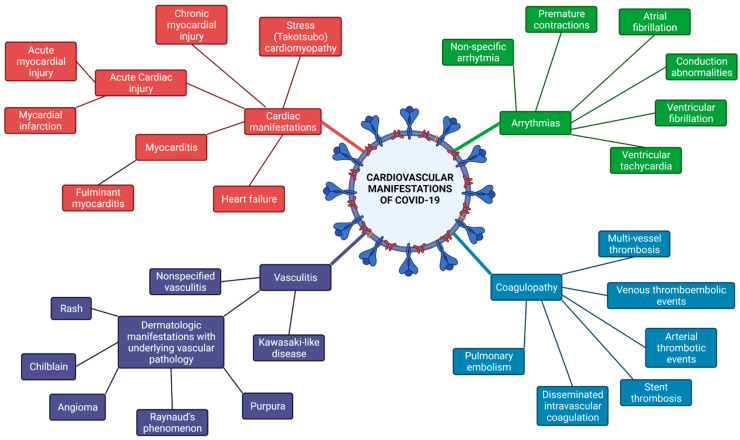
SARS-CoV-2 has been circulating in population worldwide for the past year and a half, and thus a vast amount of scientific literature has been produced in order to study the biology of the virus and the pathophysiology of COVID-19, as well as to determine the best way to prevent infection, treat the patients and eliminate the virus. SARS-CoV-2 binding to the ACE2 receptor is the key initiator of COVID-19. The ability of SARS-CoV-2 to infect various types of cells requires special attention to be given to the cardiovascular system, as it is commonly affected. Thorough diagnostics and patient monitoring are beneficial in reducing the risk of cardiovascular morbidity and to ensure the most favorable outcomes for the infected patients, even after they are cured of the acute disease. The multidisciplinary nature of the fight against the COVID-19 pandemic requires careful consideration from the attending clinicians, in order to provide fast and reliable treatment to their patients in accordance with evidence-based medicine principles. In this narrative review, we reviewed the available literature on cardiovascular implications of COVID-19; both the acute and the chronic.
在过去一年半的时间里,严重急性呼吸综合征冠状病毒2(SARS-CoV-2)一直在全球人群中传播,因此,为了研究该病毒的生物学特性、冠状病毒病(COVID-19)的病理生理学,以及确定预防感染、治疗患者和消灭病毒的最佳方法,已经产生了大量的科学文献。SARS-CoV-2与血管紧张素转换酶2(ACE2)受体结合是COVID-19的关键起始因素。SARS-CoV-2感染各种类型细胞的能力需要特别关注心血管系统,因为该系统通常会受到影响。全面的诊断和患者监测有助于降低心血管疾病的发病风险,并确保感染患者即使在急性疾病治愈后也能获得最有利的结果。抗击COVID-19大流行的多学科性质要求主治临床医生仔细考虑,以便根据循证医学原则为患者提供快速可靠的治疗。在这篇叙述性综述中,我们回顾了关于COVID-19对心血管影响的现有文献,包括急性和慢性影响。