Department of Plant Pathology, College of Plant Protection, Nanjing Agricultural University, Key Laboratory of Integrated Management of Crop Diseases and Pests, Ministry of Education, Nanjing 210095, China.
Department of Plant Pathology, University of Agriculture, Faisalabad 38040, Pakistan.
Int J Mol Sci. 2021 Nov 9;22(22):12094. doi: 10.3390/ijms222212094.
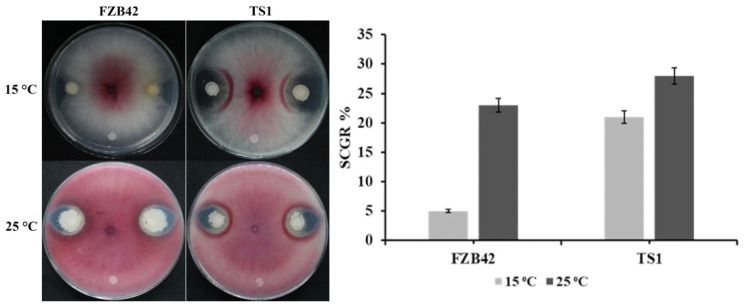
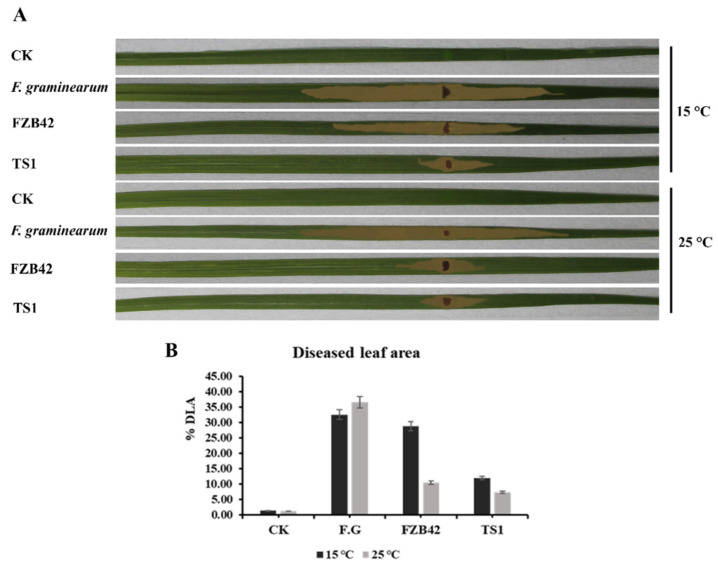
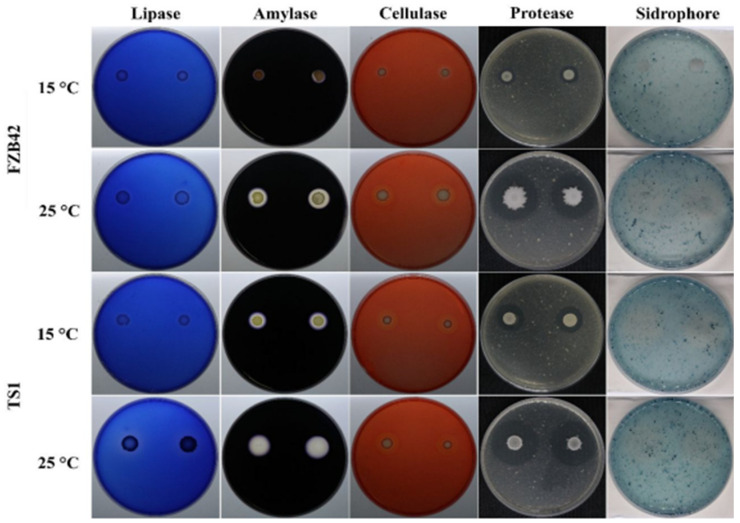
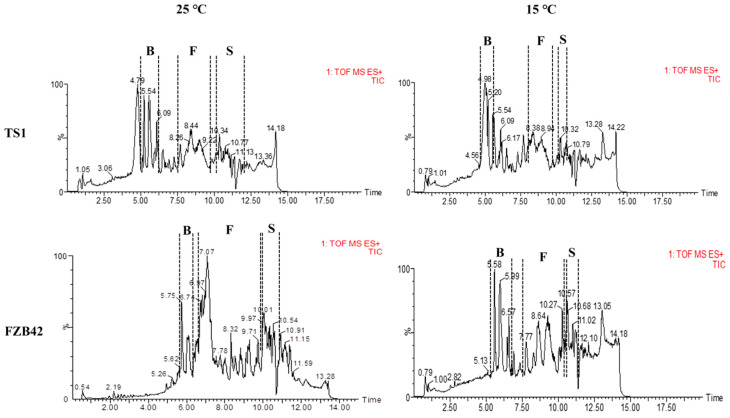
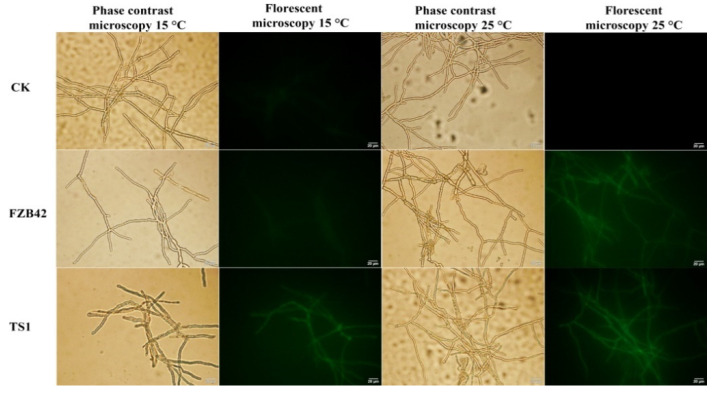
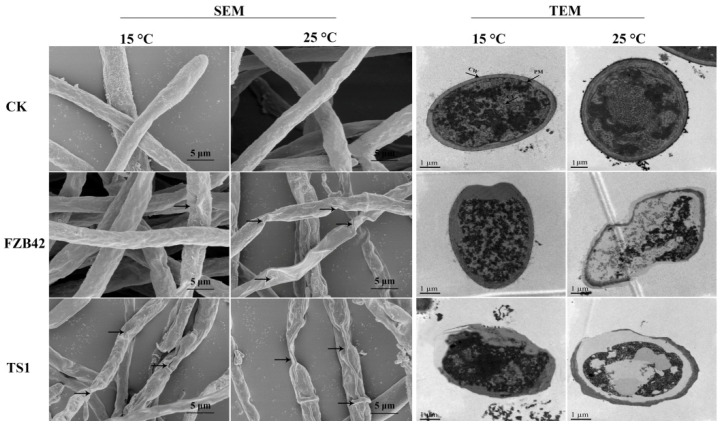
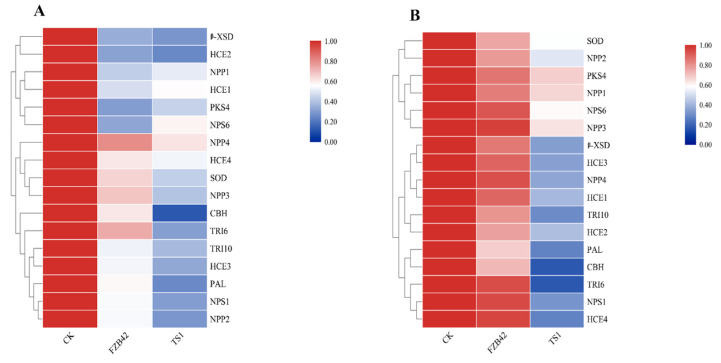
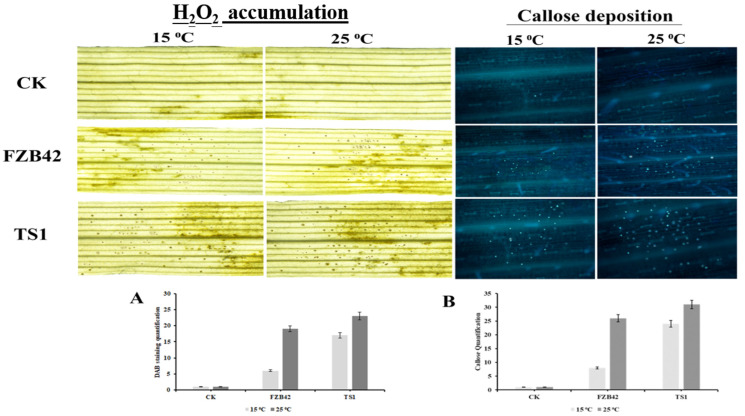
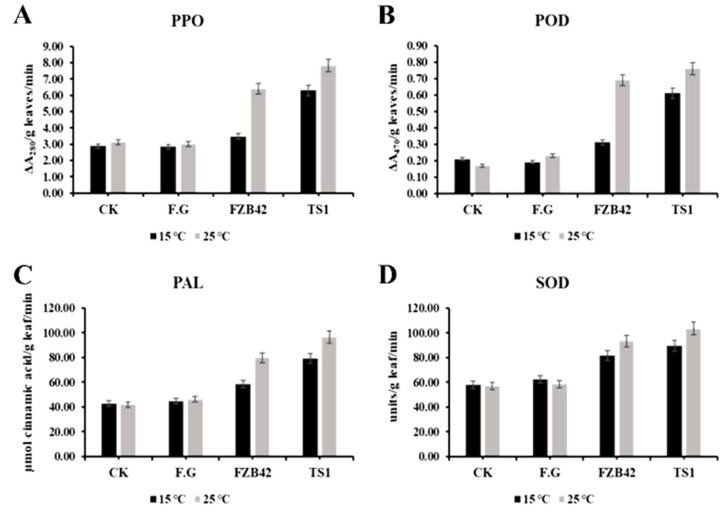
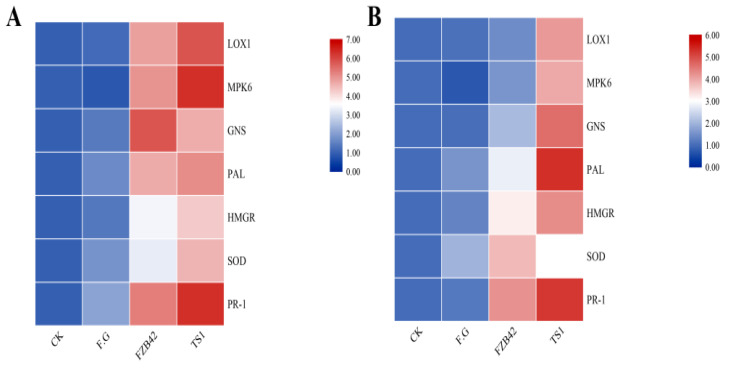
This study elaborates inter-kingdom signaling mechanisms, presenting a sustainable and eco-friendly approach to combat biotic as well as abiotic stress in wheat. is a devastating pathogen causing head and seedling blight in wheat, leading to huge yield and economic losses. Psychrophilic strain TS1 was found as a potential biocontrol agent for suppression of under low temperature by carrying out extensive biochemical and molecular studies in comparison with a temperate biocontrol model strain FZB42 at 15 and 25 °C. TS1 was able to produce hydrolytic extracellular enzymes as well as antimicrobial lipopeptides, i.e., surfactin, bacillomycin, and fengycin, efficiently at low temperatures. The strain-induced oxidative cellular damage, ultrastructural deformities, and novel genetic dysregulations in the fungal pathogen as the bacterial treatment at low temperature were able to downregulate the expression of newly predicted novel fungal genes potentially belonging to necrosis inducing protein families ( and ). The wheat pot experiments conducted at 15 and 25 °C revealed the potential of TS1 to elicit sudden induction of plant defense, namely, HO and callose enhanced activity of plant defense-related enzymes and induced over-expression of defense-related genes which accumulatively lead to the suppression of and decreased diseased leaf area.
本研究阐述了跨界信号机制,为小麦应对生物和非生物胁迫提供了一种可持续且环保的方法。 是一种毁灭性的病原体,可引起小麦的穗部和幼苗疫病,导致巨大的产量和经济损失。通过与温带生物防治模型菌株 FZB42 在 15 和 25°C 下进行广泛的生化和分子研究,发现嗜冷 菌株 TS1 是一种有潜力的生物防治剂,可以在低温下抑制 。TS1 能够在低温下有效地产生水解细胞外酶和抗菌脂肽,即表面活性剂、杆菌霉素和丰原素。该 菌株在低温下诱导真菌病原体的氧化细胞损伤、超微结构变形和新的遗传失调,而细菌处理能够下调新预测的潜在属于坏死诱导蛋白家族的新型真菌基因的表达(和)。在 15 和 25°C 下进行的小麦盆栽实验表明,TS1 能够引发植物防御的突然诱导,即 HO 和胼胝质增强与植物防御相关酶的活性,并诱导防御相关基因的过表达,这些基因累积导致 抑制和病叶面积减少。