Department of Environmental Health Sciences, School of Public Health and Health Sciences, University of Massachusetts, 686 North Pleasant Street, Amherst, MA 01003, USA.
Department of Veterinary and Animal Sciences, College of Natural Sciences, University of Massachusetts, 661 North Pleasant Street, Amherst, MA 01003, USA.
Int J Mol Sci. 2021 Nov 19;22(22):12474. doi: 10.3390/ijms222212474.
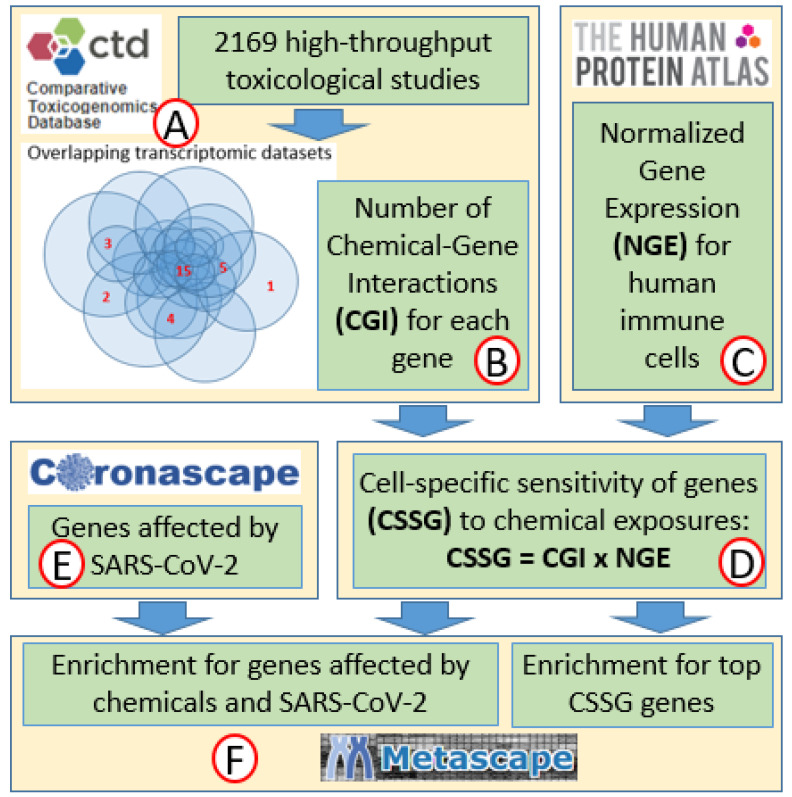
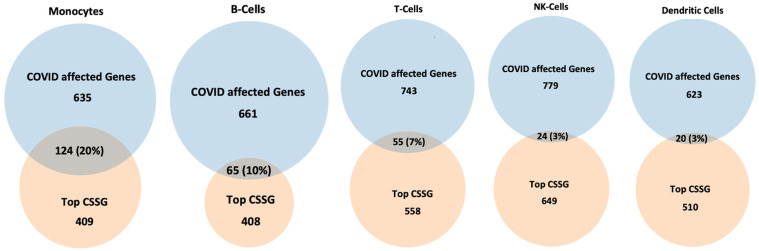
Severe outcomes of COVID-19 are associated with pathological response of the immune system to the SARS-CoV-2 infection. Emerging evidence suggests that an interaction may exist between COVID-19 pathogenesis and a broad range of xenobiotics, resulting in significant increases in death rates in highly exposed populations. Therefore, a better understanding of the molecular basis of the interaction between SARS-CoV-2 infection and chemical exposures may open opportunities for better preventive and therapeutic interventions. We attempted to gain mechanistic knowledge on the interaction between SARS-CoV-2 infection and chemical exposures using an in silico approach, where we identified genes and molecular pathways affected by both chemical exposures and SARS-CoV-2 in human immune cells (T-cells, B-cells, NK-cells, dendritic, and monocyte cells). Our findings demonstrate for the first time that overlapping molecular mechanisms affected by a broad range of chemical exposures and COVID-19 are linked to IFN type I/II signaling pathways and the process of antigen presentation. Based on our data, we also predict that exposures to various chemical compounds will predominantly impact the population of monocytes during the response against COVID-19.
严重的 COVID-19 后果与免疫系统对 SARS-CoV-2 感染的病理性反应有关。新出现的证据表明,COVID-19 发病机制与广泛的外来化学物质之间可能存在相互作用,从而导致高度暴露人群的死亡率显著增加。因此,更好地了解 SARS-CoV-2 感染与化学暴露之间的相互作用的分子基础可能为更好的预防和治疗干预措施开辟机会。我们试图使用计算方法来获得 SARS-CoV-2 感染和化学暴露之间相互作用的机制知识,其中我们确定了受化学暴露和 SARS-CoV-2 影响的人类免疫细胞(T 细胞、B 细胞、NK 细胞、树突状细胞和单核细胞)中的基因和分子途径。我们的研究结果首次表明,受广泛的化学暴露和 COVID-19 影响的重叠分子机制与 IFN 型 I/II 信号通路和抗原呈递过程有关。基于我们的数据,我们还预测,在针对 COVID-19 的反应过程中,各种化学化合物的暴露将主要影响单核细胞群体。