Department of Internal Medicine and Cardiology, Charité-Universitätsmedizin Berlin, Campus Virchow-Klinikum, 13353 Berlin, Germany.
Department of Vegetative and Clinical Physiology, Eberhard Karls University Tübingen, 72076 Tübingen, Germany.
Cells. 2021 Nov 9;10(11):3083. doi: 10.3390/cells10113083.
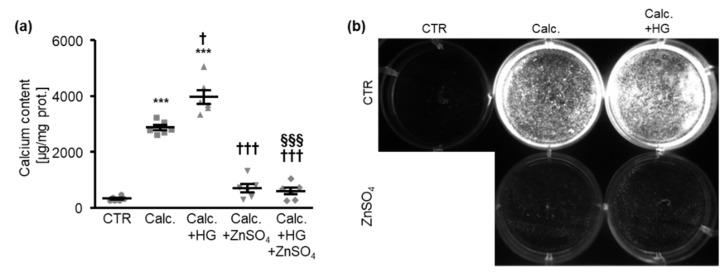
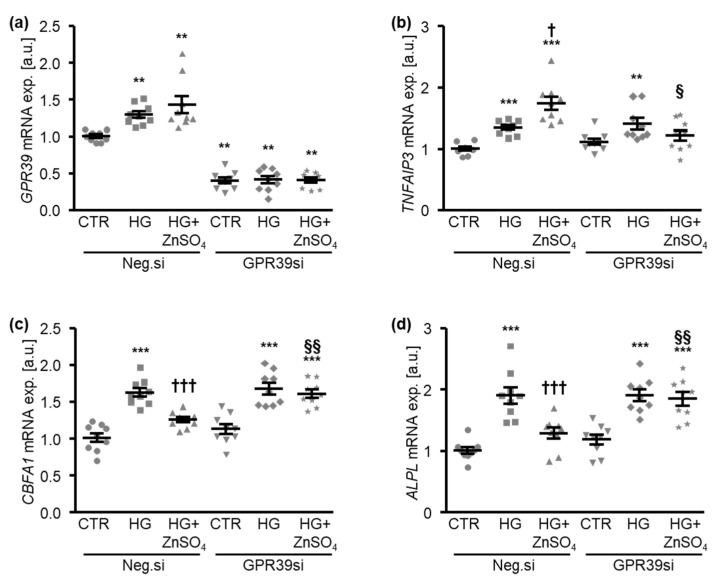
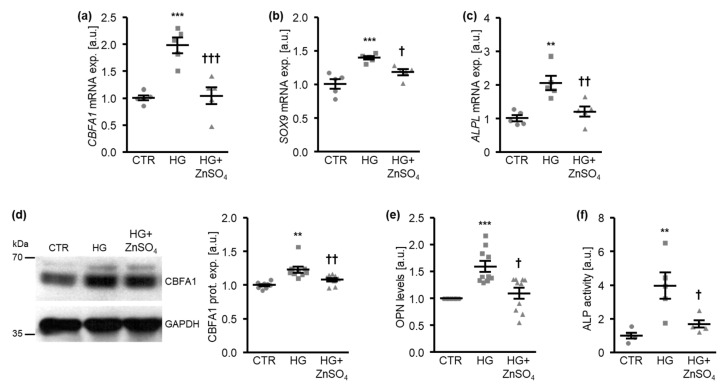
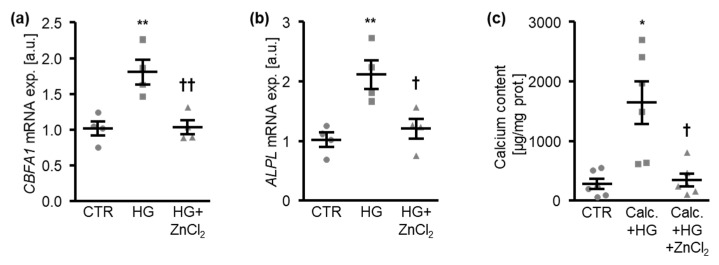
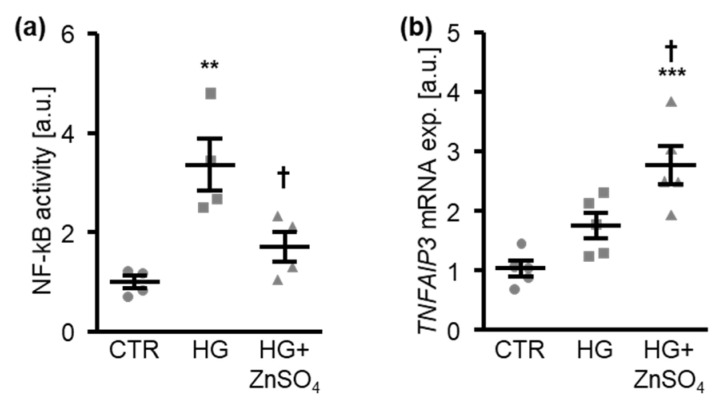
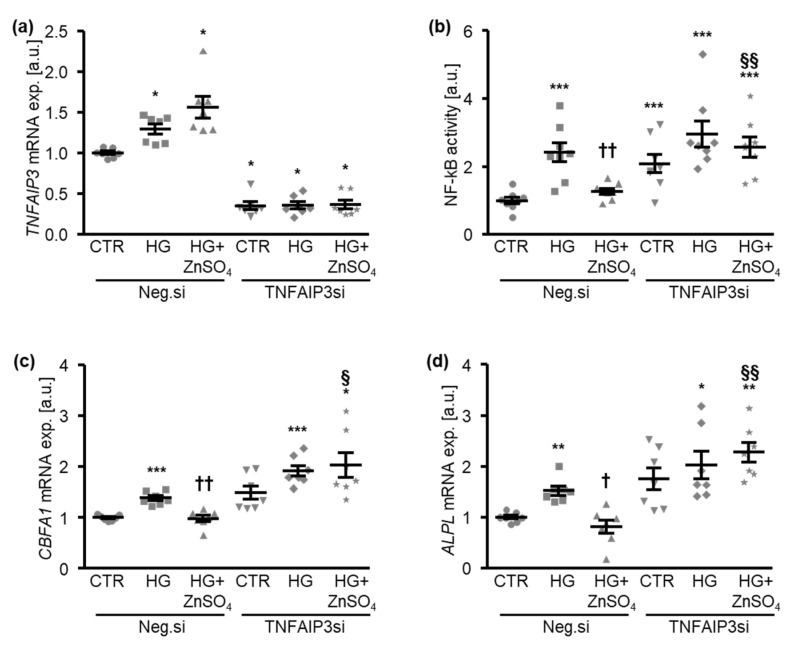
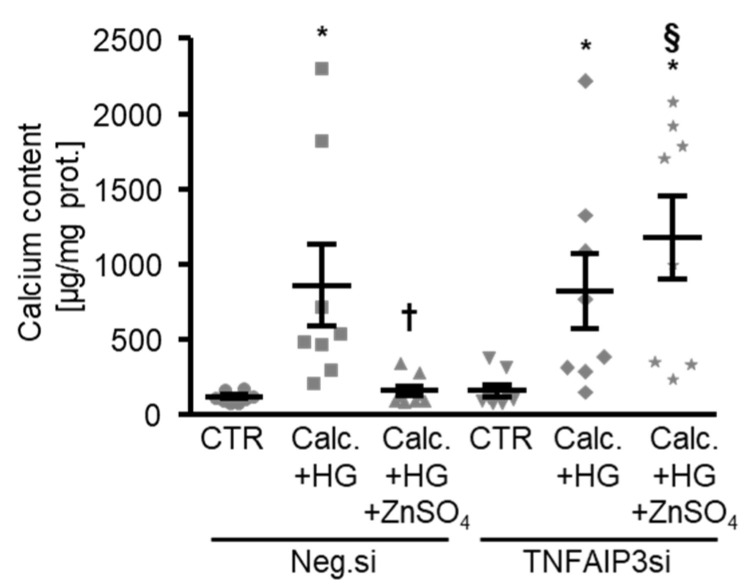
In diabetic patients, medial vascular calcification is common and associated with increased cardiovascular mortality. Excessive glucose concentrations can activate the nuclear factor kappa-light-chain-enhancer of activated B-cells (NF-kB) and trigger pro-calcific effects in vascular smooth muscle cells (VSMCs), which may actively augment vascular calcification. Zinc is able to mitigate phosphate-induced VSMC calcification. Reduced serum zinc levels have been reported in diabetes mellitus. Therefore, in this study the effects of zinc supplementation were investigated in primary human aortic VSMCs exposed to excessive glucose concentrations. Zinc treatment was found to abrogate the stimulating effects of high glucose on VSMC calcification. Furthermore, zinc was found to blunt the increased expression of osteogenic and chondrogenic markers in high glucose-treated VSMCs. High glucose exposure was shown to activate NF-kB in VSMCs, an effect that was blunted by additional zinc treatment. Zinc was further found to increase the expression of TNFα-induced protein 3 (TNFAIP3) in high glucose-treated VSMCs. The silencing of TNFAIP3 was shown to abolish the protective effects of zinc on high glucose-induced NF-kB-dependent transcriptional activation, osteogenic marker expression, and the calcification of VSMCs. Silencing of the zinc-sensing receptor G protein-coupled receptor 39 (GPR39) was shown to abolish zinc-induced expression and the effects of zinc on high glucose-induced osteogenic marker expression. These observations indicate that zinc may be a protective factor during vascular calcification in hyperglycemic conditions.
在糖尿病患者中,血管中层钙化很常见,并且与心血管死亡率增加有关。过高的葡萄糖浓度可激活核因子κB(NF-κB)并引发血管平滑肌细胞(VSMC)中的促钙化作用,这可能会积极增强血管钙化。锌能够减轻磷酸盐诱导的 VSMC 钙化。已经报道糖尿病患者的血清锌水平降低。因此,在这项研究中,研究了在暴露于高浓度葡萄糖的原代人主动脉 VSMC 中补充锌的作用。发现锌处理可消除高葡萄糖对 VSMC 钙化的刺激作用。此外,锌还可减轻高葡萄糖处理的 VSMC 中骨形成和软骨形成标志物的表达增加。高葡萄糖暴露会激活 VSMC 中的 NF-κB,而额外的锌处理可减弱这种作用。还发现锌可增加高葡萄糖处理的 VSMC 中肿瘤坏死因子α诱导蛋白 3(TNFAIP3)的表达。沉默 TNFAIP3 可消除锌对高葡萄糖诱导的 NF-κB 依赖性转录激活、成骨标志物表达和 VSMC 钙化的保护作用。沉默锌感应受体 G 蛋白偶联受体 39(GPR39)可消除锌诱导的表达和锌对高葡萄糖诱导的成骨标志物表达的作用。这些观察结果表明,在高血糖条件下的血管钙化过程中,锌可能是一种保护因素。