Kamei Noriyasu, Suwabe Susumu, Arime Kenji, Bando Hidemi, Murata Kaho, Yamaguchi Maika, Yokoyama Natsuki, Tanaka Erina, Hashimoto Ayaka, Kanazawa Takanori, Ago Yukio, Takeda-Morishita Mariko
Laboratory of Drug Delivery Systems, Faculty of Pharmaceutical Sciences, Kobe Gakuin University, 1-1-3 Minatojima, Chuo-ku, Kobe, Hyogo 650-8586, Japan.
Department of Pharmaceutical Engineering and Drug Delivery Sciences, School of Pharmaceutical Sciences, University of Shizuoka, 52-1 Yada, Suruga-ku, Shizuoka 422-8526, Japan.
Pharmaceutics. 2021 Oct 20;13(11):1745. doi: 10.3390/pharmaceutics13111745.
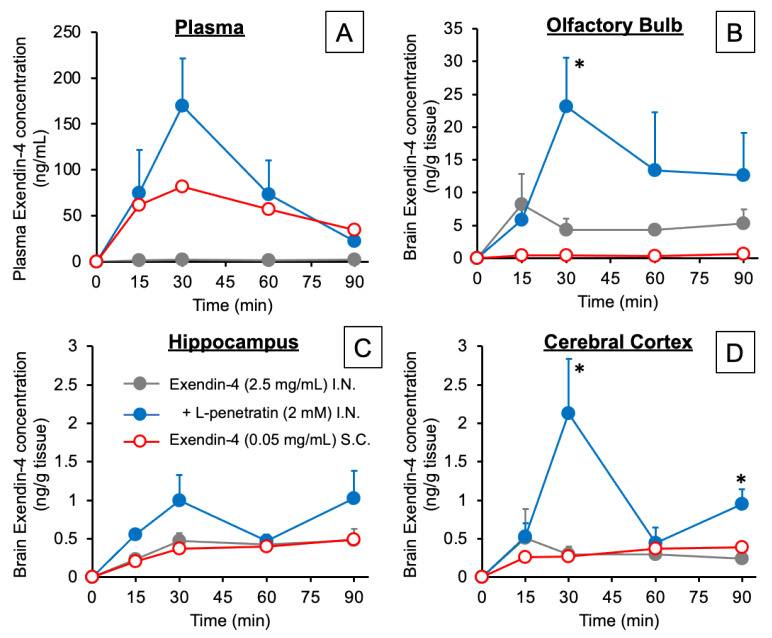
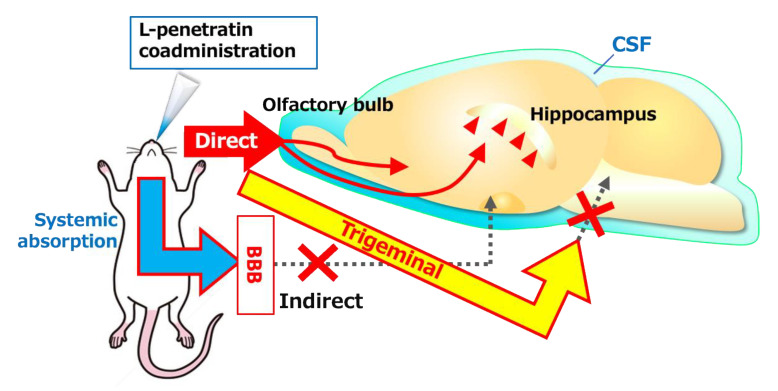
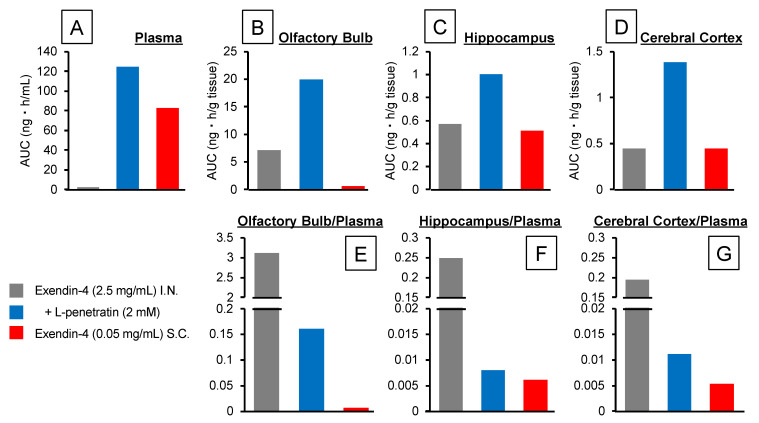
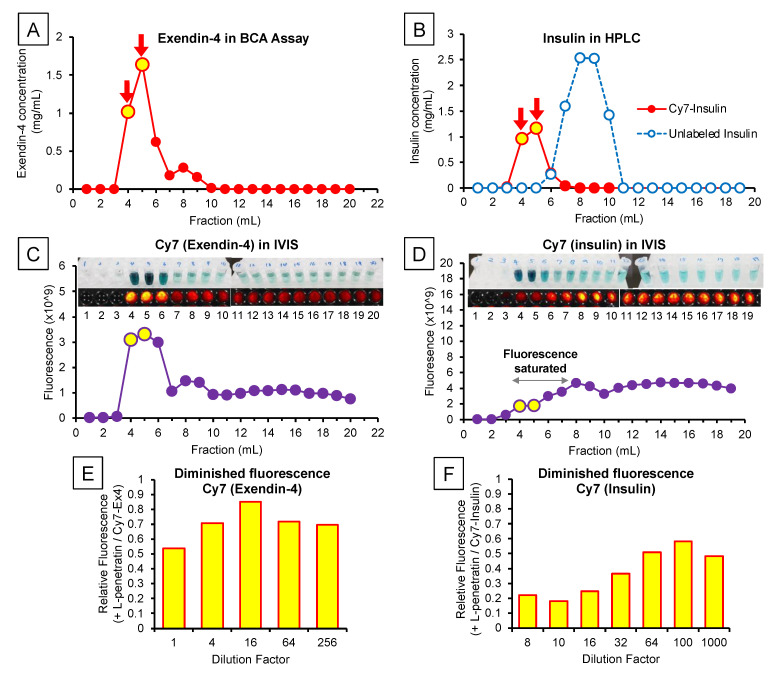
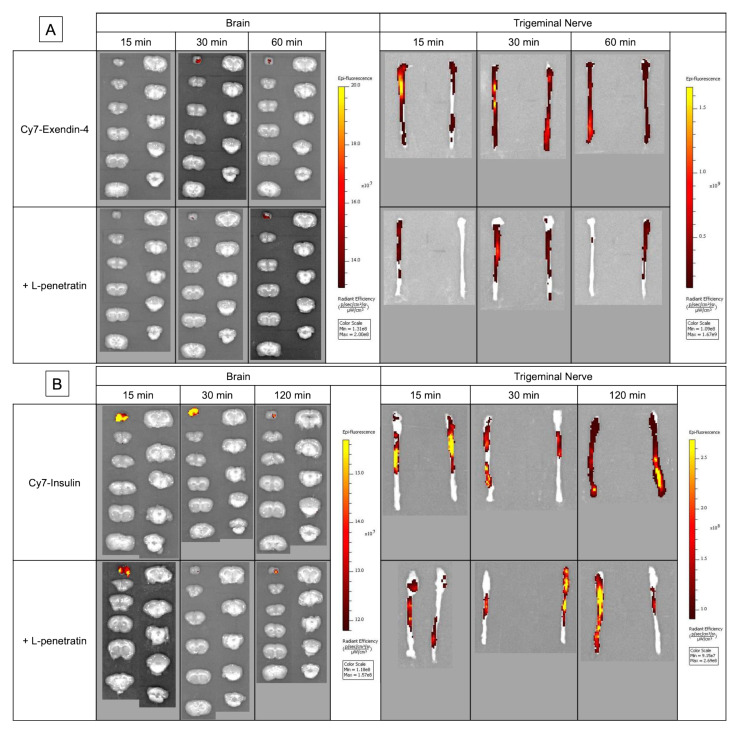
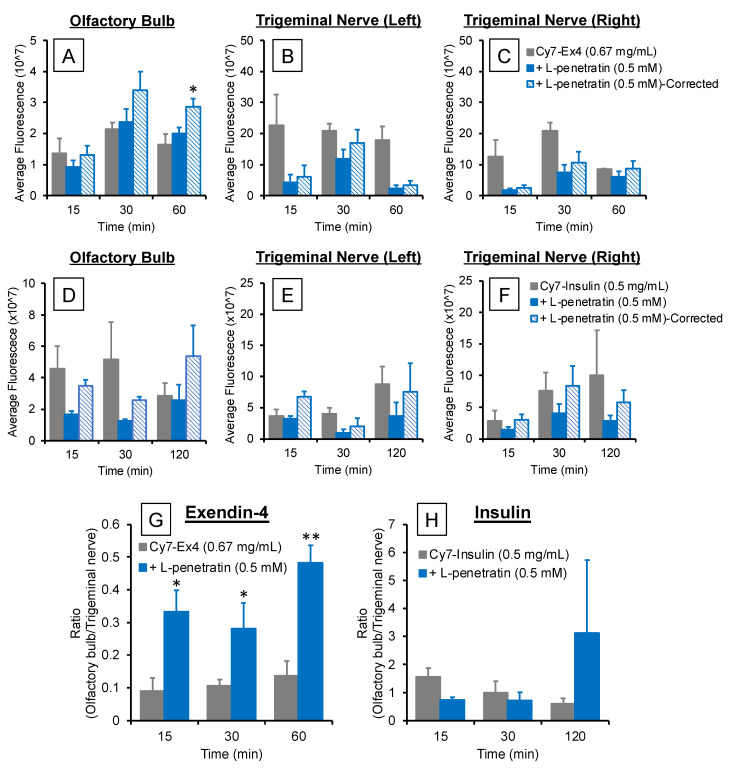
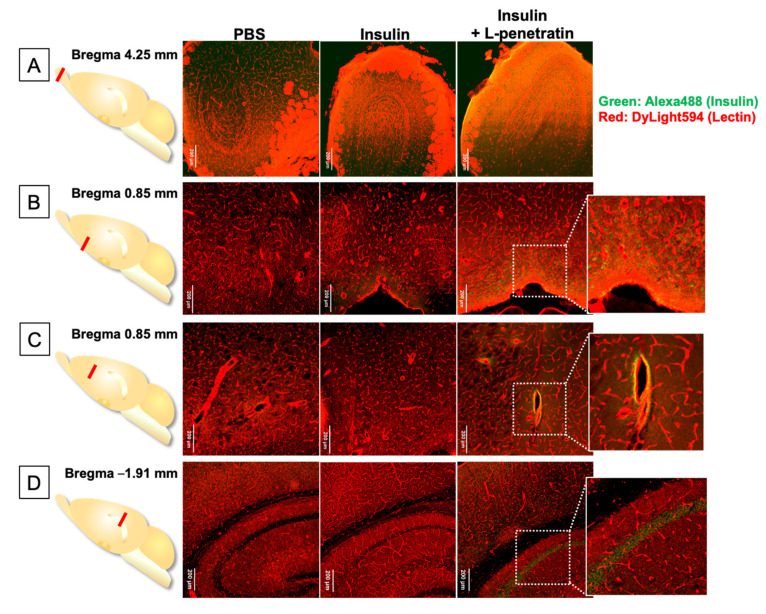
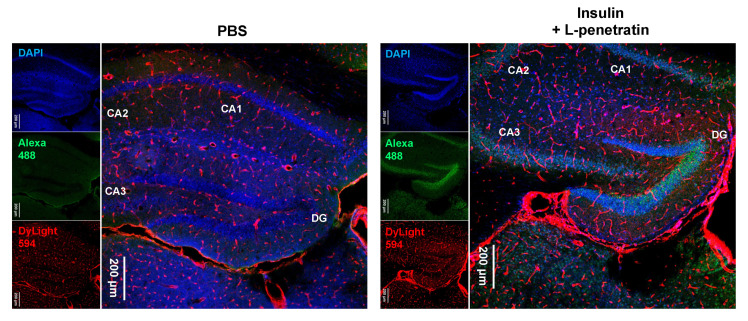
We previously found that coadministering peptides and proteins with the cell-penetrating peptide L-penetratin intranasally significantly increased transport to the brain and enhanced pharmacological effects. The present study aimed to clarify the mechanisms of nose-to-brain drug delivery enhancement by L-penetratin coadministration. First, we compared the concentrations of Exendin-4 in plasma and brain after intranasal and subcutaneous administration and suggested that coadministration with L-penetratin facilitated the direct nose-to-brain transport of Exendin-4. Second, we demonstrated that L-penetratin did not stimulate the transport of Cy7-labeled Exendin-4 and insulin through the trigeminal nerves but shifted their distribution to the olfactory mucosal pathway. Third, we investigated the distribution of insulin into the deeper regions of the brain after delivery via the olfactory pathway and suggested that insulin had entered the olfactory bulb, bottom part of the brain, and perivascular space through the cerebrospinal fluid and had diffused throughout the brain. We further demonstrated that intranasally delivered insulin with L-penetratin specifically accumulated on the hippocampus neuronal cells. Thus, this study suggested that administrating peptide drugs intranasally with L-penetratin allows direct transport to the olfactory bulb, bottom part of the brain, and perivascular space of the cerebral artery. This technique also potentially allows targeting of specific brain areas.
我们之前发现,将肽和蛋白质与细胞穿透肽L-穿膜肽经鼻共同给药可显著增加其向脑内的转运并增强药理作用。本研究旨在阐明L-穿膜肽共同给药增强鼻至脑药物递送的机制。首先,我们比较了经鼻和皮下给药后血浆和脑中艾塞那肽-4的浓度,并表明与L-穿膜肽共同给药促进了艾塞那肽-4直接从鼻至脑的转运。其次,我们证明L-穿膜肽不会刺激Cy7标记的艾塞那肽-4和胰岛素通过三叉神经转运,而是将它们的分布转移至嗅觉黏膜途径。第三,我们研究了胰岛素经嗅觉途径递送后在脑深部区域的分布,并表明胰岛素通过脑脊液进入嗅球、脑底部和血管周围间隙,并在全脑扩散。我们进一步证明,经鼻与L-穿膜肽共同递送的胰岛素特异性地积聚在海马神经元细胞上。因此,本研究表明,将肽类药物与L-穿膜肽经鼻给药可实现向嗅球、脑底部和脑动脉血管周围间隙的直接转运。该技术还可能实现对特定脑区的靶向作用。