College of Animal Science and Technology, Guangxi University, No. 100 Daxue Road, Nanning 530005, China.
Viruses. 2021 Oct 21;13(11):2119. doi: 10.3390/v13112119.
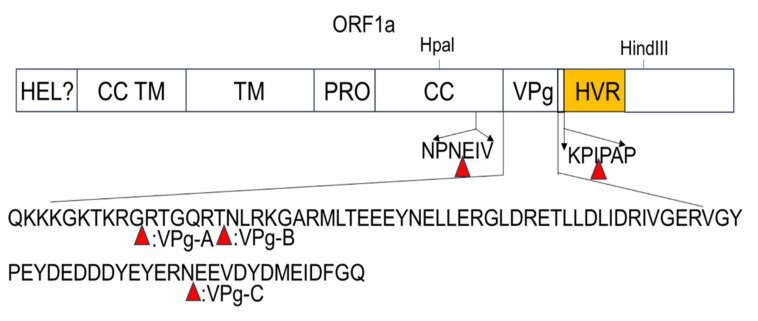
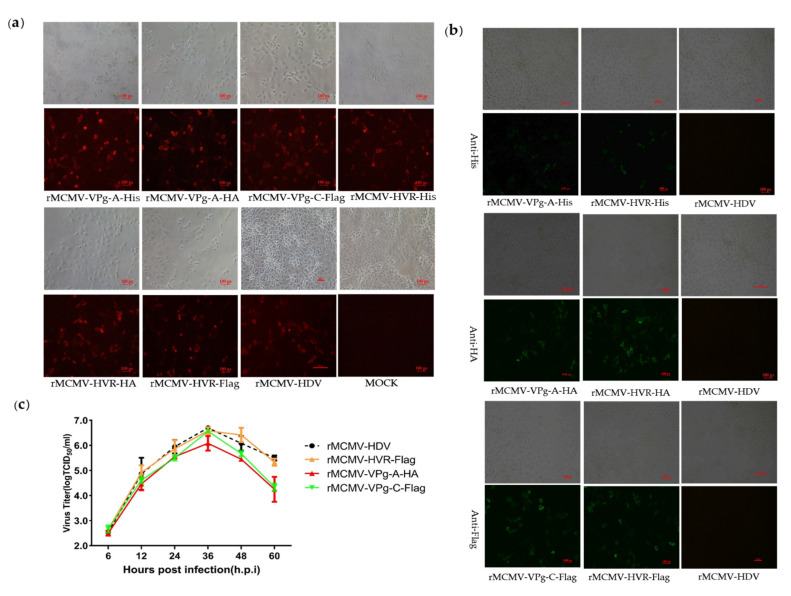
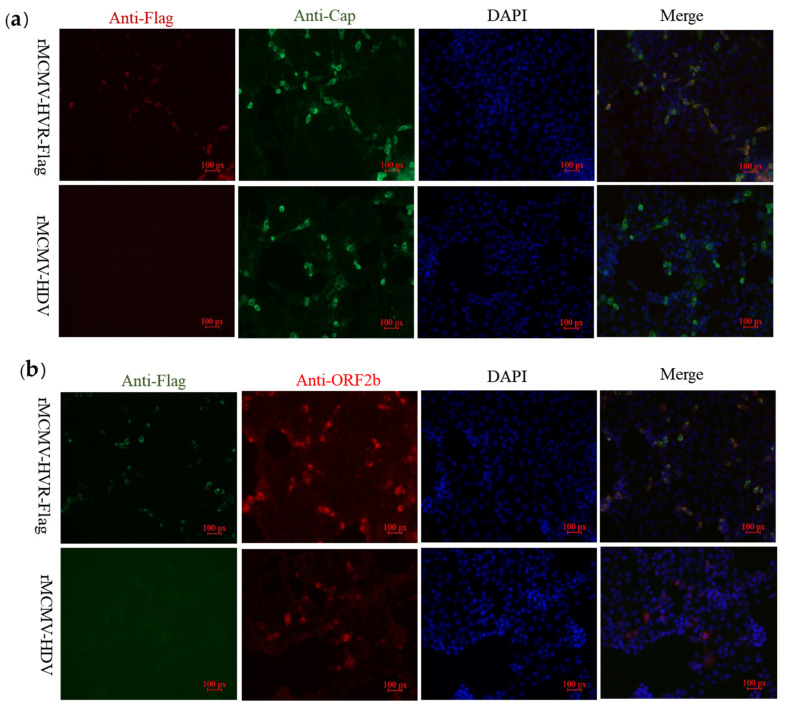
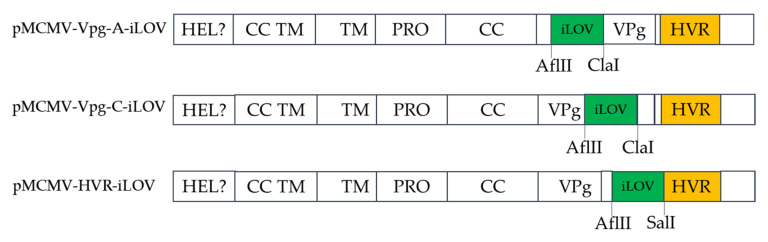
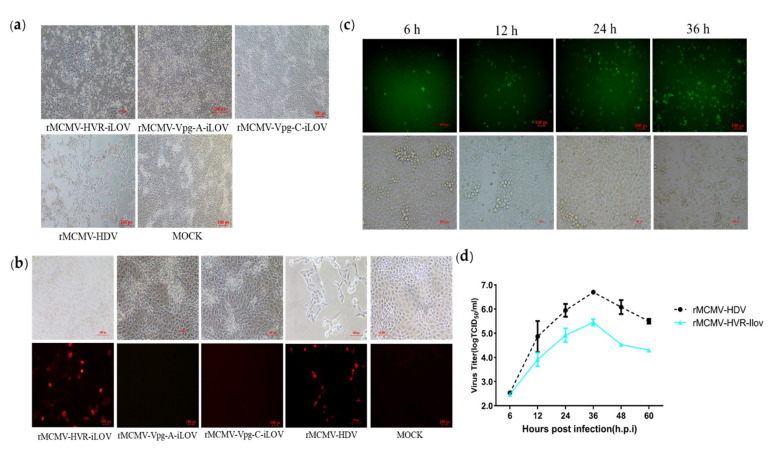
A tagged or reporter astrovirus can be a valuable tool for the analysis of various aspects of the virus life cycle, and to aid in the development of genetically engineered astroviruses as vectors. Here, transposon-mediated insertion mutagenesis was used to insert a 15-nucleotide (nt) sequence into random sites of open reading frame 1a (ORF1a) based on an infectious full-length cDNA clone of porcine astrovirus (PAstV). Five sites in the predicted coiled-coil structures (CC), genome-linked protein (VPg), and hypervariable region (HVR) in ORF1a of the PAstV genome were identified that could tolerate random 15 nt insertions. Incorporation of the commonly used epitope tags, His, Flag, and HA, into four of the five insertion sites permitted the production of infectious viruses and allowed recognition by specifically tagged monoclonal antibodies. The results of immuno-fluorescent assays showed that Flag-tagged ORF1a protein overlapped partially with capsid and ORF2b proteins in the cytoplasm. Improved light-oxygen-voltage (iLOV) gene was also introduced at the insertion sites of CC, VPg, and HVR. Only one viable recombinant reporter PAstV expressing iLOV inserted in HVR was recovered. Biological analysis of the reporter virus showed that it displayed similar growth characteristics, and yet produced less infectious virus particles, when compared with the parental virus. The recombinant virus carrying the iLOV fused with the HVR of ORF1a protein maintained its stability and showed green fluorescence after 15 passages in cell cultures. The resultant fluorescently tagged virus could provide a promising tool for the rapid screening of antiviral drugs as well as allowing the visualization of PAstV infection and replication in living cells.
标记或报告的星状病毒可以成为分析病毒生命周期各个方面的有价值的工具,并有助于开发作为载体的遗传工程化星状病毒。在这里,基于猪星状病毒(PAstV)的传染性全长 cDNA 克隆,转座子介导的插入诱变将 15 个核苷酸(nt)序列插入 ORF1a 的随机位点。在 PAstV 基因组的 ORF1a 中预测的卷曲螺旋结构(CC)、基因组连接蛋白(VPg)和高变区(HVR)中鉴定出五个位点可以耐受随机插入 15nt。将常用的表位标签 His、Flag 和 HA 掺入五个插入位点中的四个,允许产生感染性病毒,并允许被特异性标记的单克隆抗体识别。免疫荧光测定的结果表明,Flag 标记的 ORF1a 蛋白与细胞质中的衣壳和 ORF2b 蛋白部分重叠。还在 CC、VPg 和 HVR 的插入位点引入了改进的光氧电压(iLOV)基因。仅回收了一个在 HVR 中插入 iLOV 的可行重组报告 PAstV。对报告病毒的生物学分析表明,与亲本病毒相比,它显示出相似的生长特征,但产生的感染性病毒颗粒更少。携带 iLOV 与 ORF1a 蛋白的 HVR 融合的重组病毒在细胞培养中传代 15 次后仍保持稳定,并显示绿色荧光。带有荧光标记的病毒可以为快速筛选抗病毒药物提供有希望的工具,并且可以允许在活细胞中可视化 PAstV 感染和复制。