Sir Vithaldas Thackersey College of Home Science (Autonomous), Shreemati Nathibai Damodar Thackersey Women's University, Mumbai 400049, India.
Biofortis Research, Merieux NutriSciences, Addison, IL 60101, USA.
Nutrients. 2021 Oct 20;13(11):3682. doi: 10.3390/nu13113682.
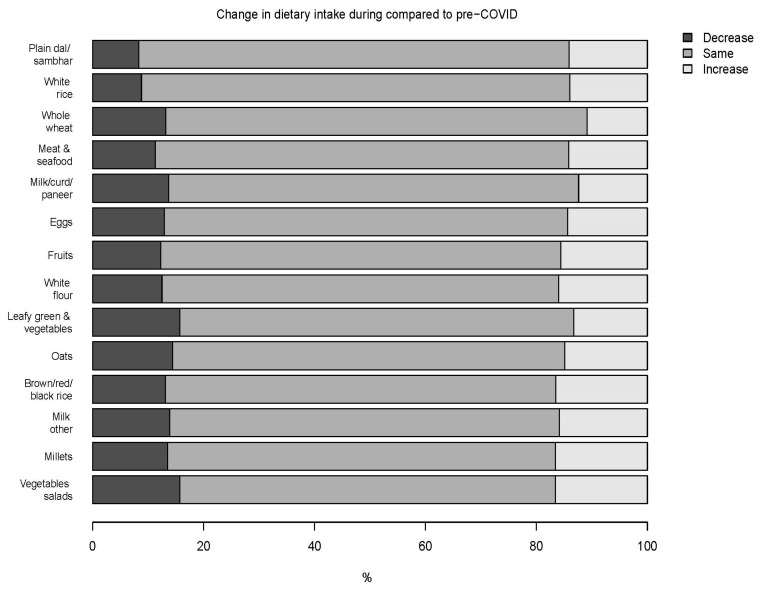
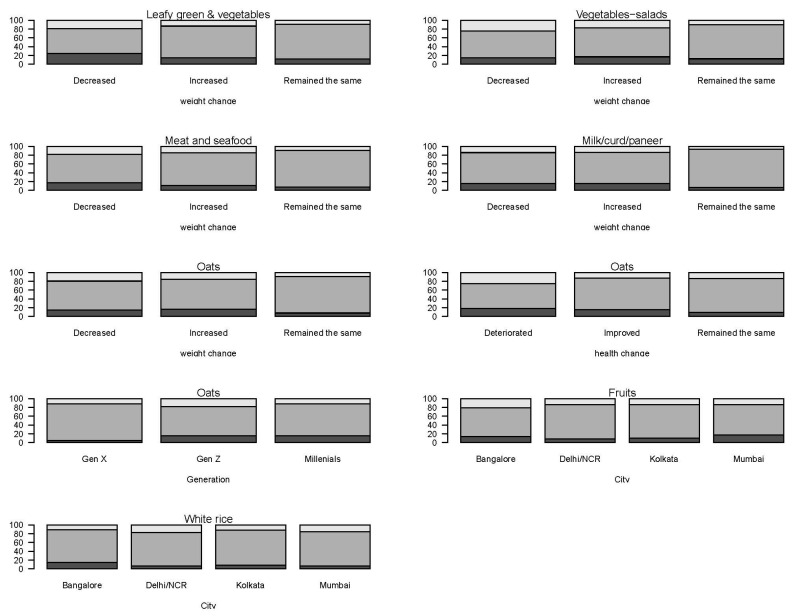
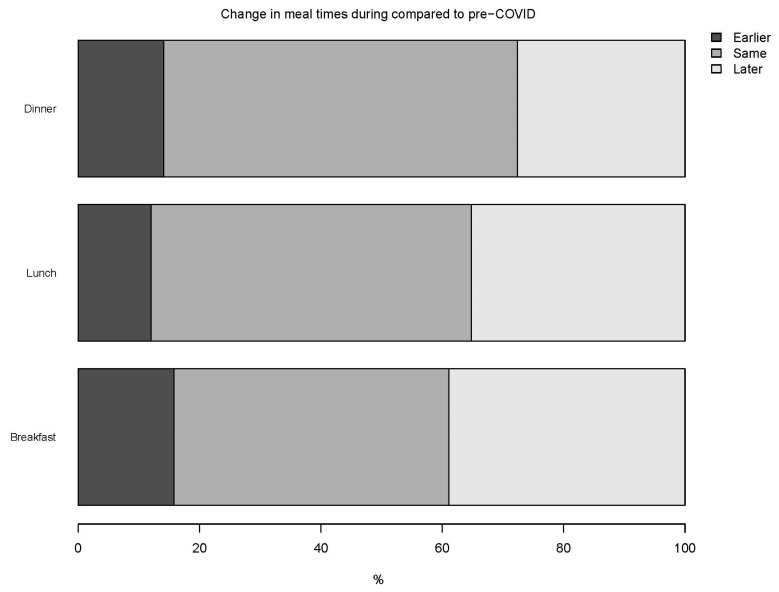
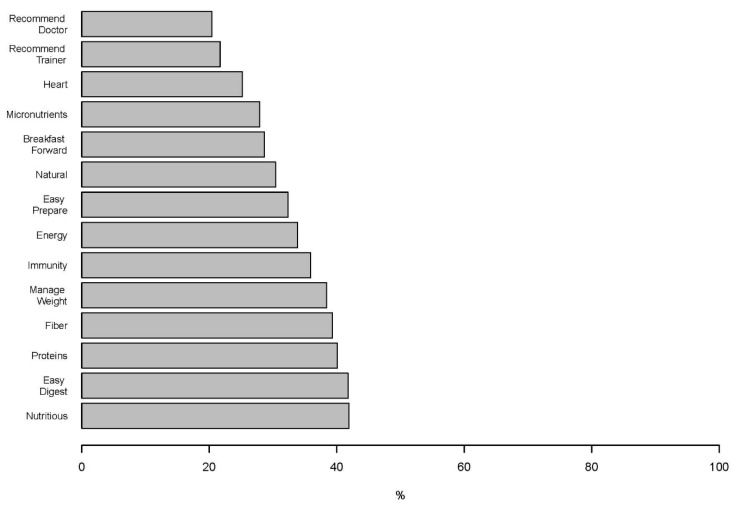
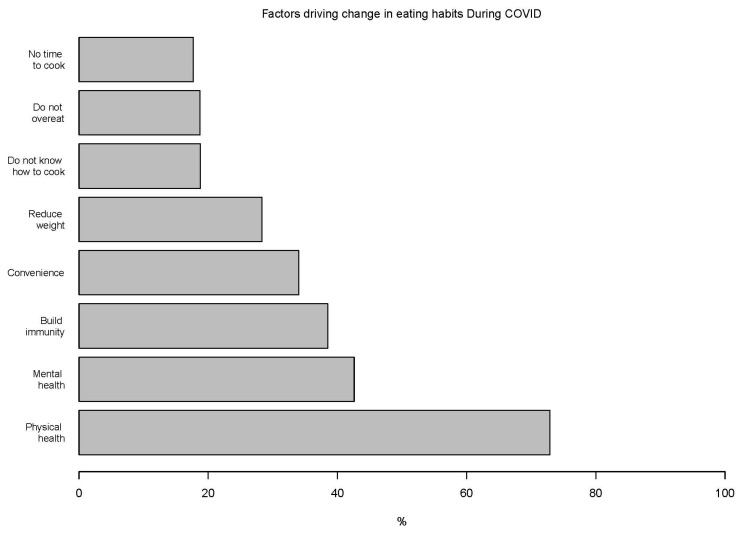
Home confinement during the COVID-19 pandemic is accompanied by dramatic changes in lifestyle and dietary behaviors that can significantly influence health. We conducted an online cross-sectional survey to assess COVID-19 pandemic-induced dietary and lifestyle changes and their association with perceived health status and self-reported body weight changes among 1000 Indian adults in early 2021. Positive improvements in dietary habits, e.g., eating more nutritious (85% of participants) and home-cooked food (89%) and an increase in overall nutrition intake (79%), were observed. Sixty-five percent of participants self-reported increased oat consumption to support immunity. There were some negative changes, e.g., more binge eating (69%), eating more in between meals (67%), and increasing meal portion size (72%). Two-thirds of participants reported no change in lifestyles, whereas 21 and 23% reported an increase, and 13 and 10% reported a decrease in physical activity and sleep, respectively. Overall, 64 and 65% of participants reported an improvement in perceived health and an increase in body weight during the COVID-19 period compared to pre-COVID-19, respectively. The top motivations for improving dietary habits included improving physical and mental health and building immunity. In conclusion, the overall perceived health was improved and there was an increase in self-reported body weight in most participants during COVID-19. Diet emerged as the most crucial determinant for these changes.
在 COVID-19 大流行期间,人们的生活方式和饮食习惯发生了巨大变化,这可能会对健康产生重大影响。我们进行了一项在线横断面调查,以评估 COVID-19 大流行引起的饮食和生活方式变化,以及它们与 1000 名印度成年人在 2021 年初的健康感知状况和自我报告体重变化的关系。我们观察到饮食习惯的积极改善,例如,更多地食用营养丰富的食物(85%的参与者)和家常饭菜(89%),以及整体营养摄入量的增加(79%)。65%的参与者报告说增加了燕麦的摄入量以支持免疫力。也存在一些负面变化,例如,更多的暴饮暴食(69%)、更多的两餐之间进食(67%)和增加每餐的份量(72%)。三分之二的参与者报告生活方式没有改变,而 21%和 23%的参与者分别报告增加和减少了身体活动和睡眠。总体而言,与 COVID-19 之前相比,64%和 65%的参与者报告 COVID-19 期间健康感知有所改善和体重增加。改善饮食习惯的主要动机包括改善身心健康和增强免疫力。总之,在 COVID-19 期间,大多数参与者的整体健康感知得到改善,自我报告的体重也有所增加。饮食是这些变化的最关键决定因素。