Department of Gastroenterology, Dietetics and Internal Diseases, Poznan University of Medical Sciences, 61-701 Poznan, Poland.
Nutrients. 2021 Nov 12;13(11):4036. doi: 10.3390/nu13114036.
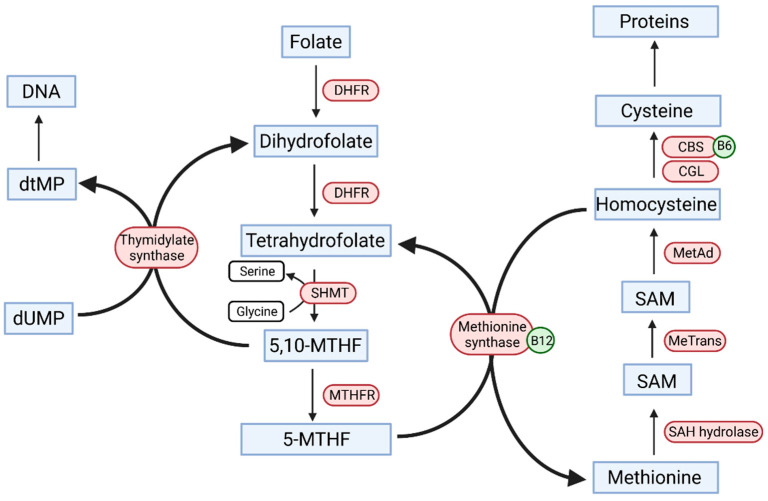
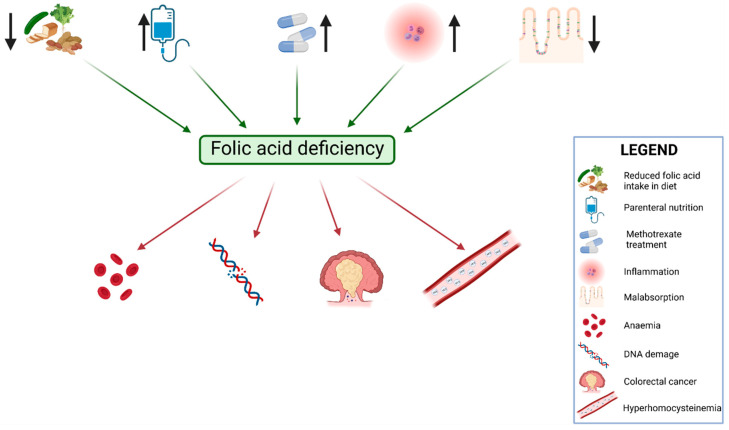
Folic acid, referred to as vitamin B9, is a water-soluble substance, which participates in the synthesis of nucleic acids, amino acids, and proteins. Similarly to B12 and B6, vitamin B9 is involved in the metabolism of homocysteine, which is associated with the gene. The human body is not able to synthesize folic acid; thus, it must be supplemented with diet. The most common consequence of folic acid deficiency is anemia; however, some studies have also demonstrated the correlation between low bone mineral density, hyperhomocysteinemia, and folic acid deficiency. Patients with inflammatory bowel disease (IBD) frequently suffer from malabsorption and avoid certain products, such as fresh fruits and vegetables, which constitute the main sources of vitamin B9. Additionally, the use of sulfasalazine by patients may result in folic acid deficiency. Therefore, IBD patients present a higher risk of folic acid deficiency and require particular supervision with regard to anemia and osteoporosis prevention, which are common consequences of IBD.
叶酸,又称维生素 B9,是一种水溶性物质,参与核酸、氨基酸和蛋白质的合成。与 B12 和 B6 类似,维生素 B9 参与同型半胱氨酸的代谢,而同型半胱氨酸与基因有关。人体无法合成叶酸,因此必须通过饮食来补充。叶酸缺乏最常见的后果是贫血,但一些研究也表明低骨密度、高同型半胱氨酸血症与叶酸缺乏之间存在相关性。炎症性肠病(IBD)患者常患有吸收不良,并避免某些产品,如新鲜水果和蔬菜,这些是维生素 B9 的主要来源。此外,患者使用柳氮磺胺吡啶可能导致叶酸缺乏。因此,IBD 患者叶酸缺乏的风险更高,需要特别注意贫血和骨质疏松症的预防,这是 IBD 的常见后果。